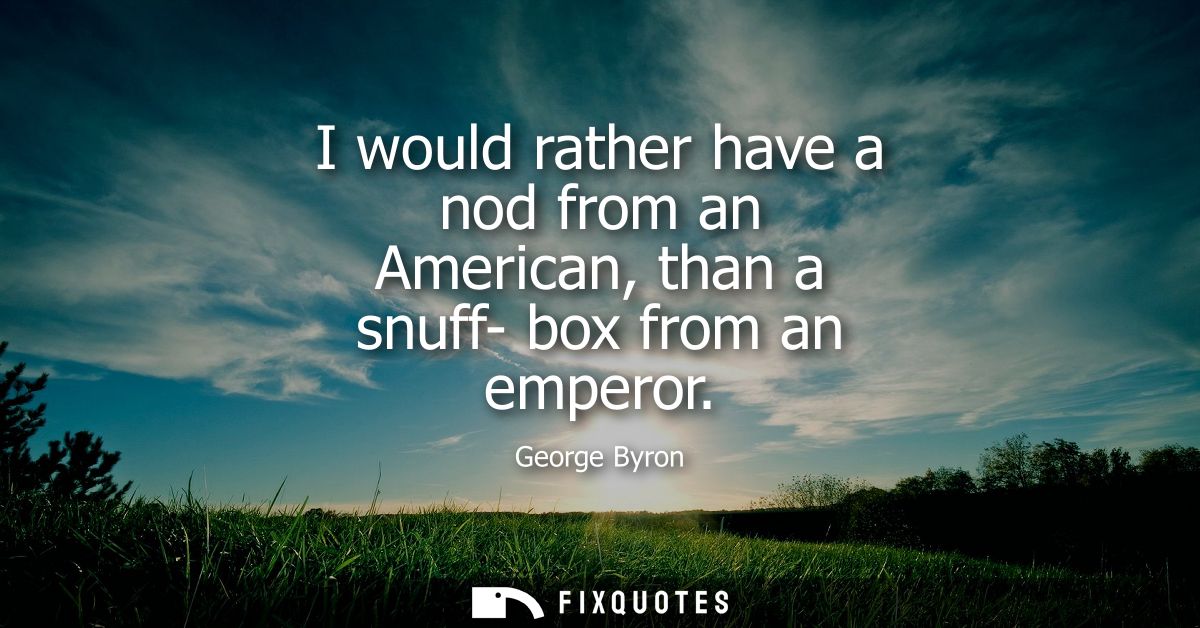
"I would rather have a nod from an American, than a snuff- box from an emperor"
About this Quote
The subtext is Byron’s ongoing self-fashioning as a celebrity in revolt against the old order, even while he benefits from it. He’s an English lord flirting with republican glamour, using America as a symbol of modernity, self-made dignity, and a certain blunt sincerity that European courts lack. The line flatters Americans, but it also flatters Byron: he casts himself as the kind of person who can refuse emperors and be validated by the “new world.”
Context matters: early 19th-century Europe is a landscape of post-Napoleonic restoration, where monarchy is trying to look inevitable again. Byron’s romantic politics resist that inevitability. By making the emperor’s gift feel tawdry and the American’s nod feel ennobling, he flips the prestige economy. Status, he implies, should flow upward from public respect, not downward from rulers’ favors.
Quote Details
| Topic | Respect |
|---|---|
| Source | Help us find the source |
| Cite |
Citation Formats
APA Style (7th ed.)
Byron, Lord. (2026, January 22). I would rather have a nod from an American, than a snuff- box from an emperor. FixQuotes. https://fixquotes.com/quotes/i-would-rather-have-a-nod-from-an-american-than-a-20933/
Chicago Style
Byron, Lord. "I would rather have a nod from an American, than a snuff- box from an emperor." FixQuotes. January 22, 2026. https://fixquotes.com/quotes/i-would-rather-have-a-nod-from-an-american-than-a-20933/.
MLA Style (9th ed.)
"I would rather have a nod from an American, than a snuff- box from an emperor." FixQuotes, 22 Jan. 2026, https://fixquotes.com/quotes/i-would-rather-have-a-nod-from-an-american-than-a-20933/. Accessed 7 Mar. 2026.