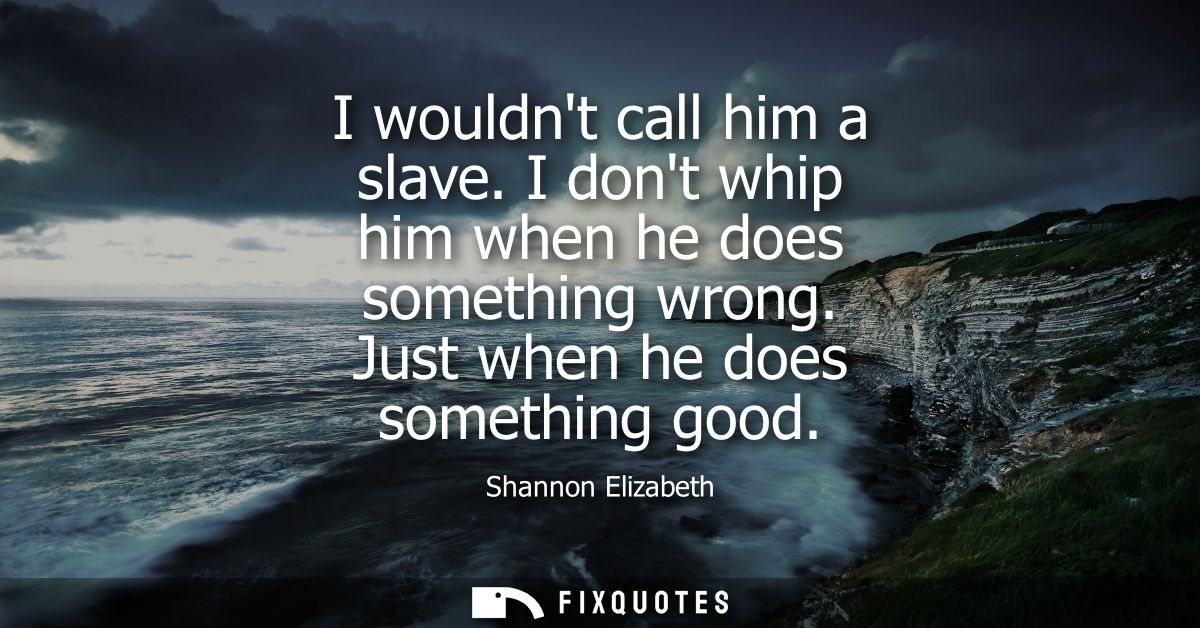
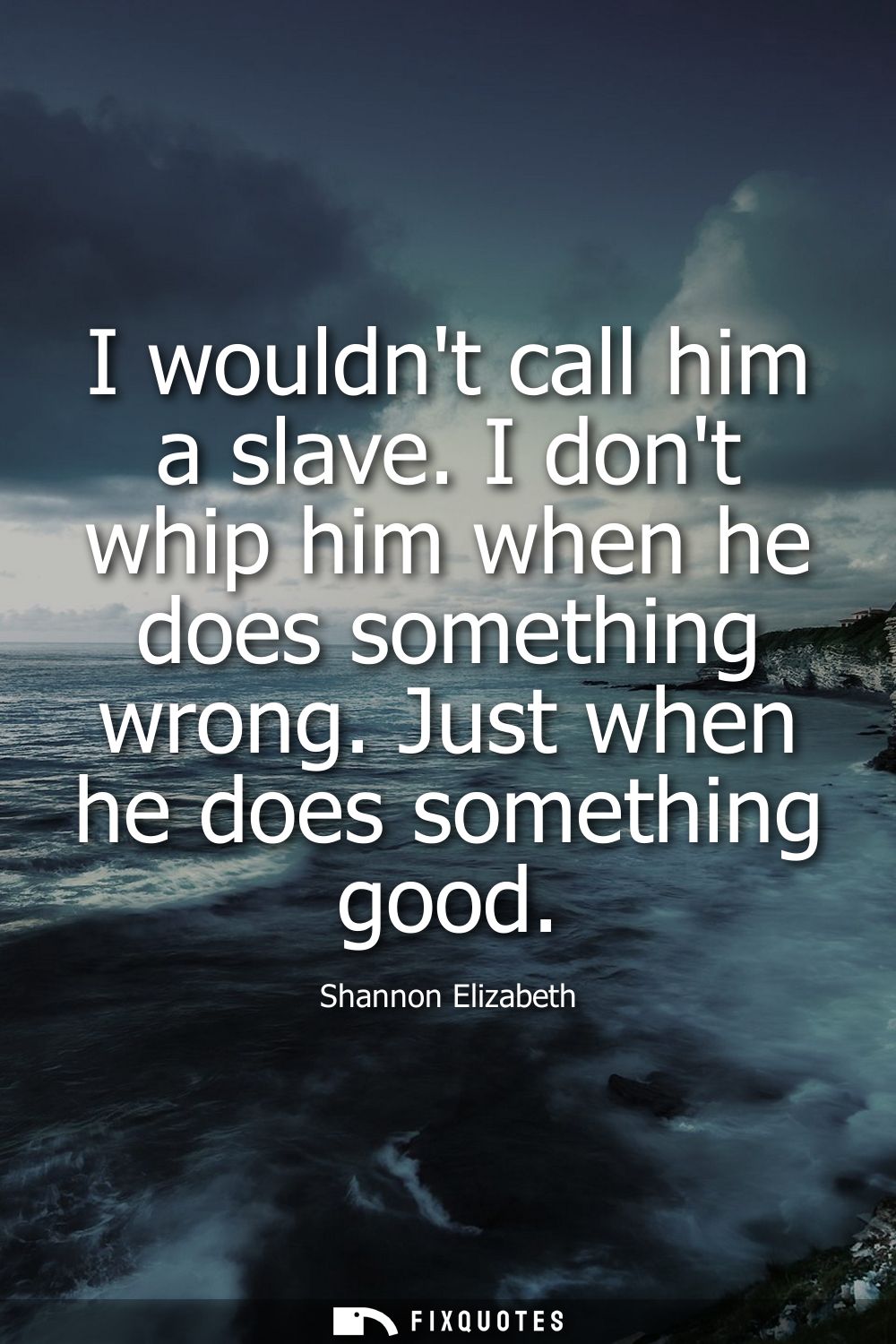
"I wouldn't call him a slave. I don't whip him when he does something wrong. Just when he does something good"
About this Quote
The pivot - “Just when he does something good” - is the wicked engine. Punishment for obedience flips the logic of discipline into pure control: it’s not about correcting behavior, it’s about demonstrating ownership. That reversal also riffs on how some relationships (sexual, romantic, professional) can disguise domination as “reward,” “kink,” or “motivation.” The line needles the way people sanitize harm when it’s wrapped in consent-adjacent language or presented as a private arrangement. You can hear the cultural background noise: early-2000s comedy’s comfort with shock humor, where taboo subjects (slavery, violence, BDSM) were mined for laughs by treating them as outrageous miscommunications.
Elizabeth, associated with broad, raunchy mainstream comedy, delivers the kind of punchline that tests the audience: if you laugh, you’re laughing at the audacity of the rationalization, not the act itself. The subtext is a cynical truth about power: the easiest way to excuse cruelty is to rename it, then insist you’re the ethical one for choosing a softer word.
Quote Details
| Topic | Witty One-Liners |
|---|---|
| Source | Help us find the source |
| Cite |
Citation Formats
APA Style (7th ed.)
Elizabeth, Shannon. (2026, January 16). I wouldn't call him a slave. I don't whip him when he does something wrong. Just when he does something good. FixQuotes. https://fixquotes.com/quotes/i-wouldnt-call-him-a-slave-i-dont-whip-him-when-90663/
Chicago Style
Elizabeth, Shannon. "I wouldn't call him a slave. I don't whip him when he does something wrong. Just when he does something good." FixQuotes. January 16, 2026. https://fixquotes.com/quotes/i-wouldnt-call-him-a-slave-i-dont-whip-him-when-90663/.
MLA Style (9th ed.)
"I wouldn't call him a slave. I don't whip him when he does something wrong. Just when he does something good." FixQuotes, 16 Jan. 2026, https://fixquotes.com/quotes/i-wouldnt-call-him-a-slave-i-dont-whip-him-when-90663/. Accessed 31 Mar. 2026.