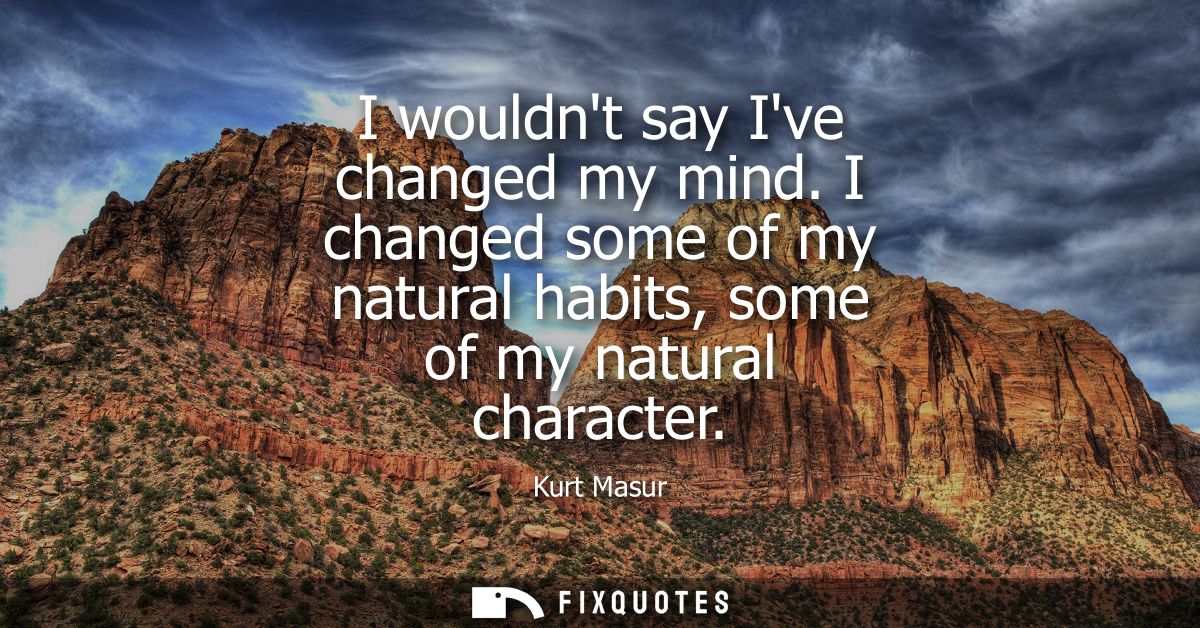
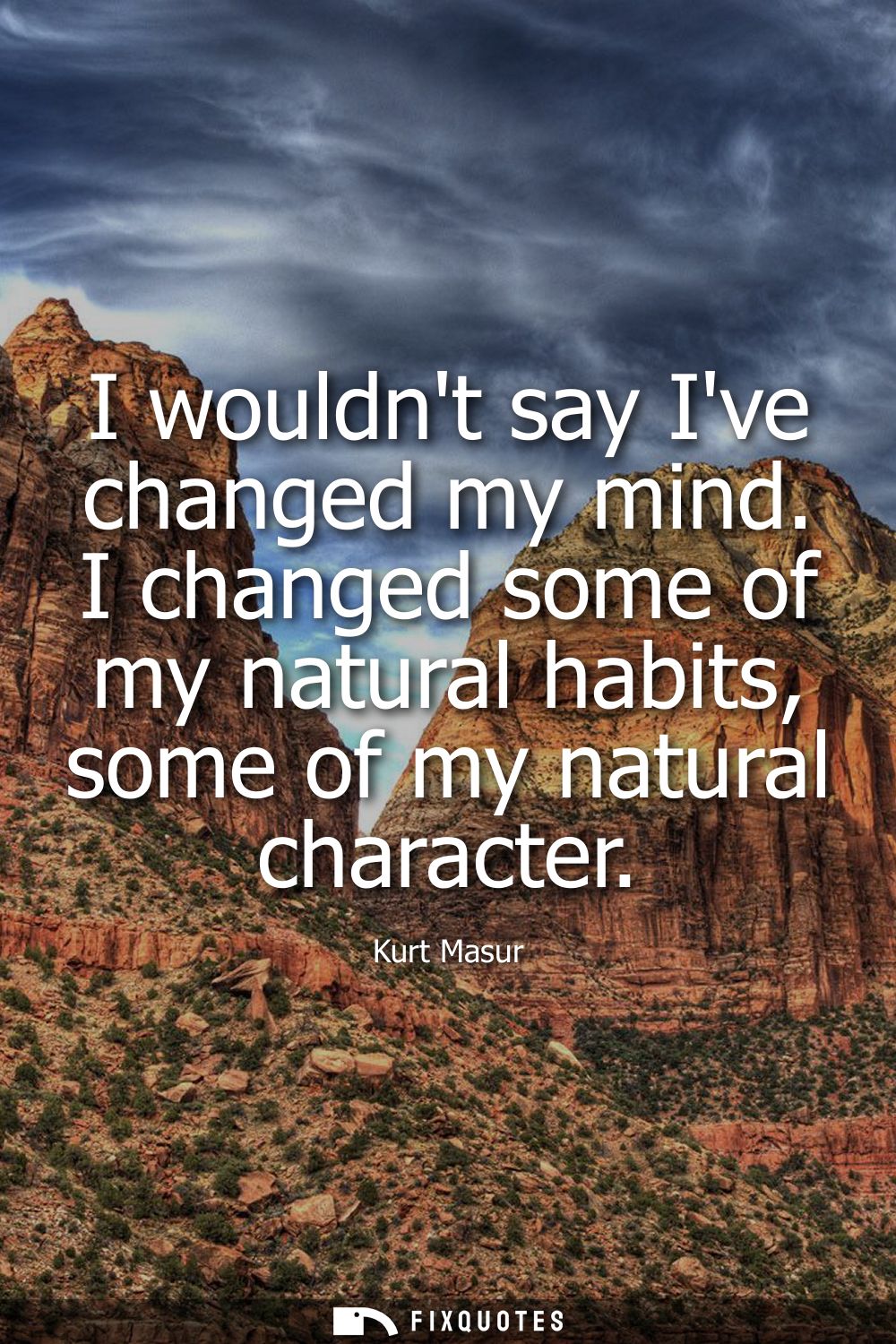
"I wouldn't say I've changed my mind. I changed some of my natural habits, some of my natural character"
About this Quote
For a musician and conductor, this lands with particular force. Conducting is authority under pressure: you don’t just interpret a score; you manage egos, time, institutions, politics, and the emotional weather of an orchestra. Masur’s subtext is professional maturity without ideological surrender. He’s not claiming to be “a different person”; he’s claiming to be a more usable version of himself. The mind remains steady, but the behavior gets edited.
It also hints at an old-world ethic that feels almost radical now: self-control as craft. In an era that prizes “authenticity” as unfiltered expression, Masur suggests authenticity can be something you earn by refining your roughness, not indulging it. The intent isn’t self-mythology; it’s accountability. He’s telling you where he made concessions - in habit, in temperament - and where he didn’t: in the internal compass that guides the work.
Quote Details
| Topic | Habits |
|---|---|
| Source | Help us find the source |
| Cite |
Citation Formats
APA Style (7th ed.)
Masur, Kurt. (2026, January 17). I wouldn't say I've changed my mind. I changed some of my natural habits, some of my natural character. FixQuotes. https://fixquotes.com/quotes/i-wouldnt-say-ive-changed-my-mind-i-changed-some-72251/
Chicago Style
Masur, Kurt. "I wouldn't say I've changed my mind. I changed some of my natural habits, some of my natural character." FixQuotes. January 17, 2026. https://fixquotes.com/quotes/i-wouldnt-say-ive-changed-my-mind-i-changed-some-72251/.
MLA Style (9th ed.)
"I wouldn't say I've changed my mind. I changed some of my natural habits, some of my natural character." FixQuotes, 17 Jan. 2026, https://fixquotes.com/quotes/i-wouldnt-say-ive-changed-my-mind-i-changed-some-72251/. Accessed 12 Feb. 2026.