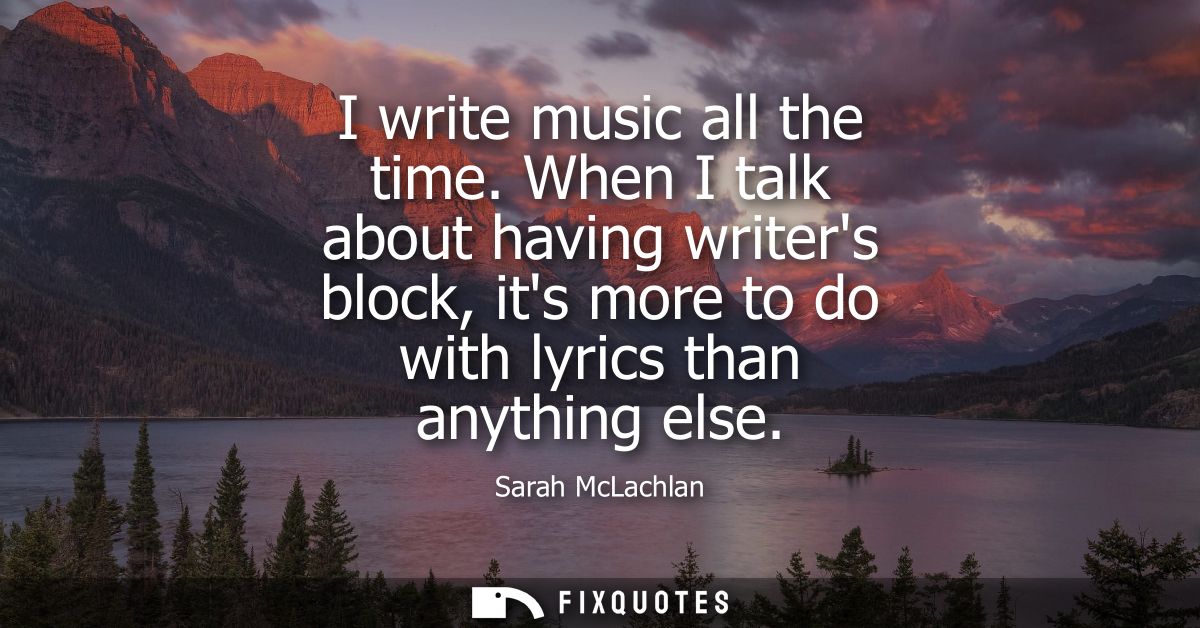
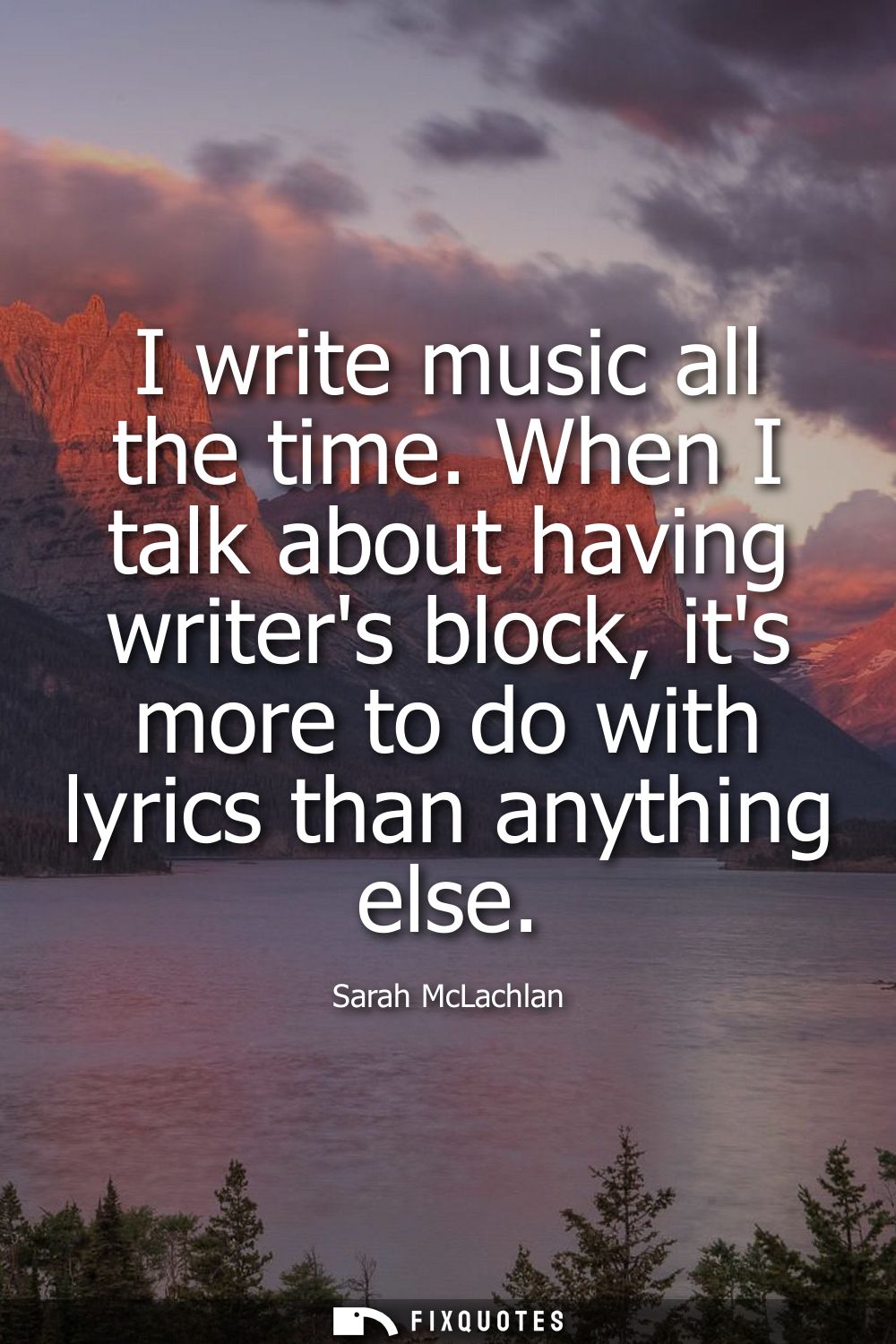
"I write music all the time. When I talk about having writer's block, it's more to do with lyrics than anything else"
About this Quote
That distinction matters because lyrics carry a different kind of risk. A chord progression can be emotionally precise without being personally legible; words have to stand out in public, pinned to meaning, vulnerable to misreading. For a songwriter known for intimate, diaristic intensity, the subtext is almost protective: the music is safe terrain, the lyrics are where exposure happens. She’s also pushing back against a culture that treats “writer’s block” as a single, glamorous condition. In her framing, it’s more like a workflow problem: one part of the pipeline is jammed, the rest is moving.
Contextually, it reflects a late-90s and 2000s pop landscape where singer-songwriters were expected to be both confessional and quotable. The melodies can arrive in abundance; the right words have to earn their place. McLachlan’s intent isn’t to demystify creativity so much as to locate the pressure point: not inspiration, but articulation.
Quote Details
| Topic | Music |
|---|---|
| Source | Help us find the source |
| Cite |
Citation Formats
APA Style (7th ed.)
McLachlan, Sarah. (2026, January 16). I write music all the time. When I talk about having writer's block, it's more to do with lyrics than anything else. FixQuotes. https://fixquotes.com/quotes/i-write-music-all-the-time-when-i-talk-about-94829/
Chicago Style
McLachlan, Sarah. "I write music all the time. When I talk about having writer's block, it's more to do with lyrics than anything else." FixQuotes. January 16, 2026. https://fixquotes.com/quotes/i-write-music-all-the-time-when-i-talk-about-94829/.
MLA Style (9th ed.)
"I write music all the time. When I talk about having writer's block, it's more to do with lyrics than anything else." FixQuotes, 16 Jan. 2026, https://fixquotes.com/quotes/i-write-music-all-the-time-when-i-talk-about-94829/. Accessed 12 Feb. 2026.