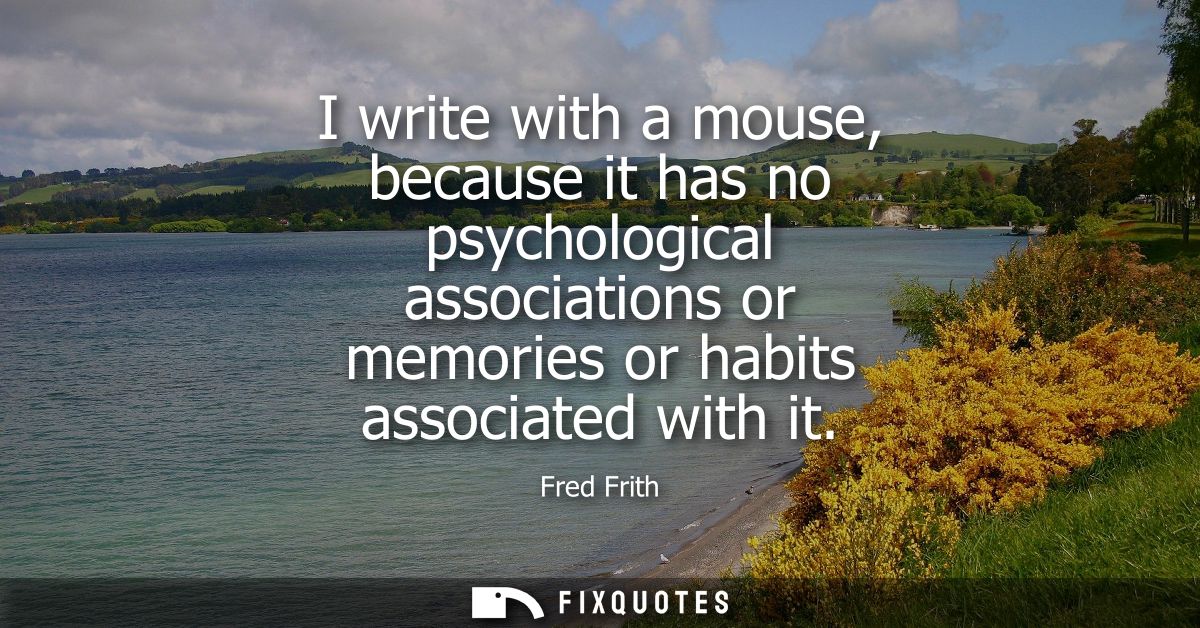
"I write with a mouse, because it has no psychological associations or memories or habits associated with it"
About this Quote
That’s the intent: to strip composition down to decision-making, not performance. The mouse is a tool for unlearning, a way to sabotage virtuosity so the ear can lead instead of the fingers. In Frith’s subtext, “expression” is less about pouring yourself into sound and more about designing conditions where surprise can happen. It’s an argument for constraint as freedom: when the interface has no “habits,” the composer can’t coast on theirs.
The context is late-20th/early-21st century music’s ongoing fight with technology: fears that computers sterilize art, countered by artists who use the digital to reintroduce risk. Frith flips the usual anxiety. The psychological association he’s dodging isn’t with machines; it’s with tradition. The mouse becomes a kind of creative amnesia button, letting him hear music before it hardens into “how it’s supposed to go.”
Quote Details
| Topic | Writing |
|---|---|
| Source | Help us find the source |
| Cite |
Citation Formats
APA Style (7th ed.)
Frith, Fred. (2026, January 15). I write with a mouse, because it has no psychological associations or memories or habits associated with it. FixQuotes. https://fixquotes.com/quotes/i-write-with-a-mouse-because-it-has-no-90036/
Chicago Style
Frith, Fred. "I write with a mouse, because it has no psychological associations or memories or habits associated with it." FixQuotes. January 15, 2026. https://fixquotes.com/quotes/i-write-with-a-mouse-because-it-has-no-90036/.
MLA Style (9th ed.)
"I write with a mouse, because it has no psychological associations or memories or habits associated with it." FixQuotes, 15 Jan. 2026, https://fixquotes.com/quotes/i-write-with-a-mouse-because-it-has-no-90036/. Accessed 13 Feb. 2026.