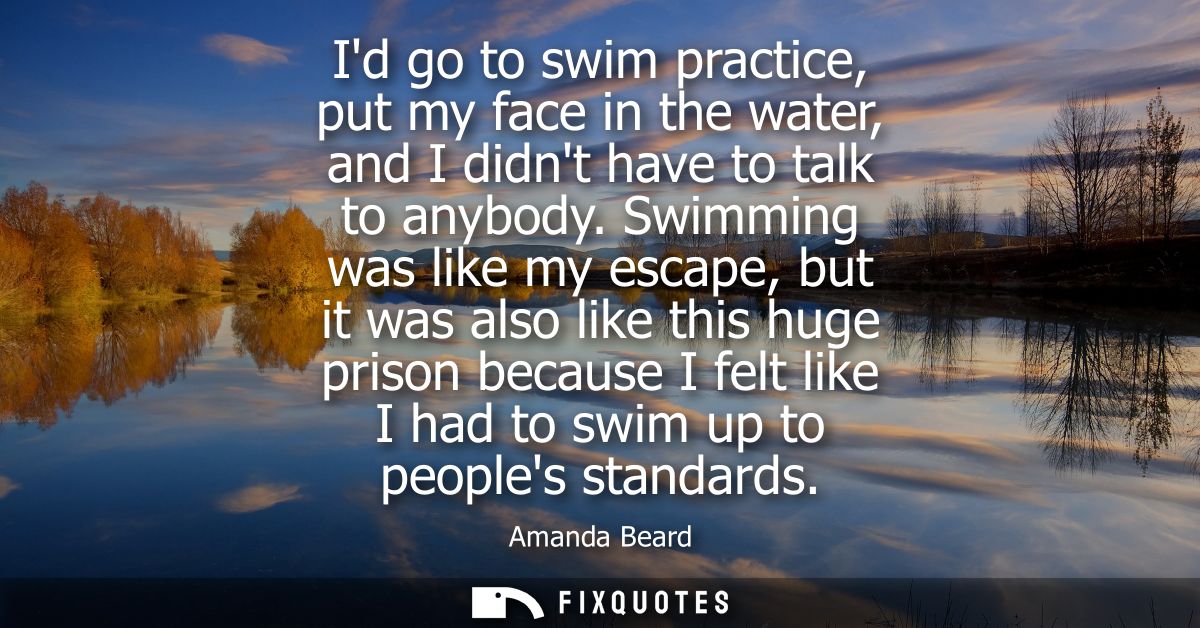
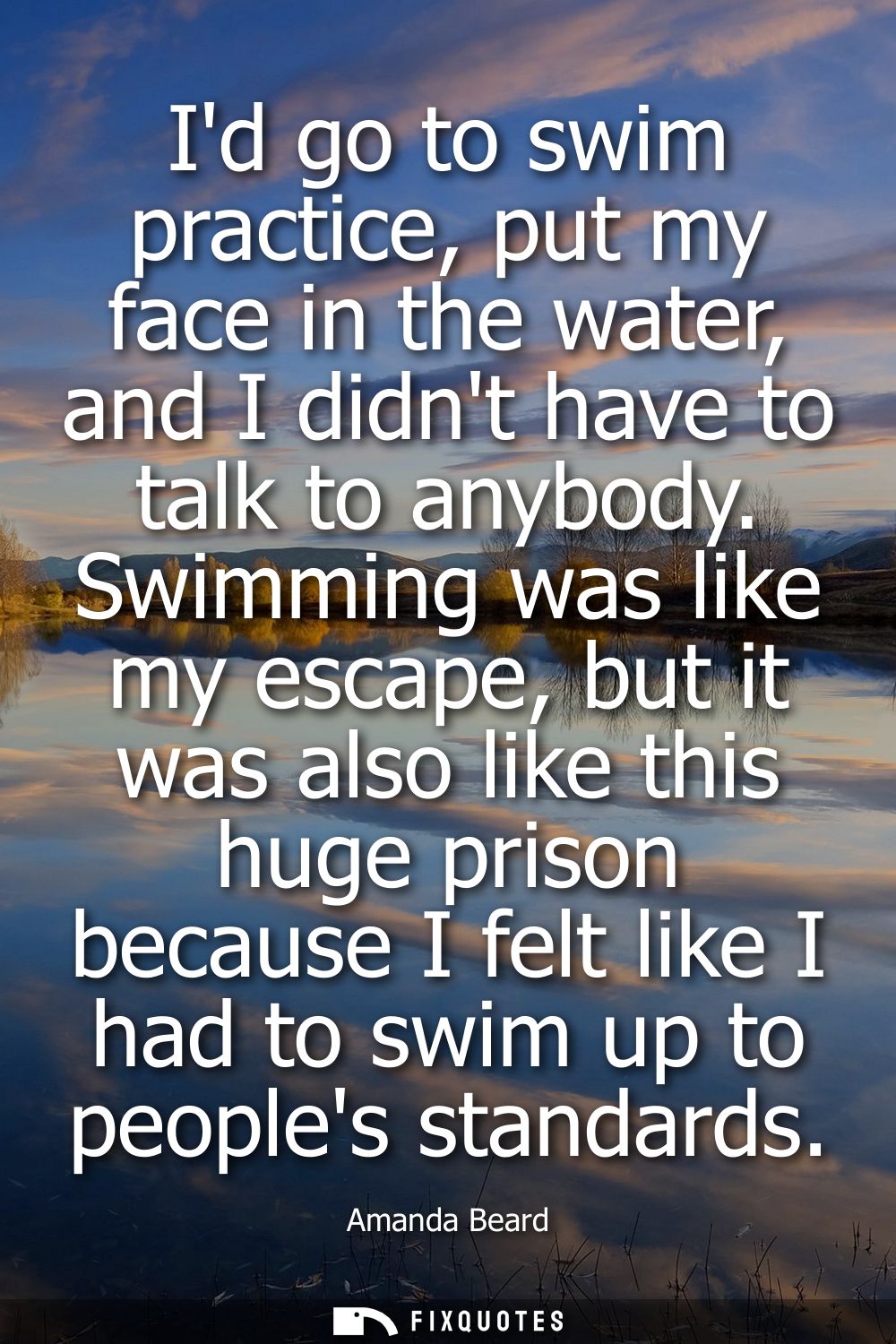
"I'd go to swim practice, put my face in the water, and I didn't have to talk to anybody. Swimming was like my escape, but it was also like this huge prison because I felt like I had to swim up to people's standards"
About this Quote
The subtext is about control. Water offers a clean logic: you do the work, you get the time. No small talk, no messy emotional negotiations. But that same logic turns cruel when the metrics stop being yours. Beard’s “escape” flips into “prison” the moment performance becomes a proxy for worth, a way of paying rent for other people’s approval. “People’s standards” is deliberately vague, which is the point; it’s everyone and no one at once: coaches, judges, sponsors, parents, fans, even the voice in your head that has learned the language of expectation.
Context matters here because Beard’s career unfolded in the era when athletes were branded early and often, especially women whose bodies and “likability” get evaluated alongside medals. The quote works because it refuses the clean triumph narrative. It names the hidden transaction behind elite sport: you can use discipline to outrun vulnerability, but the finish line keeps moving, and the water that hides you also holds you under.
Quote Details
| Topic | Training & Practice |
|---|---|
| Source | Help us find the source |
| Cite |
Citation Formats
APA Style (7th ed.)
Beard, Amanda. (2026, January 16). I'd go to swim practice, put my face in the water, and I didn't have to talk to anybody. Swimming was like my escape, but it was also like this huge prison because I felt like I had to swim up to people's standards. FixQuotes. https://fixquotes.com/quotes/id-go-to-swim-practice-put-my-face-in-the-water-129962/
Chicago Style
Beard, Amanda. "I'd go to swim practice, put my face in the water, and I didn't have to talk to anybody. Swimming was like my escape, but it was also like this huge prison because I felt like I had to swim up to people's standards." FixQuotes. January 16, 2026. https://fixquotes.com/quotes/id-go-to-swim-practice-put-my-face-in-the-water-129962/.
MLA Style (9th ed.)
"I'd go to swim practice, put my face in the water, and I didn't have to talk to anybody. Swimming was like my escape, but it was also like this huge prison because I felt like I had to swim up to people's standards." FixQuotes, 16 Jan. 2026, https://fixquotes.com/quotes/id-go-to-swim-practice-put-my-face-in-the-water-129962/. Accessed 12 Mar. 2026.