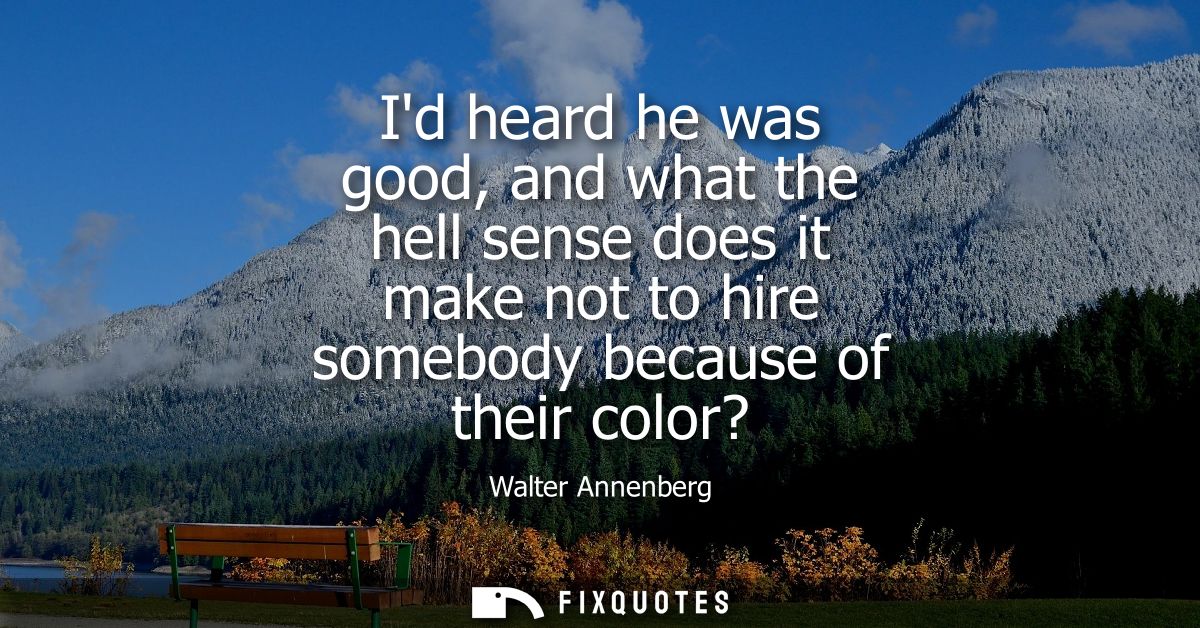
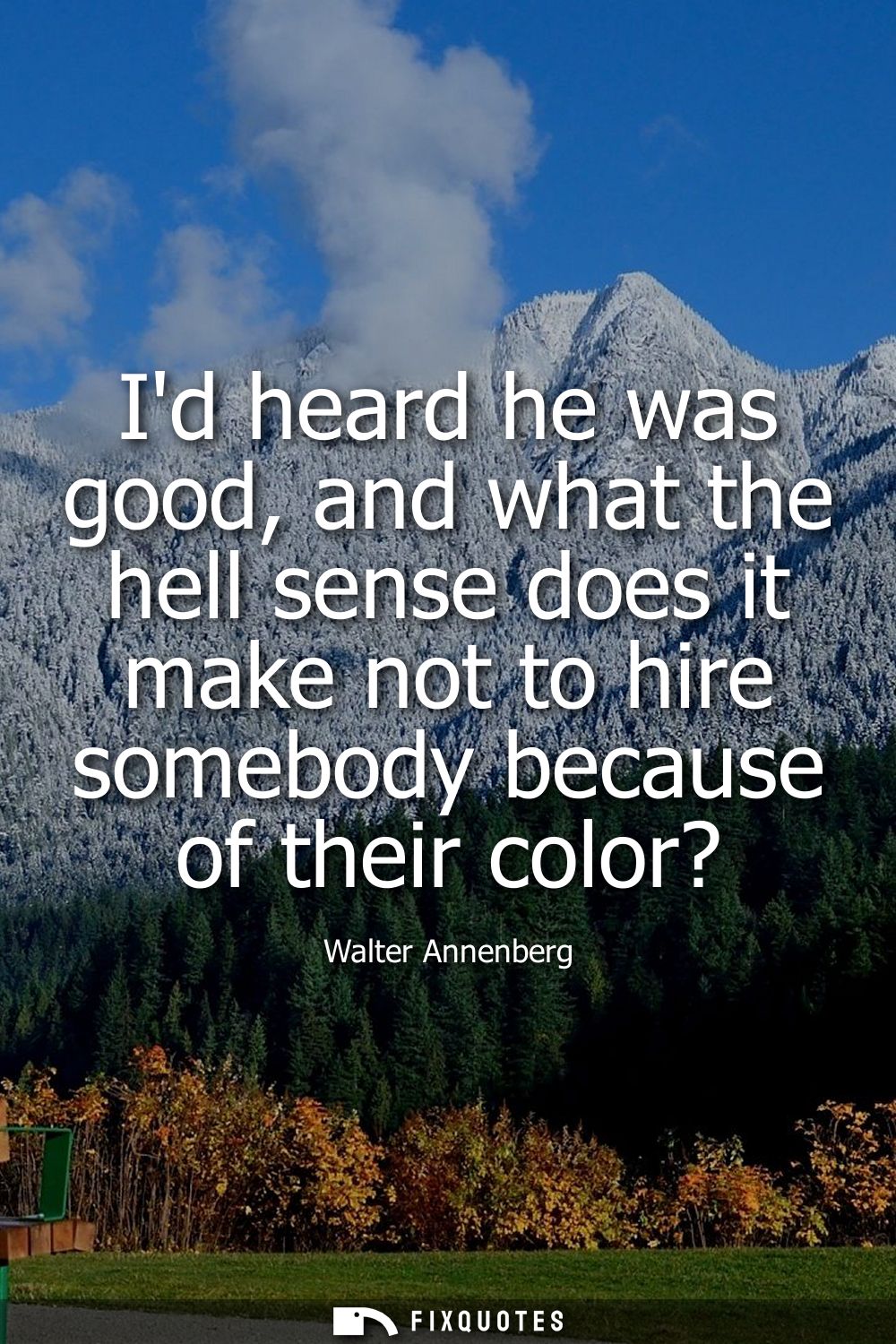
"I'd heard he was good, and what the hell sense does it make not to hire somebody because of their color?"
About this Quote
The profanity (“what the hell”) matters. It’s not performative virtue; it’s irritation, a refusal to dignify discrimination with debate. By framing racism as illogical, Annenberg sidesteps the moral sermon and hits the audience he likely knew best: peers who might rationalize exclusion as “tradition,” “fit,” or “what clients want.” He collapses those euphemisms into an accounting error.
Context sharpens the subtext. Annenberg rose in a 20th-century corporate and media landscape where informal gatekeeping was often as powerful as formal policy, and where hiring - especially into visible roles - was a proxy for belonging. The line hints at a moment when someone “good” was already circulating by reputation, yet the barrier remained color. He positions himself as the guy willing to be modern, efficient, and unembarrassed about it - a small sentence that doubles as a statement of managerial authority: I’m not letting your bias cost me excellence.
Quote Details
| Topic | Equality |
|---|---|
| Source | Help us find the source |
| Cite |
Citation Formats
APA Style (7th ed.)
Annenberg, Walter. (2026, January 16). I'd heard he was good, and what the hell sense does it make not to hire somebody because of their color? FixQuotes. https://fixquotes.com/quotes/id-heard-he-was-good-and-what-the-hell-sense-does-122073/
Chicago Style
Annenberg, Walter. "I'd heard he was good, and what the hell sense does it make not to hire somebody because of their color?" FixQuotes. January 16, 2026. https://fixquotes.com/quotes/id-heard-he-was-good-and-what-the-hell-sense-does-122073/.
MLA Style (9th ed.)
"I'd heard he was good, and what the hell sense does it make not to hire somebody because of their color?" FixQuotes, 16 Jan. 2026, https://fixquotes.com/quotes/id-heard-he-was-good-and-what-the-hell-sense-does-122073/. Accessed 29 Mar. 2026.