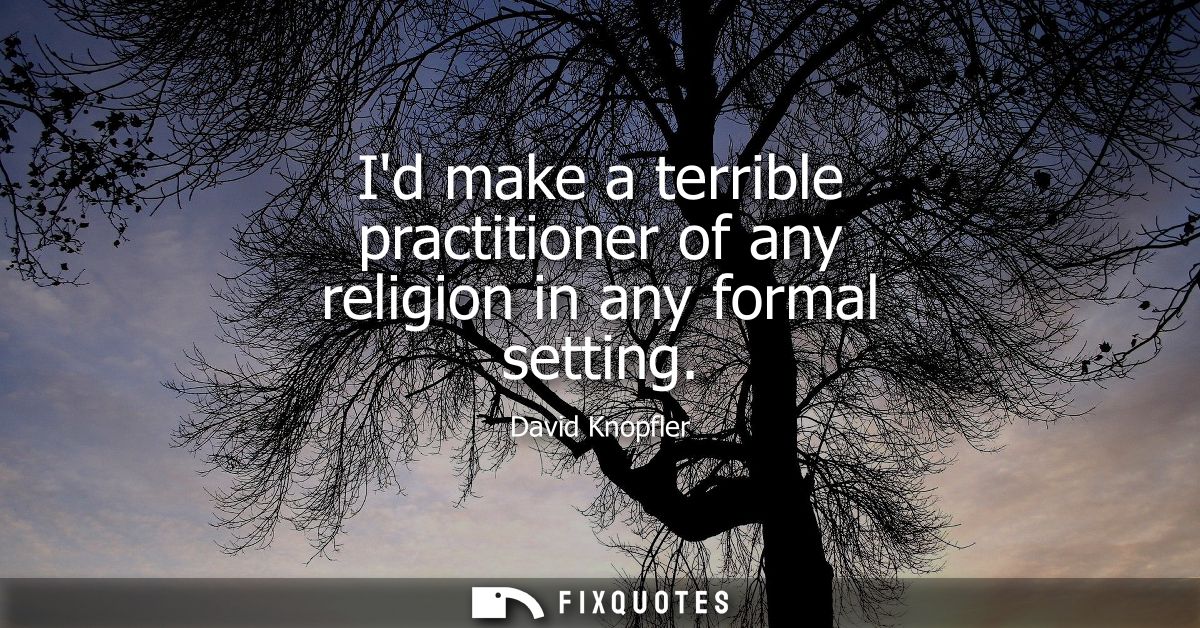
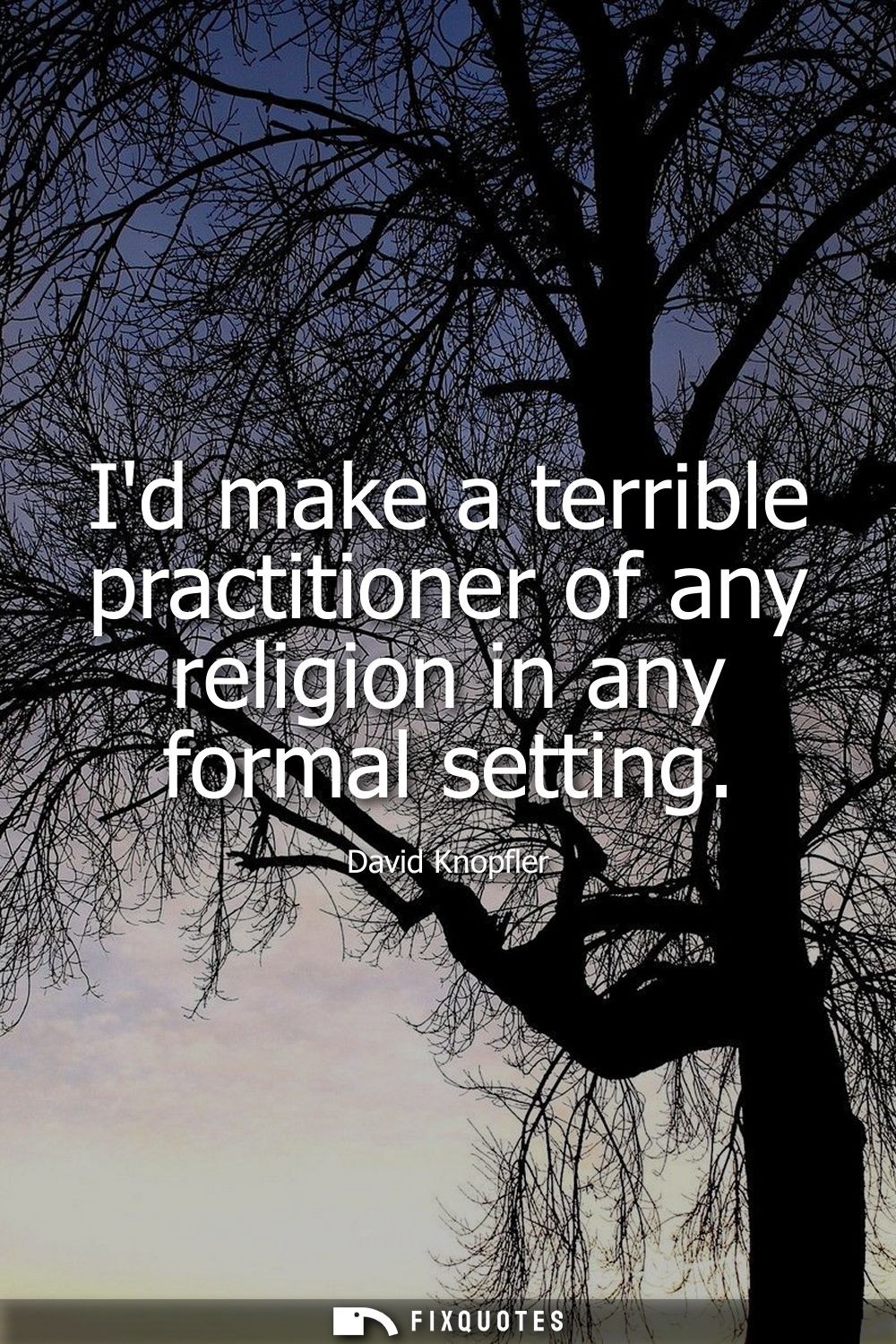
"I'd make a terrible practitioner of any religion in any formal setting"
About this Quote
The subtext is less “I’m an atheist” than “I’m allergic to institutions.” Formal settings come with choreography: standing when told, speaking in unison, accepting the authority of inherited language. For a musician whose job is to translate feeling into sound, that kind of prewritten emotional script can read as counterfeit. He’s protecting a private, improvisational relationship to meaning, the kind that doesn’t survive fluorescent-lit fellowship halls or the moral pressure of group belonging.
Culturally, it’s a quietly punk stance delivered in a mild register: not the dramatic exit from faith, but the refusal to become a “good” member. It also hints at the long post-60s drift toward individualized spirituality, where people keep the questions but ditch the dues. The genius of the sentence is how it lowers the temperature: he doesn’t attack religion; he indicts his own fit for it, making the critique harder to argue with and easier to recognize.
Quote Details
| Topic | Faith |
|---|---|
| Source | Help us find the source |
| Cite |
Citation Formats
APA Style (7th ed.)
Knopfler, David. (2026, January 17). I'd make a terrible practitioner of any religion in any formal setting. FixQuotes. https://fixquotes.com/quotes/id-make-a-terrible-practitioner-of-any-religion-58264/
Chicago Style
Knopfler, David. "I'd make a terrible practitioner of any religion in any formal setting." FixQuotes. January 17, 2026. https://fixquotes.com/quotes/id-make-a-terrible-practitioner-of-any-religion-58264/.
MLA Style (9th ed.)
"I'd make a terrible practitioner of any religion in any formal setting." FixQuotes, 17 Jan. 2026, https://fixquotes.com/quotes/id-make-a-terrible-practitioner-of-any-religion-58264/. Accessed 20 Mar. 2026.