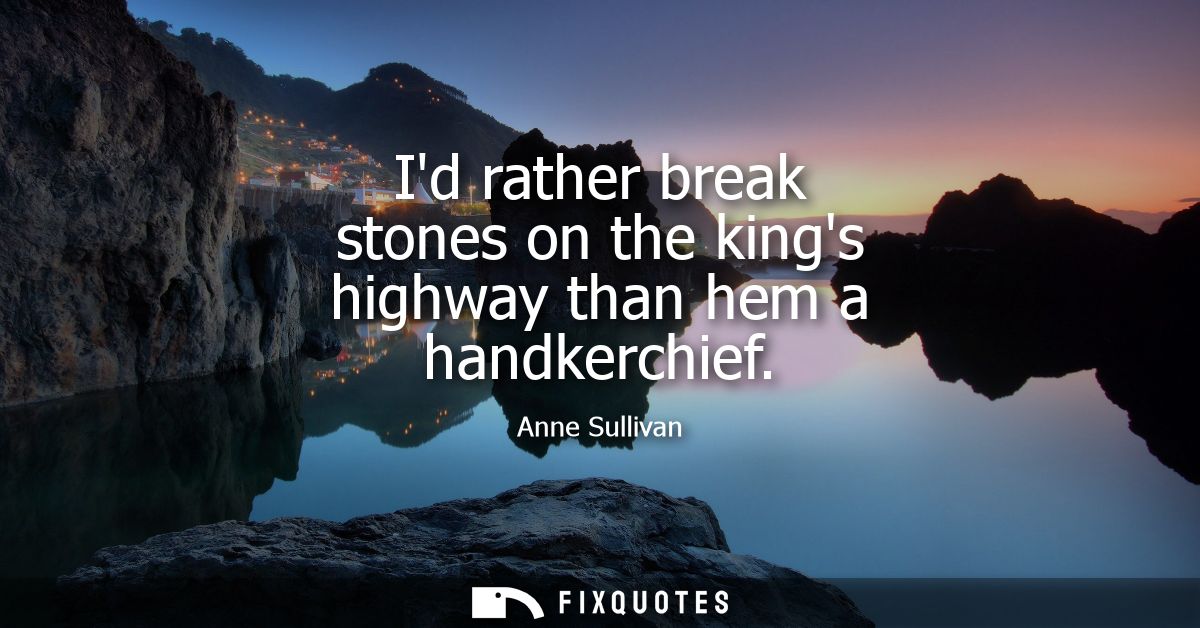
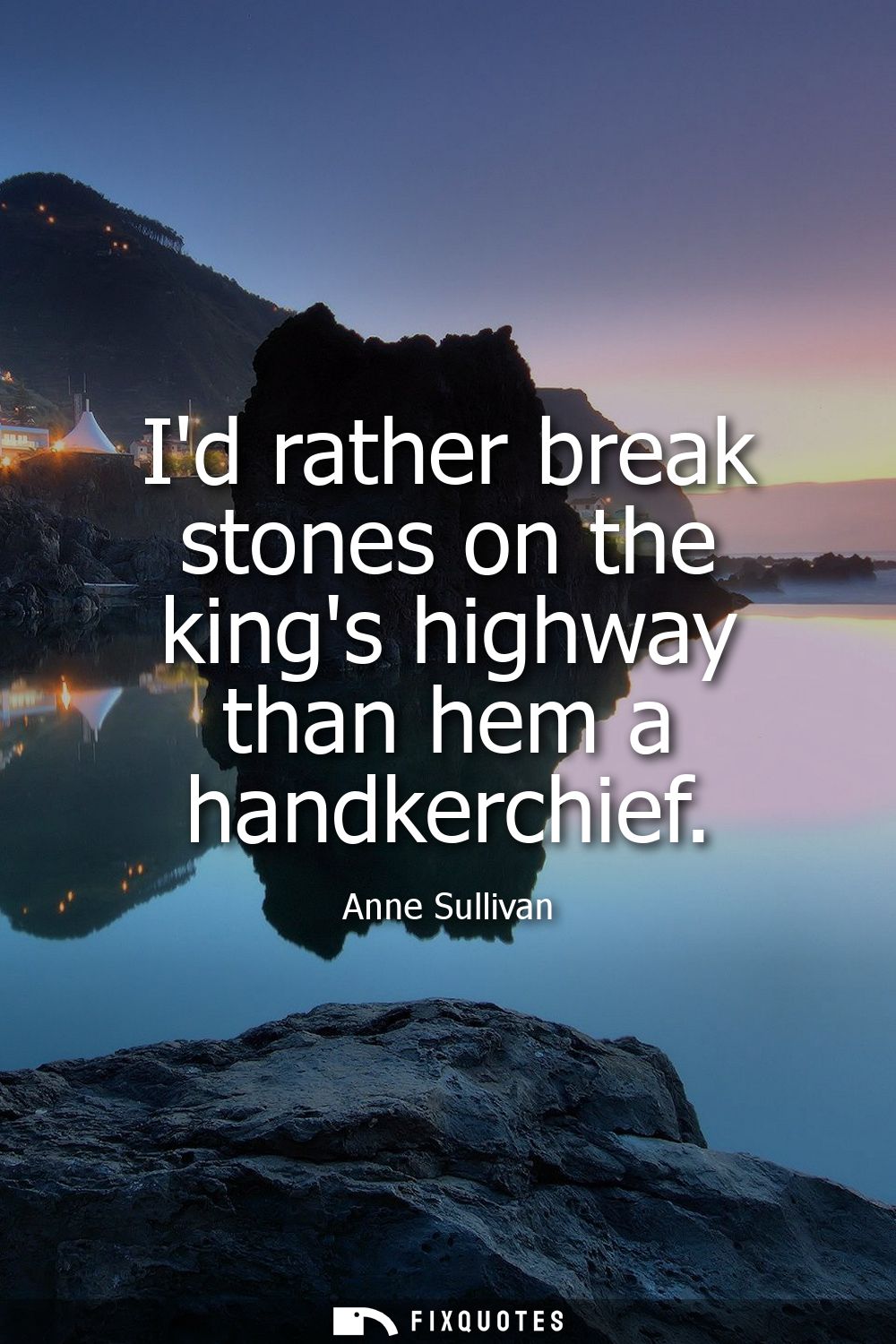
"I'd rather break stones on the king's highway than hem a handkerchief"
About this Quote
The intent reads as refusal. Not of work itself, but of work that makes you smaller. Sullivan, who grew up in poverty and institutional settings before becoming Helen Keller’s teacher and advocate, understood how “proper” roles can function like a velvet restraint. The subtext is bodily autonomy: she’d rather be punished in the open than erased in private. There’s also class bite here. Hemming handkerchiefs suggests genteel, underpaid female labor and the expectation that women’s time is endlessly divisible, endlessly cheap. Breaking stones is at least honest about its cruelty.
“King’s highway” adds a pointed edge: the state can commandeer your labor, but so can custom. Sullivan frames domestic femininity as a kind of monarchy too, one that conscripts women without ever admitting it’s coercion. The sentence lands because it turns a “lesser” job into the more dehumanizing one, and makes freedom sound like sweat and noise.
Quote Details
| Topic | Work Ethic |
|---|---|
| Source | Help us find the source |
| Cite |
Citation Formats
APA Style (7th ed.)
Sullivan, Anne. (2026, January 17). I'd rather break stones on the king's highway than hem a handkerchief. FixQuotes. https://fixquotes.com/quotes/id-rather-break-stones-on-the-kings-highway-than-62859/
Chicago Style
Sullivan, Anne. "I'd rather break stones on the king's highway than hem a handkerchief." FixQuotes. January 17, 2026. https://fixquotes.com/quotes/id-rather-break-stones-on-the-kings-highway-than-62859/.
MLA Style (9th ed.)
"I'd rather break stones on the king's highway than hem a handkerchief." FixQuotes, 17 Jan. 2026, https://fixquotes.com/quotes/id-rather-break-stones-on-the-kings-highway-than-62859/. Accessed 22 Mar. 2026.