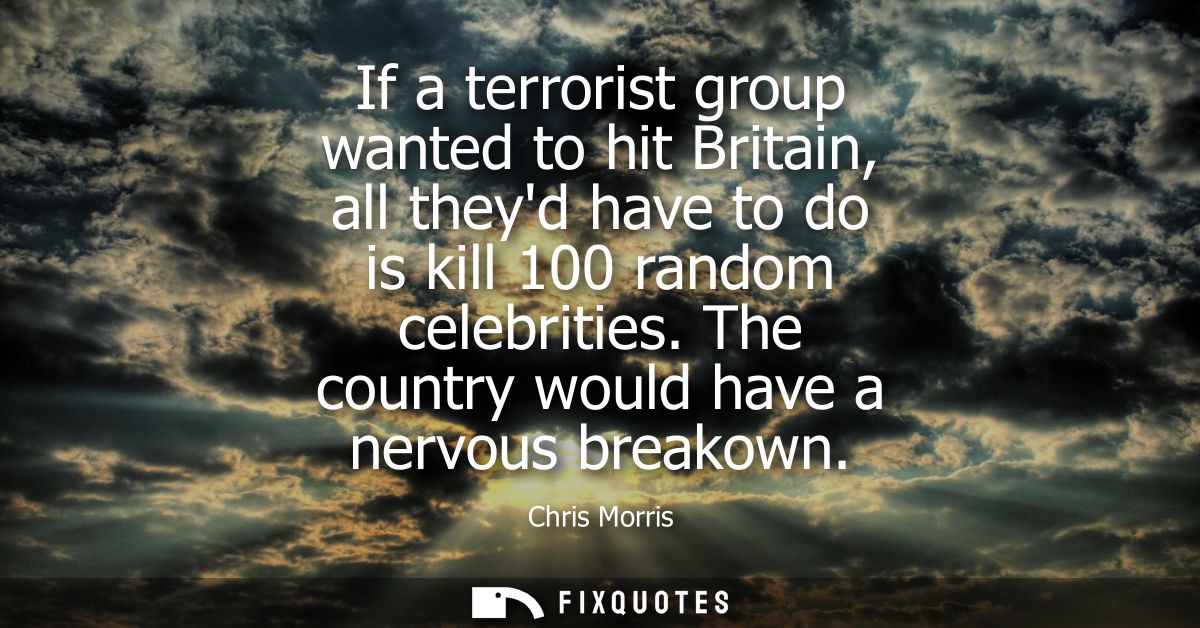
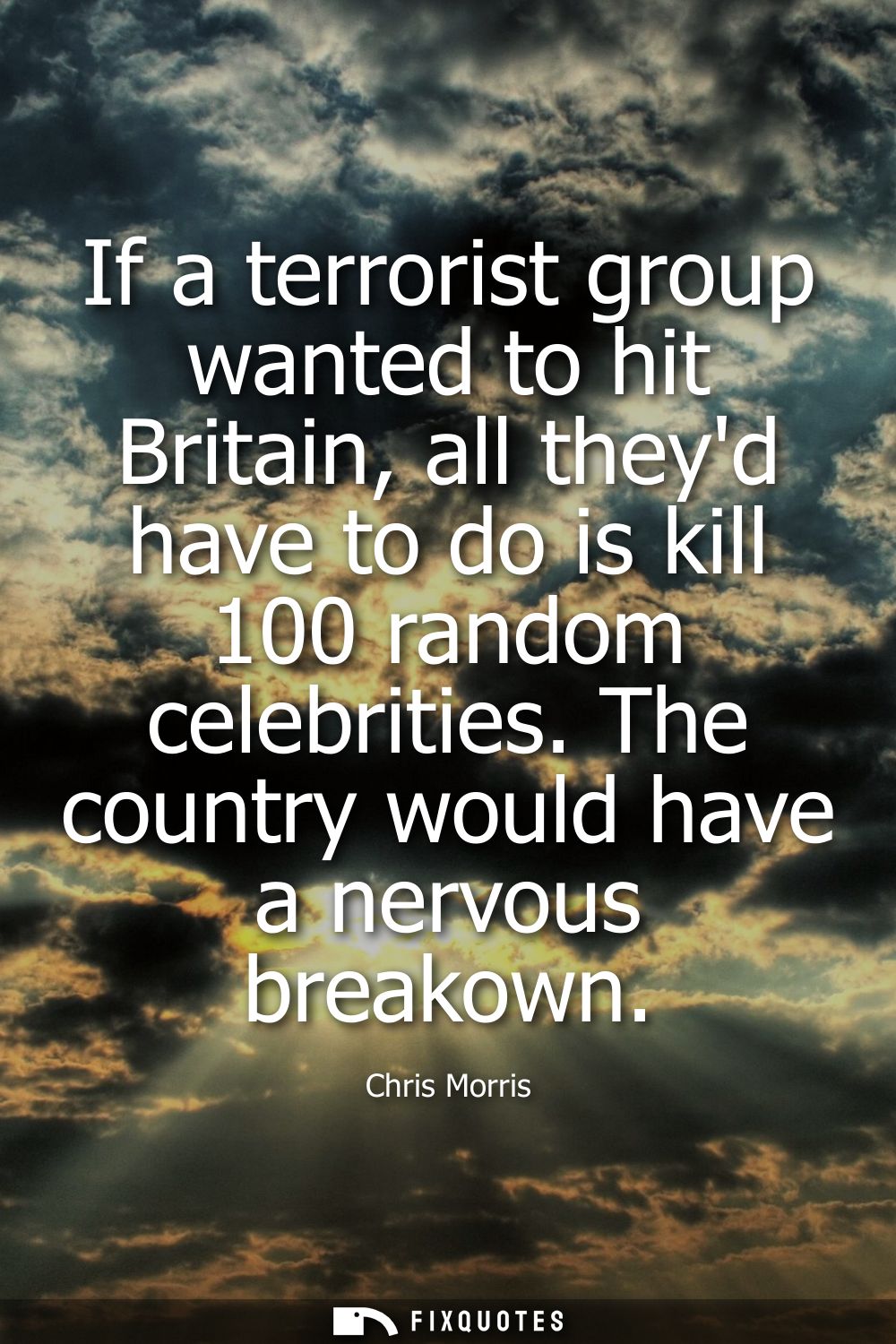
"If a terrorist group wanted to hit Britain, all they'd have to do is kill 100 random celebrities. The country would have a nervous breakown"
About this Quote
The subtext is a critique of mediated solidarity. Celebrities are treated as communal property, a shared set of reference points that knit together a fragmented public. Strip them away and the country, Morris suggests, doesn’t just mourn; it loses the narrative scaffolding that helps it feel coherent. The punchline is that this is a vulnerability created by the attention economy: newsrooms and audiences have trained themselves to treat famous people as both entertainment and emergency, so the emotional escalation is preloaded.
Context matters because Morris is a satirist who made a career skewering moral panics, tabloid appetites, and the performative theatrics of “serious” broadcast culture. The provocation isn’t a literal terror manual; it’s a stress test for Britain’s self-image. The “nervous breakdown” lands as an accusation: not that Britons are uniquely fragile, but that modern national life is organized around celebrity shocks precisely because they’re easier to package than slow, structural crises.
Quote Details
| Topic | Dark Humor |
|---|---|
| Source | Help us find the source |
| Cite |
Citation Formats
APA Style (7th ed.)
Morris, Chris. (2026, January 17). If a terrorist group wanted to hit Britain, all they'd have to do is kill 100 random celebrities. The country would have a nervous breakown. FixQuotes. https://fixquotes.com/quotes/if-a-terrorist-group-wanted-to-hit-britain-all-51045/
Chicago Style
Morris, Chris. "If a terrorist group wanted to hit Britain, all they'd have to do is kill 100 random celebrities. The country would have a nervous breakown." FixQuotes. January 17, 2026. https://fixquotes.com/quotes/if-a-terrorist-group-wanted-to-hit-britain-all-51045/.
MLA Style (9th ed.)
"If a terrorist group wanted to hit Britain, all they'd have to do is kill 100 random celebrities. The country would have a nervous breakown." FixQuotes, 17 Jan. 2026, https://fixquotes.com/quotes/if-a-terrorist-group-wanted-to-hit-britain-all-51045/. Accessed 31 Mar. 2026.