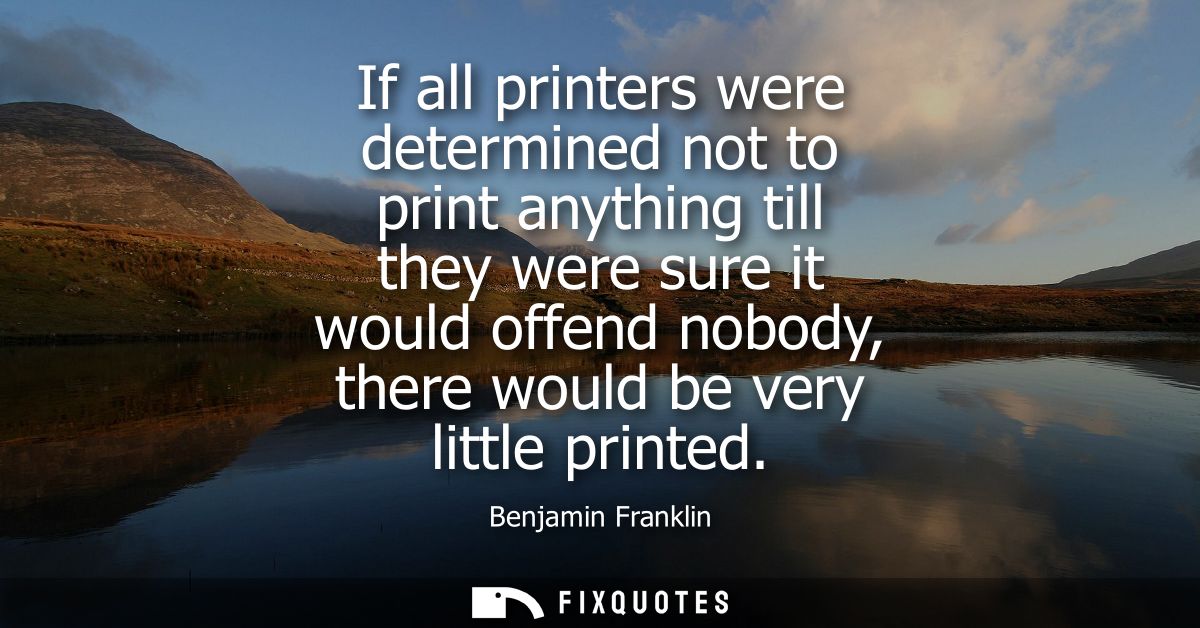
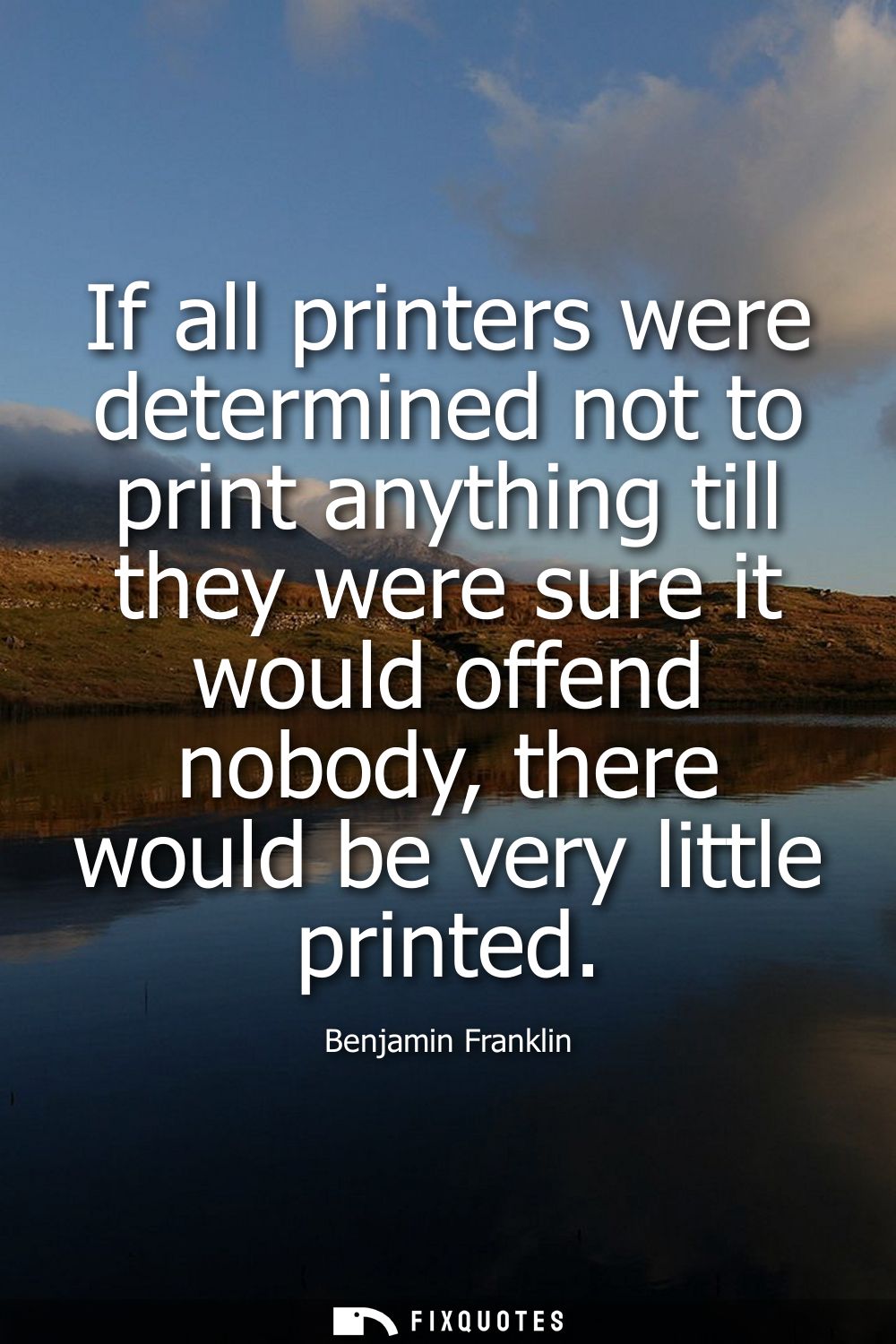
"If all printers were determined not to print anything till they were sure it would offend nobody, there would be very little printed"
About this Quote
The line is also a shrewd rebuke to self-censorship disguised as decency. Franklin spots the moral pose: the printer who claims he’s only avoiding offense is often avoiding risk. “Offend nobody” sounds like civility; Franklin reveals it as cowardice with good manners. His tone is lightly comic, but the subtext is hard-edged: a public that demands not to be disturbed will end up uneducated, and leaders who fear controversy will find it easier to manage that public.
Context matters: Franklin lived in an era when printers were political actors, not neutral service providers. Pamphlets, broadsides, and newspapers were the bloodstream of revolutionary argument, and authorities knew it. His point is less about protecting speech everyone likes than preserving the messy ecosystem that makes democratic conflict possible. The punchline - “very little printed” - is an empirical warning: a culture that mistakes “inoffensive” for “responsible” chooses stagnation, and calls it virtue.
Quote Details
| Topic | Freedom |
|---|---|
| Source | Help us find the source |
| Cite |
Citation Formats
APA Style (7th ed.)
Franklin, Benjamin. (2026, January 17). If all printers were determined not to print anything till they were sure it would offend nobody, there would be very little printed. FixQuotes. https://fixquotes.com/quotes/if-all-printers-were-determined-not-to-print-25501/
Chicago Style
Franklin, Benjamin. "If all printers were determined not to print anything till they were sure it would offend nobody, there would be very little printed." FixQuotes. January 17, 2026. https://fixquotes.com/quotes/if-all-printers-were-determined-not-to-print-25501/.
MLA Style (9th ed.)
"If all printers were determined not to print anything till they were sure it would offend nobody, there would be very little printed." FixQuotes, 17 Jan. 2026, https://fixquotes.com/quotes/if-all-printers-were-determined-not-to-print-25501/. Accessed 11 Mar. 2026.