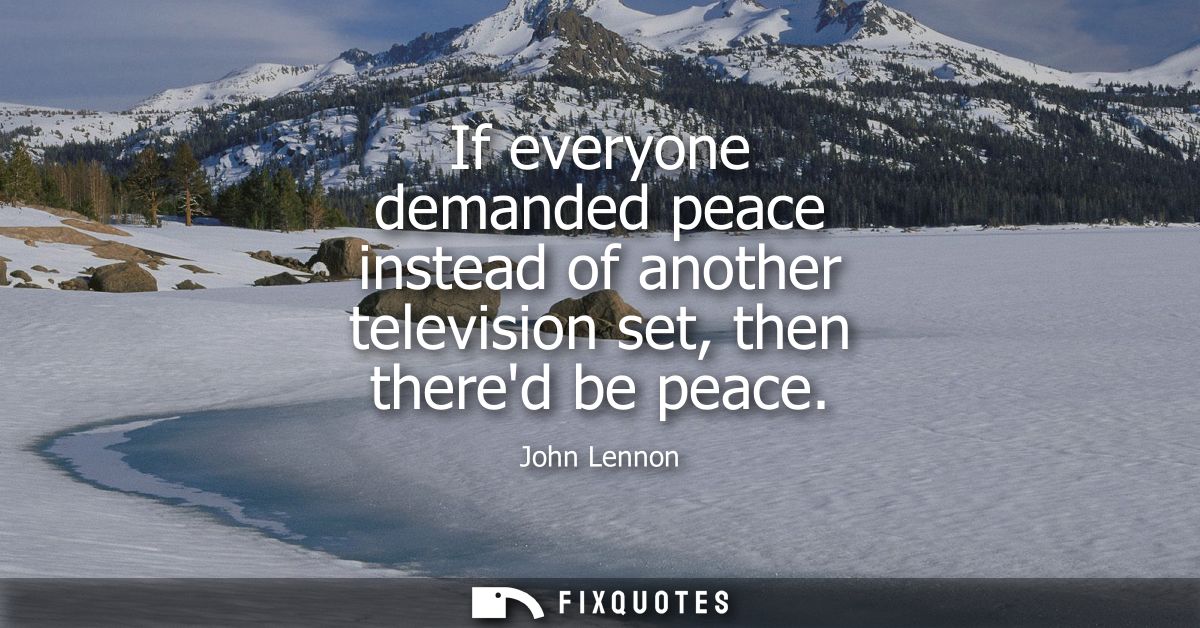
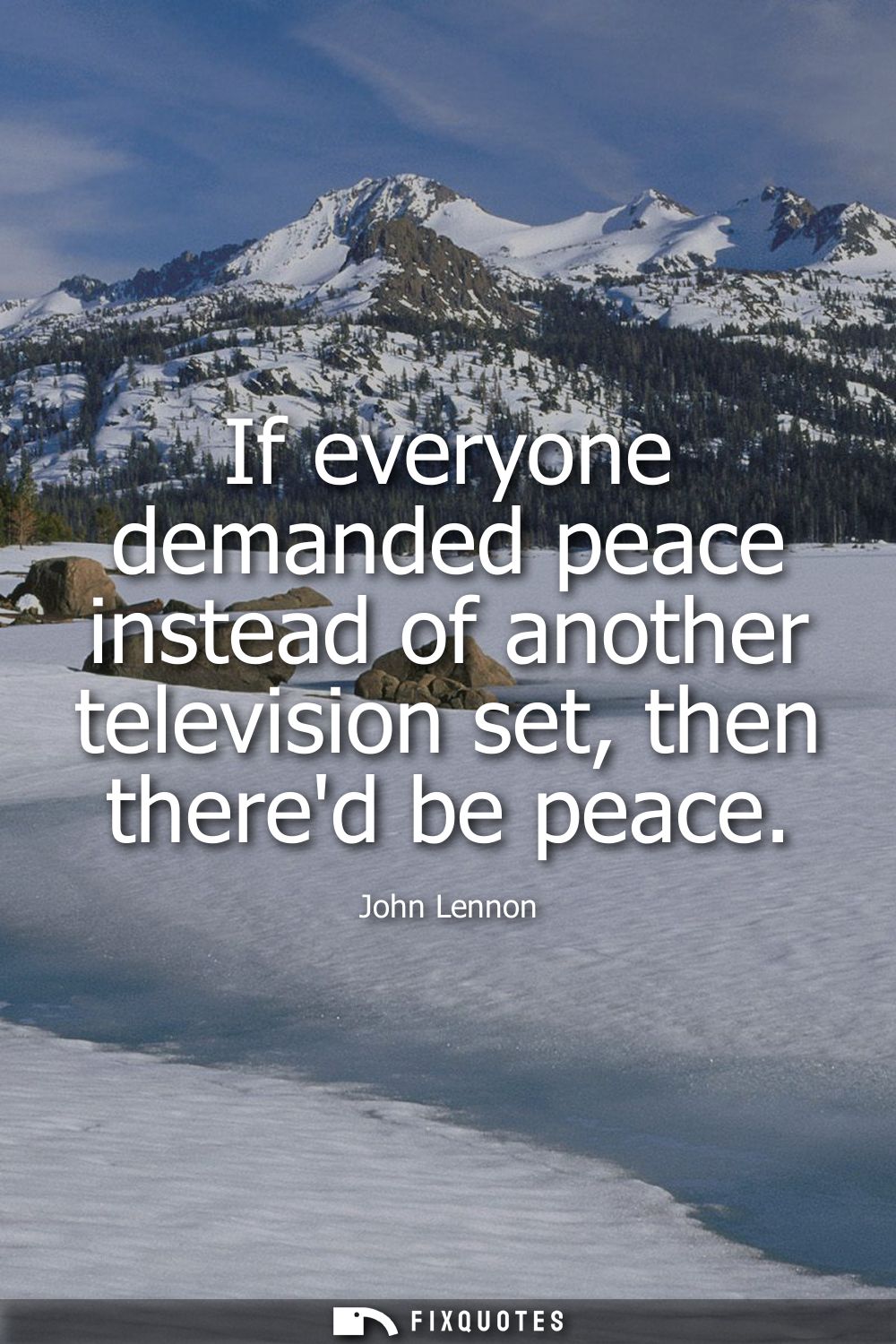
"If everyone demanded peace instead of another television set, then there'd be peace"
About this Quote
The subtext is accusation disguised as optimism. “If everyone” is utopian on its face, but it also functions as a mirror: you, yes you, are part of the “everyone” that keeps choosing the next upgrade over the harder, slower work of solidarity. By naming “another television set,” Lennon doesn’t just dunk on materialism; he points at the machinery that sells comfort and distraction while normalizing violence at a safe distance. The TV is both the commodity and the conduit - the thing you buy and the thing that teaches you to want buying.
Context sharpens the provocation. Coming out of the late 60s and early 70s - Vietnam, mass protest, a youth culture learning its own power and its own limits - Lennon is translating political rage into a mass-audience idiom. It’s not policy analysis; it’s pressure applied to the cultural nerve. The line works because it’s embarrassingly plausible: peace isn’t only negotiated in summits, it’s negotiated in budgets, attention, and appetite. Lennon turns the dream into a receipt and asks who’s paying.
Quote Details
| Topic | Peace |
|---|---|
| Source | Help us find the source |
| Cite |
Citation Formats
APA Style (7th ed.)
Lennon, John. (2026, January 17). If everyone demanded peace instead of another television set, then there'd be peace. FixQuotes. https://fixquotes.com/quotes/if-everyone-demanded-peace-instead-of-another-24847/
Chicago Style
Lennon, John. "If everyone demanded peace instead of another television set, then there'd be peace." FixQuotes. January 17, 2026. https://fixquotes.com/quotes/if-everyone-demanded-peace-instead-of-another-24847/.
MLA Style (9th ed.)
"If everyone demanded peace instead of another television set, then there'd be peace." FixQuotes, 17 Jan. 2026, https://fixquotes.com/quotes/if-everyone-demanded-peace-instead-of-another-24847/. Accessed 7 Apr. 2026.