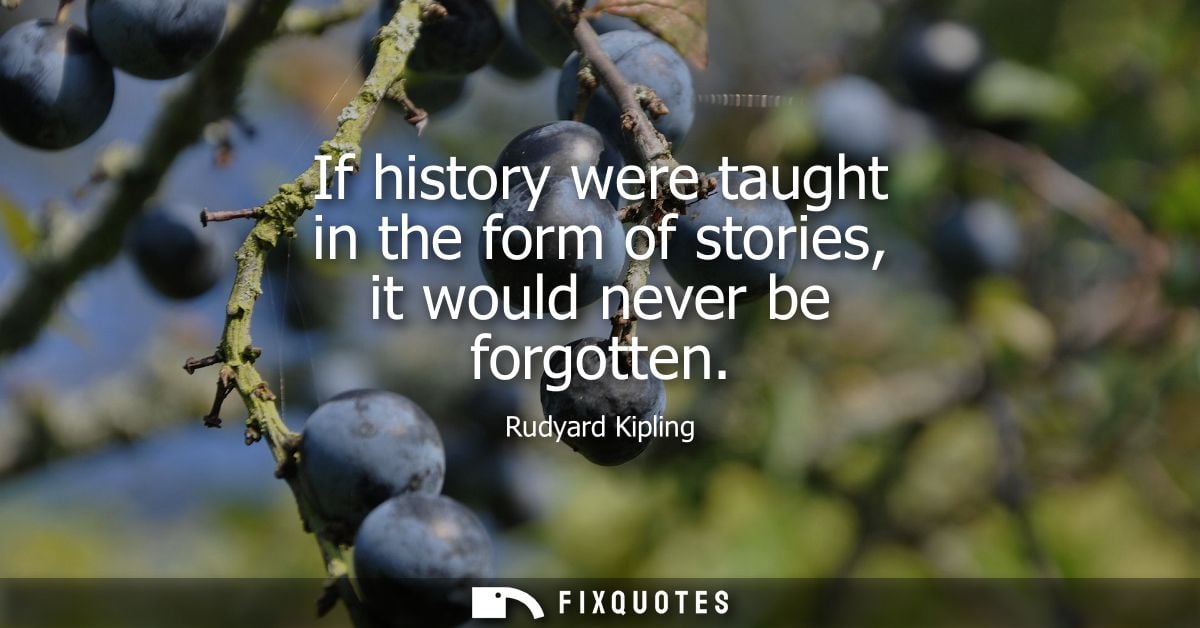
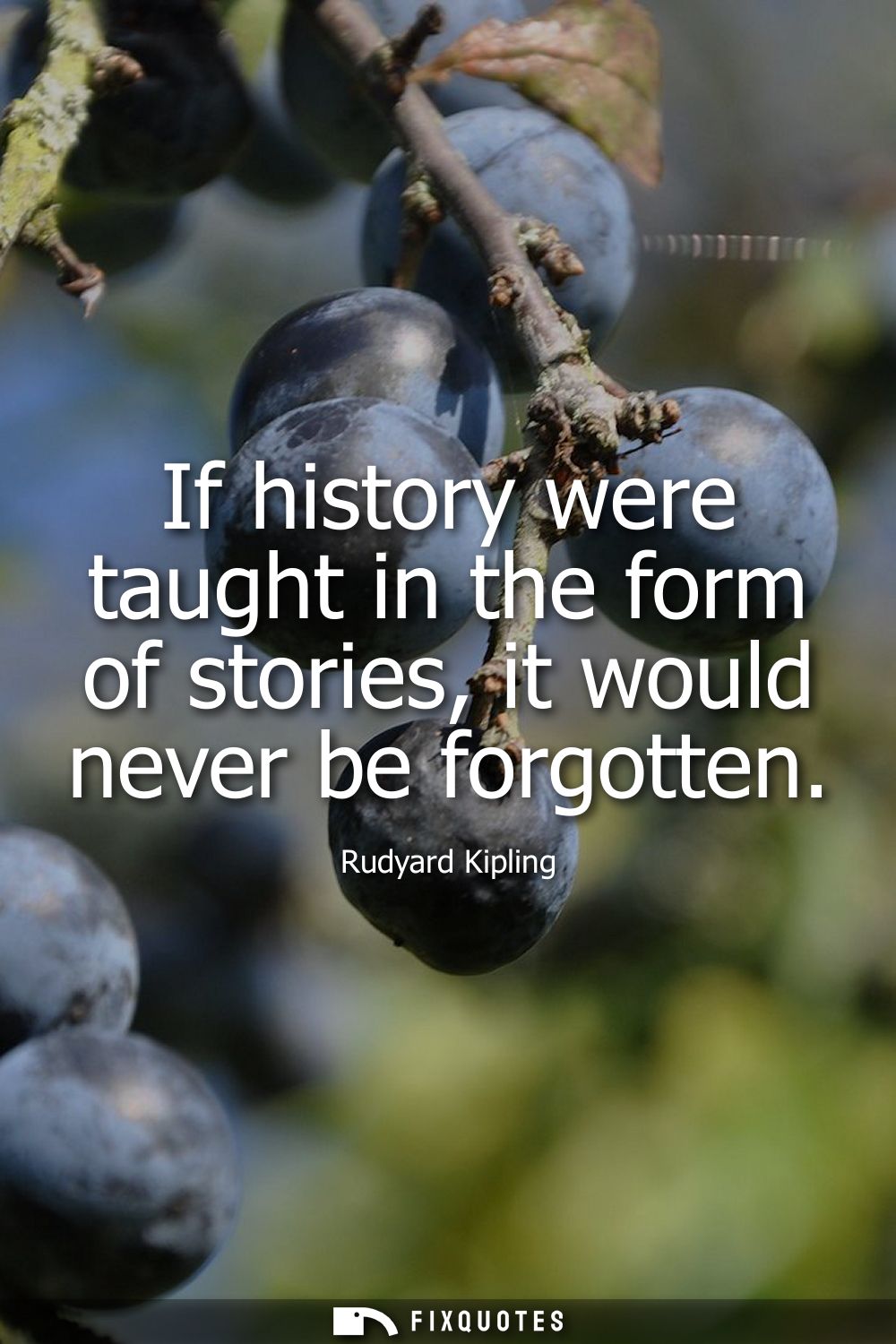
"If history were taught in the form of stories, it would never be forgotten"
About this Quote
The subtext is more pointed: whoever controls the story controls what gets remembered. Kipling isn’t just praising storytelling as a teaching hack; he’s quietly naming it as a cultural technology, one that turns selective facts into durable belief. That’s why the line flatters educators and warns them at the same time. Story is sticky precisely because it’s persuasive. It doesn’t merely transmit information; it manufactures meaning, assigning heroes, villains, and lessons that can outlive the messy record.
Context matters. Kipling wrote at the height of the British Empire, when “history” was often a legitimizing myth as much as a discipline. Imperial projects depended on narratives of destiny, civilizing missions, brave administrators, and grateful subjects. His own fiction helped circulate those frames. Read that way, the quote doubles as a blueprint for soft power: make the past feel inevitable and you make the present feel justified.
It still lands today because we live inside competing story-machines: podcasts, prestige TV, TikTok explainers. The fight over history is, as Kipling implies, a fight over narrative form.
Quote Details
| Topic | Teaching |
|---|---|
| Source | Help us find the source |
| Cite |
Citation Formats
APA Style (7th ed.)
Kipling, Rudyard. (2026, January 14). If history were taught in the form of stories, it would never be forgotten. FixQuotes. https://fixquotes.com/quotes/if-history-were-taught-in-the-form-of-stories-it-12345/
Chicago Style
Kipling, Rudyard. "If history were taught in the form of stories, it would never be forgotten." FixQuotes. January 14, 2026. https://fixquotes.com/quotes/if-history-were-taught-in-the-form-of-stories-it-12345/.
MLA Style (9th ed.)
"If history were taught in the form of stories, it would never be forgotten." FixQuotes, 14 Jan. 2026, https://fixquotes.com/quotes/if-history-were-taught-in-the-form-of-stories-it-12345/. Accessed 12 Feb. 2026.