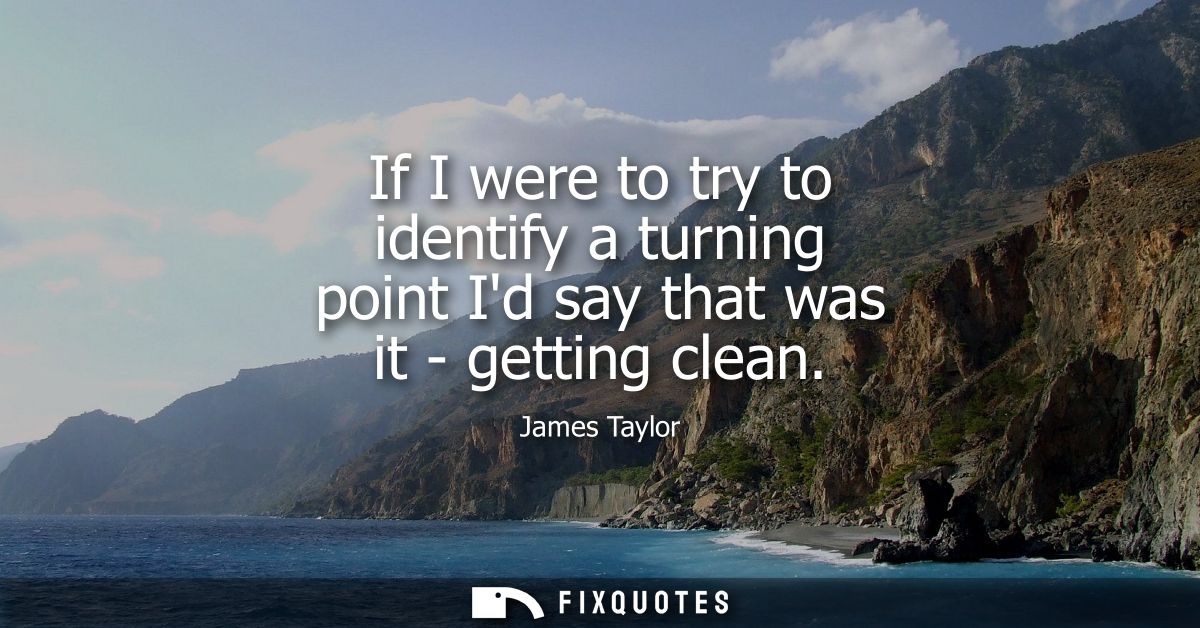
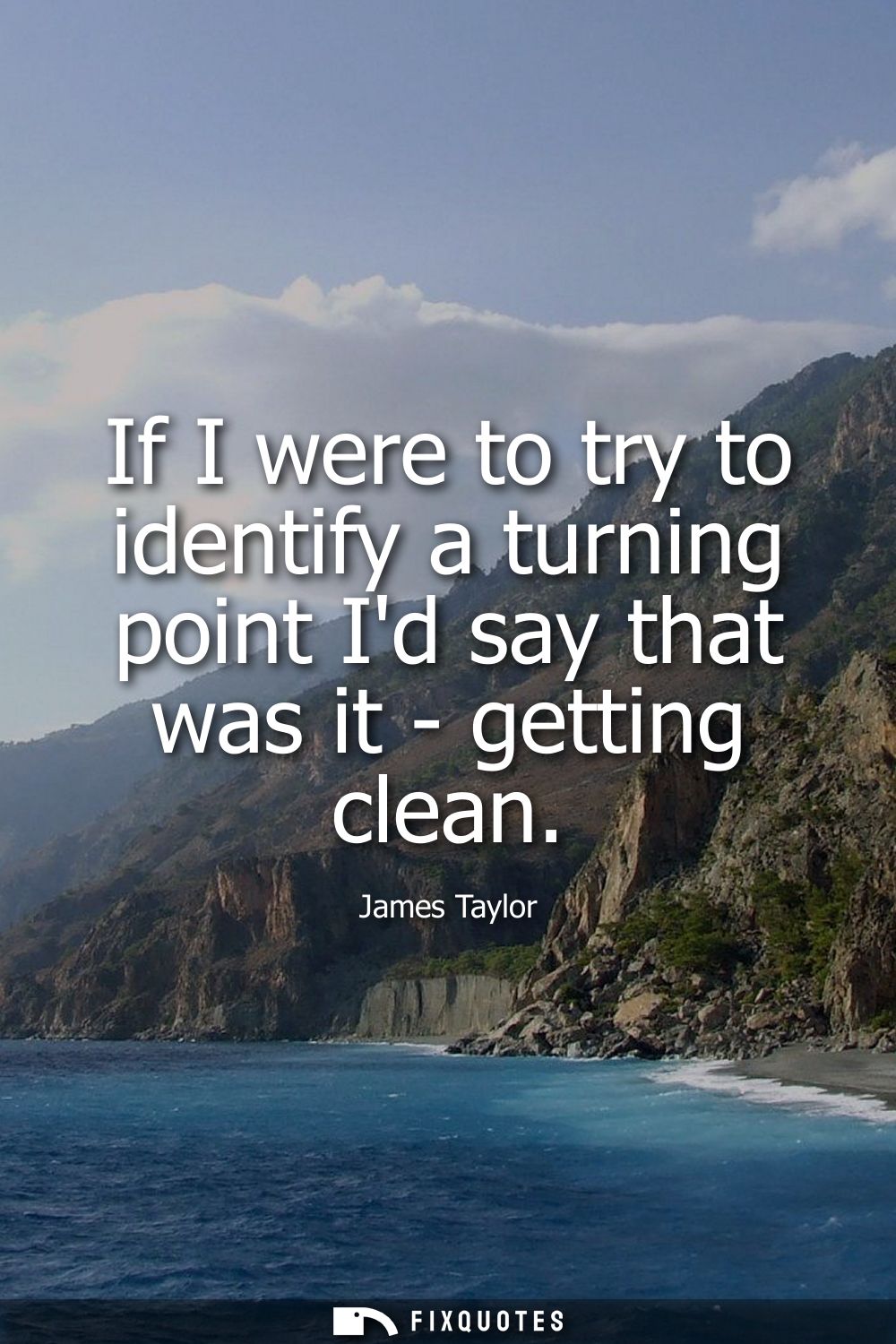
"If I were to try to identify a turning point I'd say that was it - getting clean"
About this Quote
“Getting clean” is blunt, almost deliberately unsentimental. No poetic metaphor, no album-title flourish. For a musician whose public identity is often wrapped in warmth and ease, the phrase punctures the soft-focus myth: the gentle voice came from a life that, at least for a stretch, wasn’t gentle at all. The subtext is control. Addiction is chaos, and “getting clean” is not just moral improvement; it’s the recovery of agency, craft, and time. It implies a return to the ability to show up, to finish songs, to sustain relationships, to be present inside his own talent instead of merely orbiting it.
Context matters because Taylor is a survivor of an era when celebrity and substance were practically co-branded, when heroin in particular carried a grim glamour right up until it didn’t. By naming sobriety as the pivot, he subtly revises the romantic “tortured artist” script. The turning point isn’t inspiration striking; it’s the unglamorous decision to stay alive long enough to have a career worth mythologizing.
Quote Details
| Topic | New Beginnings |
|---|---|
| Source | Help us find the source |
| Cite |
Citation Formats
APA Style (7th ed.)
Taylor, James. (2026, January 17). If I were to try to identify a turning point I'd say that was it - getting clean. FixQuotes. https://fixquotes.com/quotes/if-i-were-to-try-to-identify-a-turning-point-id-79907/
Chicago Style
Taylor, James. "If I were to try to identify a turning point I'd say that was it - getting clean." FixQuotes. January 17, 2026. https://fixquotes.com/quotes/if-i-were-to-try-to-identify-a-turning-point-id-79907/.
MLA Style (9th ed.)
"If I were to try to identify a turning point I'd say that was it - getting clean." FixQuotes, 17 Jan. 2026, https://fixquotes.com/quotes/if-i-were-to-try-to-identify-a-turning-point-id-79907/. Accessed 15 Mar. 2026.