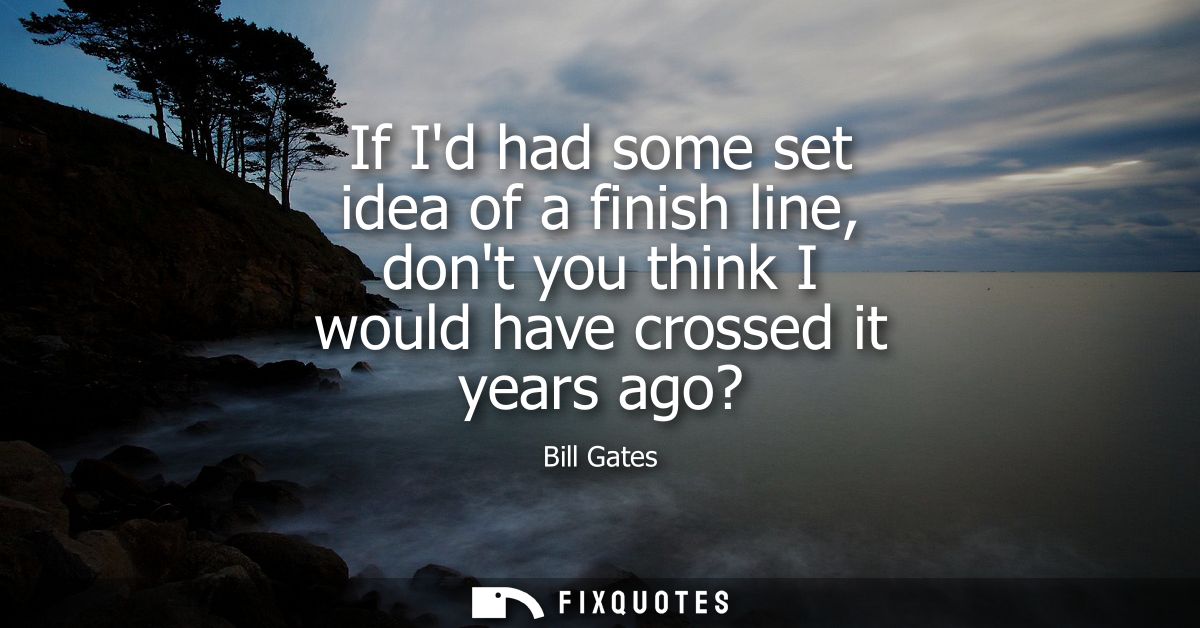
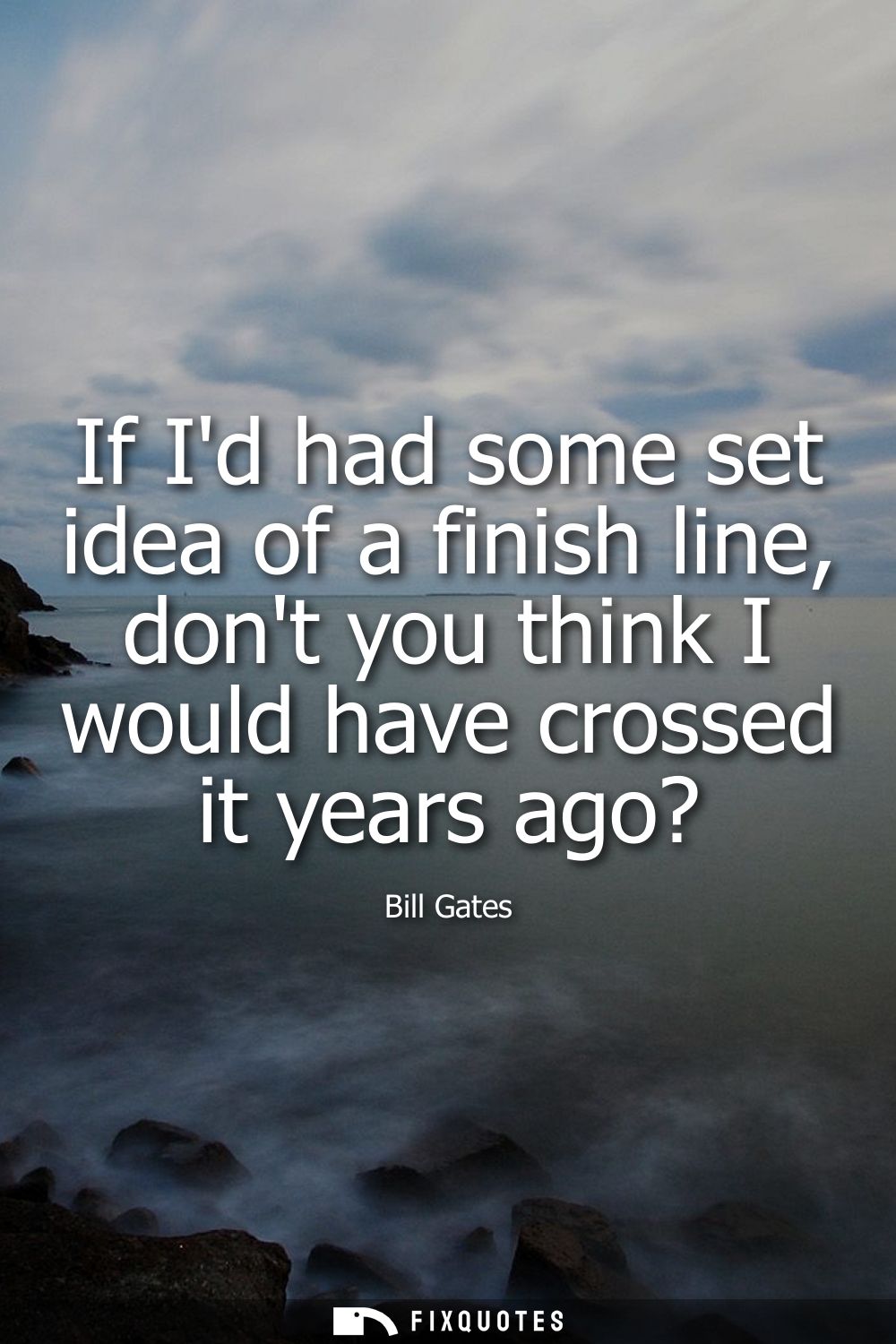
"If I'd had some set idea of a finish line, don't you think I would have crossed it years ago?"
About this Quote
The subtext is that for a certain class of builder-turned-philanthropist, success isn’t a destination but a machinery that keeps demanding new inputs. Gates’ career arc - software dominance, then a second act in global health and education - makes the “finish line” metaphor especially pointed. The wealth and status that would close the story for most people become, in his framing, just the point where the plot can escalate. He’s not describing restlessness as a personality quirk; he’s normalizing perpetual motion as a rational response to scale. When you can fund vaccines or reshape school systems, stopping starts to look less like self-care and more like negligence.
There’s also an implicit defense here against critiques of billionaire overreach: if there’s no finish line, there’s no tidy moment to step aside. The question doubles as permission and provocation - permission to keep playing, provocation to rethink why we expect anyone with outsized power to ever feel “done.”
Quote Details
| Topic | Goal Setting |
|---|---|
| Source | Help us find the source |
| Cite |
Citation Formats
APA Style (7th ed.)
Gates, Bill. (2026, January 18). If I'd had some set idea of a finish line, don't you think I would have crossed it years ago? FixQuotes. https://fixquotes.com/quotes/if-id-had-some-set-idea-of-a-finish-line-dont-you-17651/
Chicago Style
Gates, Bill. "If I'd had some set idea of a finish line, don't you think I would have crossed it years ago?" FixQuotes. January 18, 2026. https://fixquotes.com/quotes/if-id-had-some-set-idea-of-a-finish-line-dont-you-17651/.
MLA Style (9th ed.)
"If I'd had some set idea of a finish line, don't you think I would have crossed it years ago?" FixQuotes, 18 Jan. 2026, https://fixquotes.com/quotes/if-id-had-some-set-idea-of-a-finish-line-dont-you-17651/. Accessed 5 Apr. 2026.