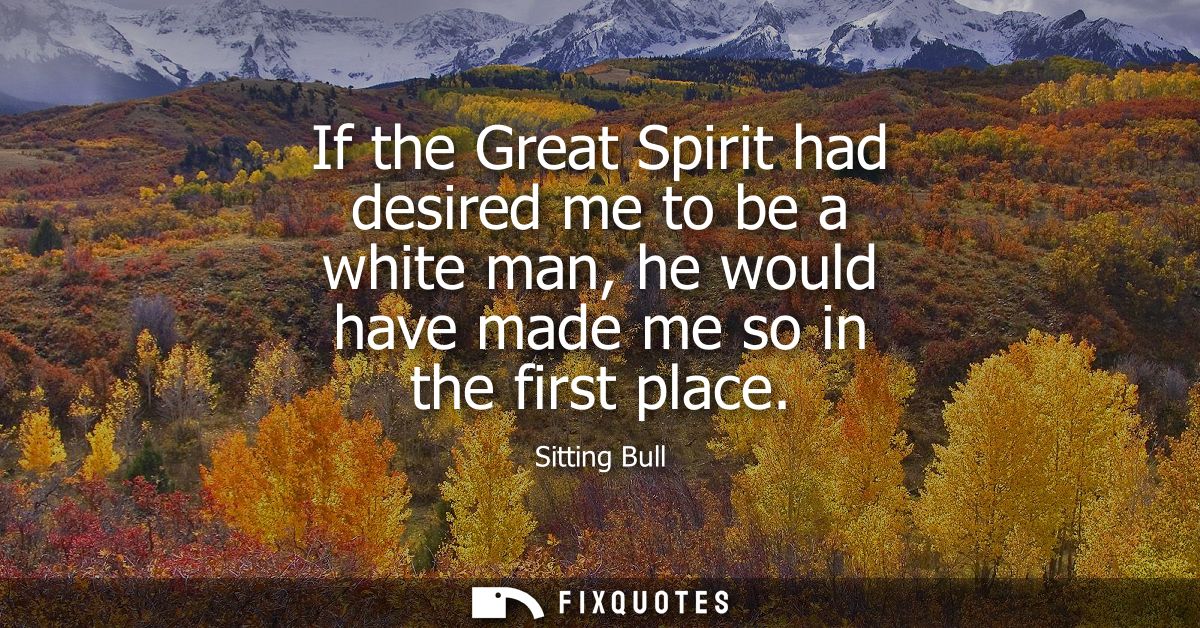
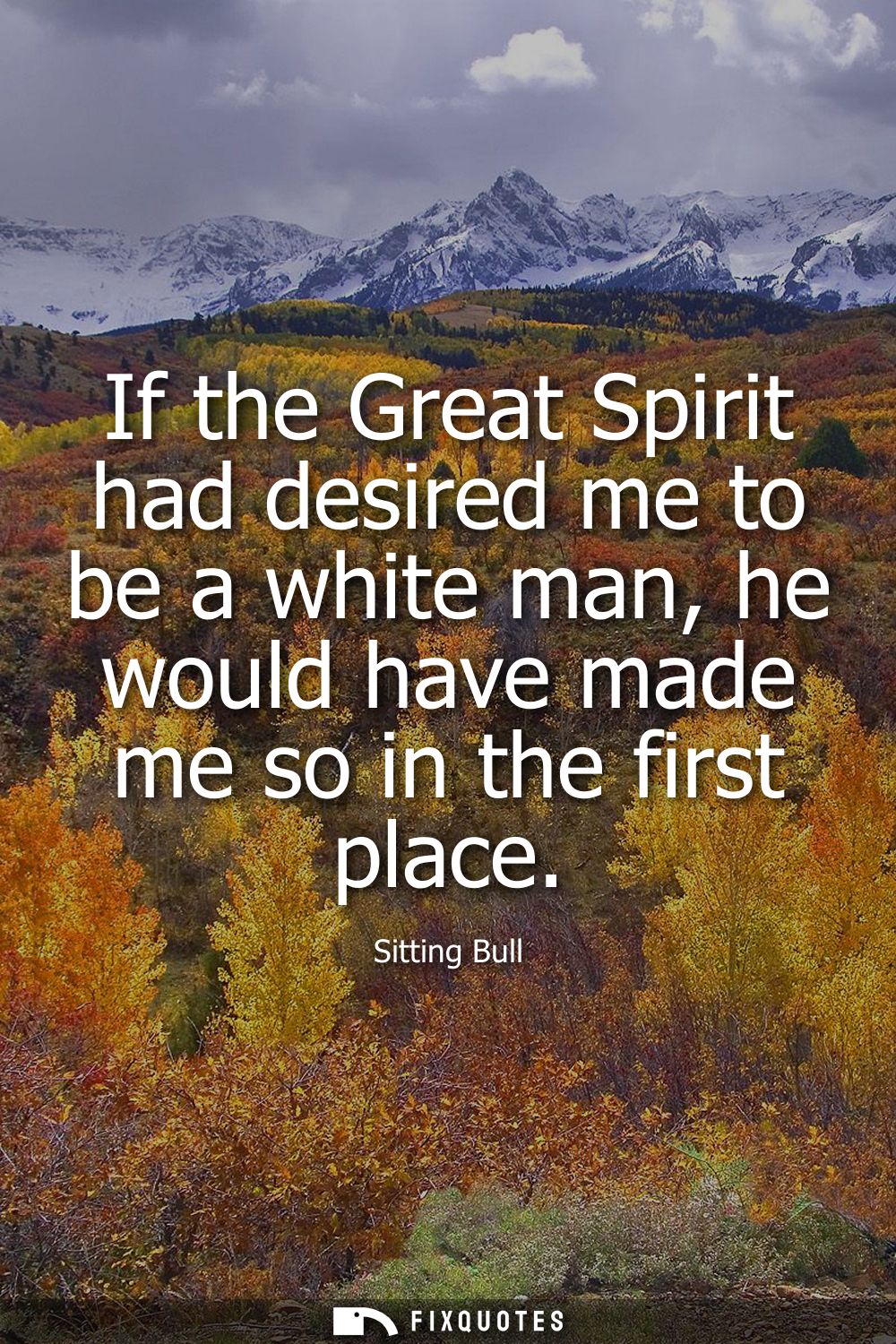
"If the Great Spirit had desired me to be a white man, he would have made me so in the first place"
About this Quote
The intent is political, not merely personal. In the late 19th century, U.S. policy and missionary pressure worked in tandem to remake Indigenous life: land allotments, boarding schools, enforced Christianity, the slow violence of "kill the Indian, save the man". Sitting Bull answers with a blunt counter-theory of identity: if transformation were divine, it would be original. The subtext is sharper: your demand that I change is not progress; it’s arrogance masquerading as salvation.
What makes the quote work is its economy. It avoids the trap of pleading for tolerance on white terms. Instead, it asserts a Native legitimacy that doesn’t require validation from Washington or a pulpit. It’s also a strategic inversion of power: the speaker frames whiteness as merely one contingent form among others, not the default human setting. Under the calm fatalism is a warning - attempts to forcibly edit a people will be met with resistance grounded in something deeper than policy: an un-negotiable claim to being.
Quote Details
| Topic | Native American Sayings |
|---|---|
| Source | Help us find the source |
| Cite |
Citation Formats
APA Style (7th ed.)
Bull, Sitting. (2026, January 18). If the Great Spirit had desired me to be a white man, he would have made me so in the first place. FixQuotes. https://fixquotes.com/quotes/if-the-great-spirit-had-desired-me-to-be-a-white-22545/
Chicago Style
Bull, Sitting. "If the Great Spirit had desired me to be a white man, he would have made me so in the first place." FixQuotes. January 18, 2026. https://fixquotes.com/quotes/if-the-great-spirit-had-desired-me-to-be-a-white-22545/.
MLA Style (9th ed.)
"If the Great Spirit had desired me to be a white man, he would have made me so in the first place." FixQuotes, 18 Jan. 2026, https://fixquotes.com/quotes/if-the-great-spirit-had-desired-me-to-be-a-white-22545/. Accessed 4 Apr. 2026.