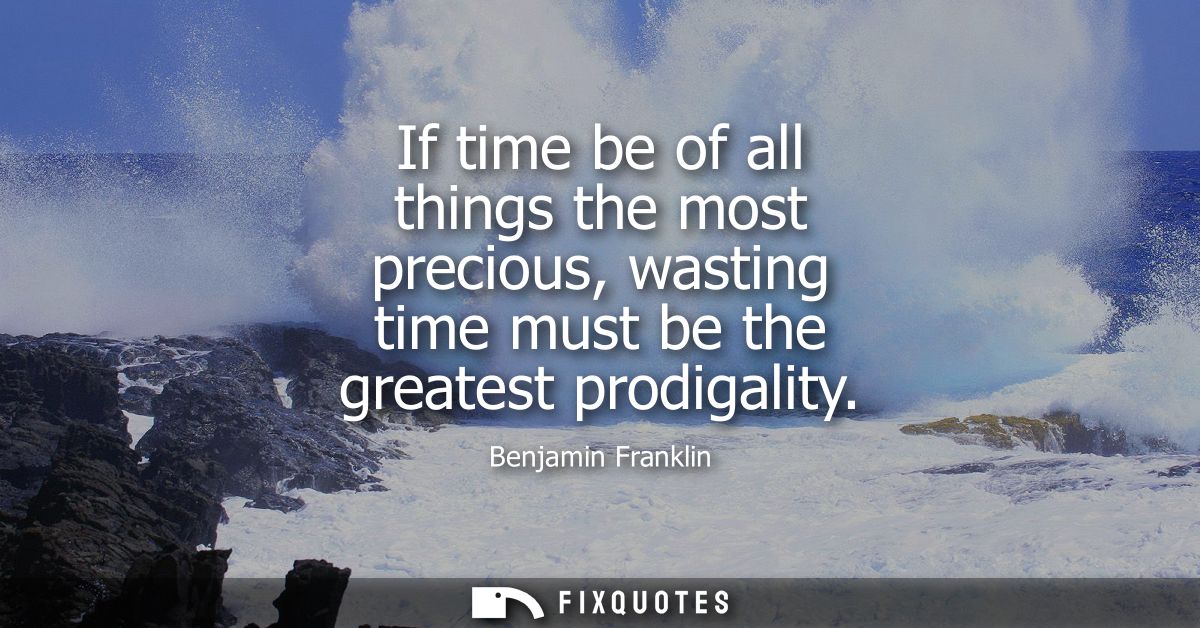
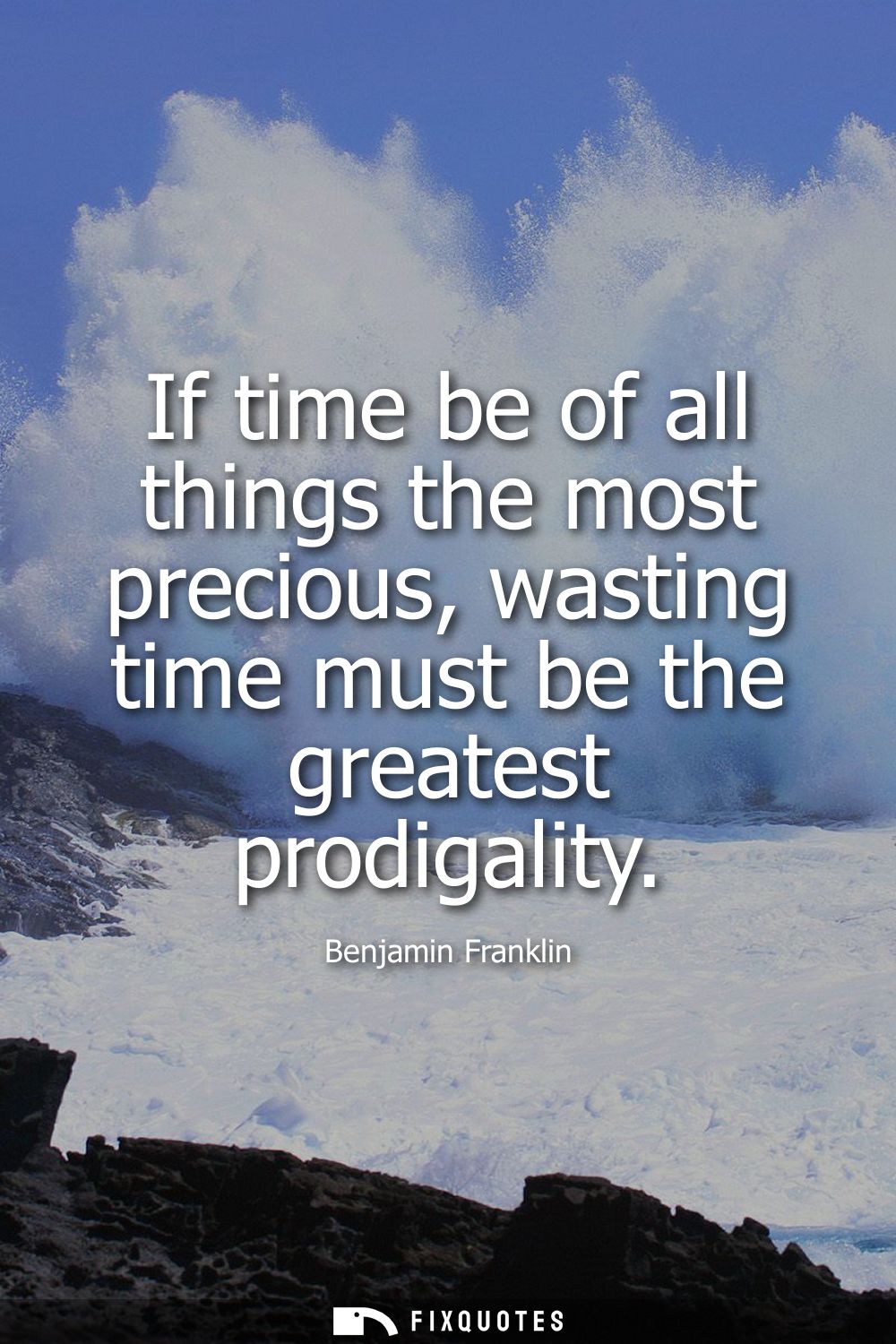
"If time be of all things the most precious, wasting time must be the greatest prodigality"
About this Quote
The intent is partly personal discipline and partly nation-building. Franklin helped popularize a Protestant-inflected ethic where diligence isn’t just admirable; it’s socially useful. In an emerging commercial republic, time becomes the hidden fuel of prosperity, invention, and civic order. The subtext is blunt: your habits are political. A population that fritters away hours can’t compete, can’t govern itself well, can’t sustain the fragile promise of self-rule.
It also carries Franklin’s characteristic pragmatism. He avoids grand metaphysics about mortality and instead picks a pressure point that works on merchants, artisans, and officials alike: self-interest. “Wasting time” becomes a form of self-theft, a moral failing that doesn’t need a priest to diagnose - just a mirror and a ledger.
In context, this is Enlightenment rhetoric with a workbench sensibility. Franklin isn’t preaching asceticism; he’s pitching efficiency as freedom. Use your time well, and you buy independence. Waste it, and you quietly mortgage your life to chance, debt, and other people’s schedules.
Quote Details
| Topic | Time |
|---|---|
| Source | Help us find the source |
| Cite |
Citation Formats
APA Style (7th ed.)
Franklin, Benjamin. (2026, January 17). If time be of all things the most precious, wasting time must be the greatest prodigality. FixQuotes. https://fixquotes.com/quotes/if-time-be-of-all-things-the-most-precious-25503/
Chicago Style
Franklin, Benjamin. "If time be of all things the most precious, wasting time must be the greatest prodigality." FixQuotes. January 17, 2026. https://fixquotes.com/quotes/if-time-be-of-all-things-the-most-precious-25503/.
MLA Style (9th ed.)
"If time be of all things the most precious, wasting time must be the greatest prodigality." FixQuotes, 17 Jan. 2026, https://fixquotes.com/quotes/if-time-be-of-all-things-the-most-precious-25503/. Accessed 1 Apr. 2026.