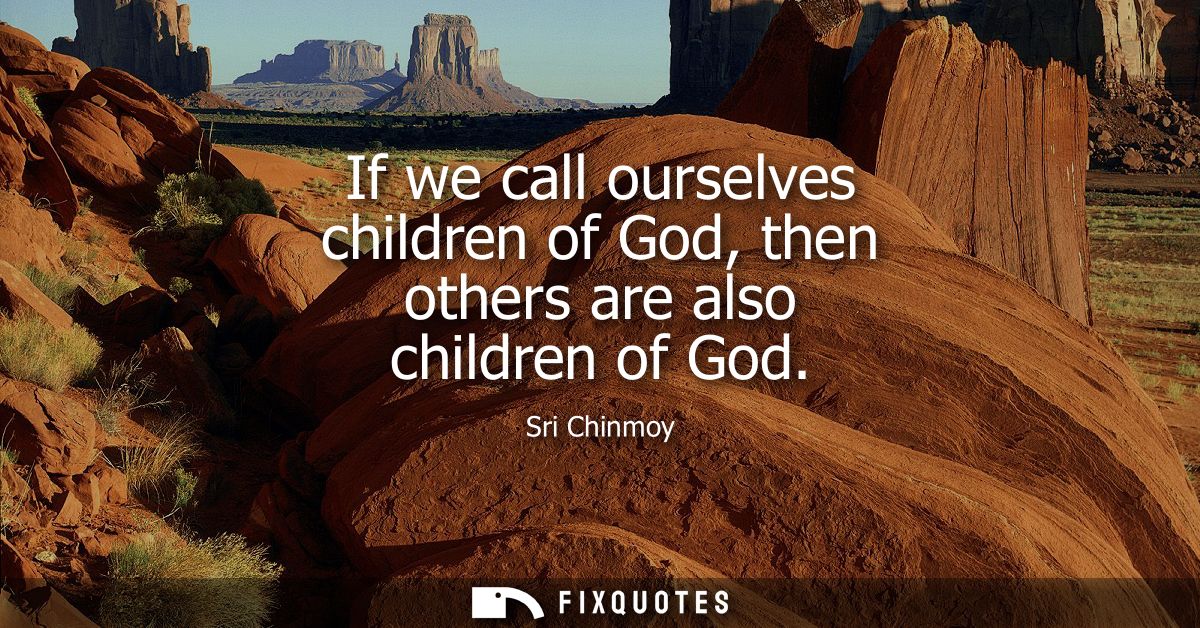
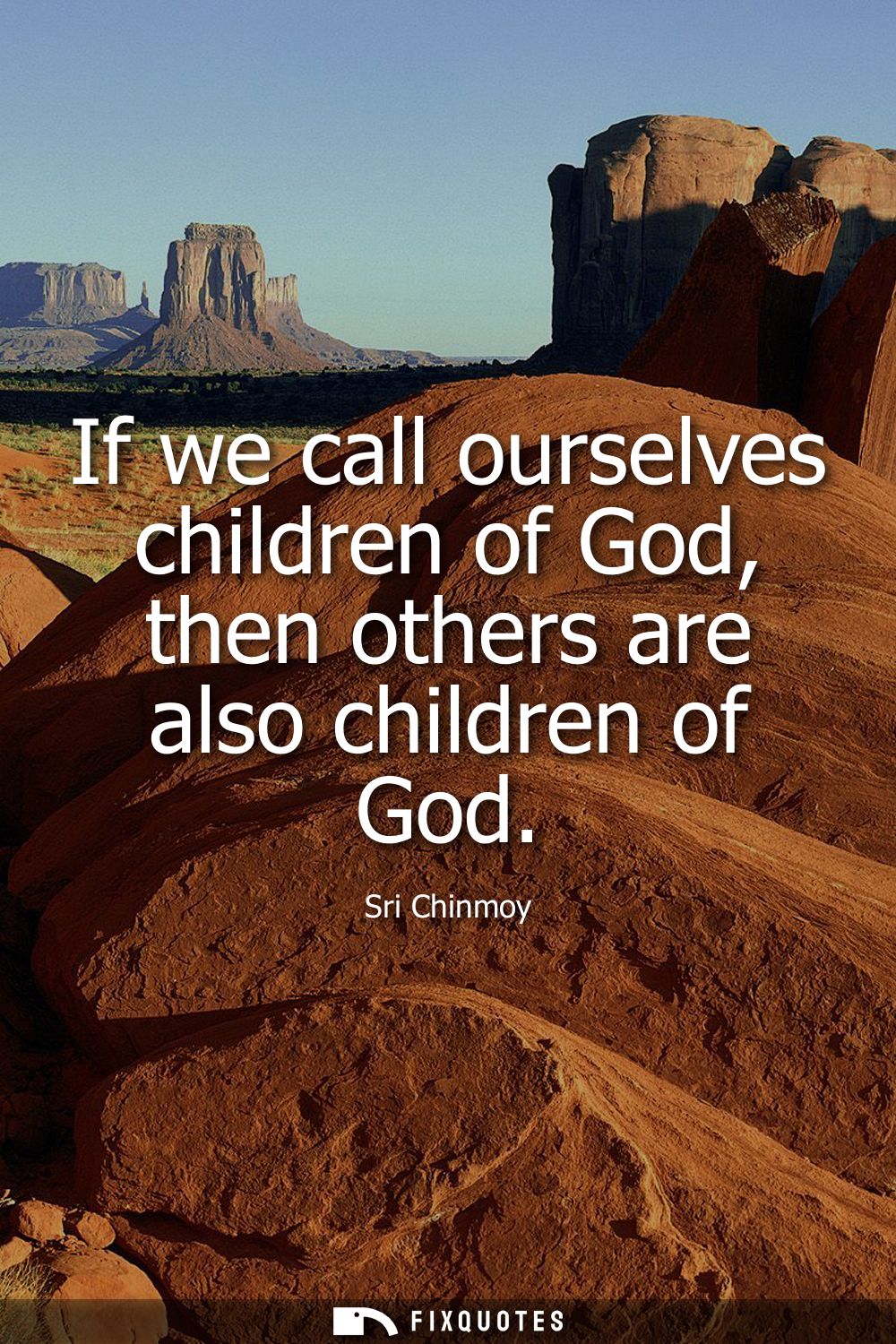
"If we call ourselves children of God, then others are also children of God"
About this Quote
Chinmoy wrote and taught in a late-20th-century landscape where Eastern spirituality was being imported, personalized, and sometimes commodified in the West. In that climate, God-talk could become wellness-talk: a declaration of inner peace that leaves power, prejudice, and hierarchy untouched. This sentence refuses that escape hatch. It insists that spiritual belonging is not scarce. The moment you claim proximity to the divine, you inherit responsibility toward people you might rather categorize as strangers, rivals, or less enlightened.
The subtext is also a critique of selective compassion. Many religious identities quietly run on exceptions: my group is chosen, my suffering is special, my morality is purer. Chinmoy collapses those loopholes with a simple symmetry. "Ourselves" and "others" share the same status; the only remaining variable is behavior. If you speak the language of God while denying dignity to others, your piety becomes performance.
It works because it is disarmingly plain. No doctrine, no threat, no metaphysical detours - just a logical mirror held up to the ego.
Quote Details
| Topic | God |
|---|---|
| Source | Help us find the source |
| Cite |
Citation Formats
APA Style (7th ed.)
Chinmoy, Sri. (2026, January 18). If we call ourselves children of God, then others are also children of God. FixQuotes. https://fixquotes.com/quotes/if-we-call-ourselves-children-of-god-then-others-7729/
Chicago Style
Chinmoy, Sri. "If we call ourselves children of God, then others are also children of God." FixQuotes. January 18, 2026. https://fixquotes.com/quotes/if-we-call-ourselves-children-of-god-then-others-7729/.
MLA Style (9th ed.)
"If we call ourselves children of God, then others are also children of God." FixQuotes, 18 Jan. 2026, https://fixquotes.com/quotes/if-we-call-ourselves-children-of-god-then-others-7729/. Accessed 12 Feb. 2026.