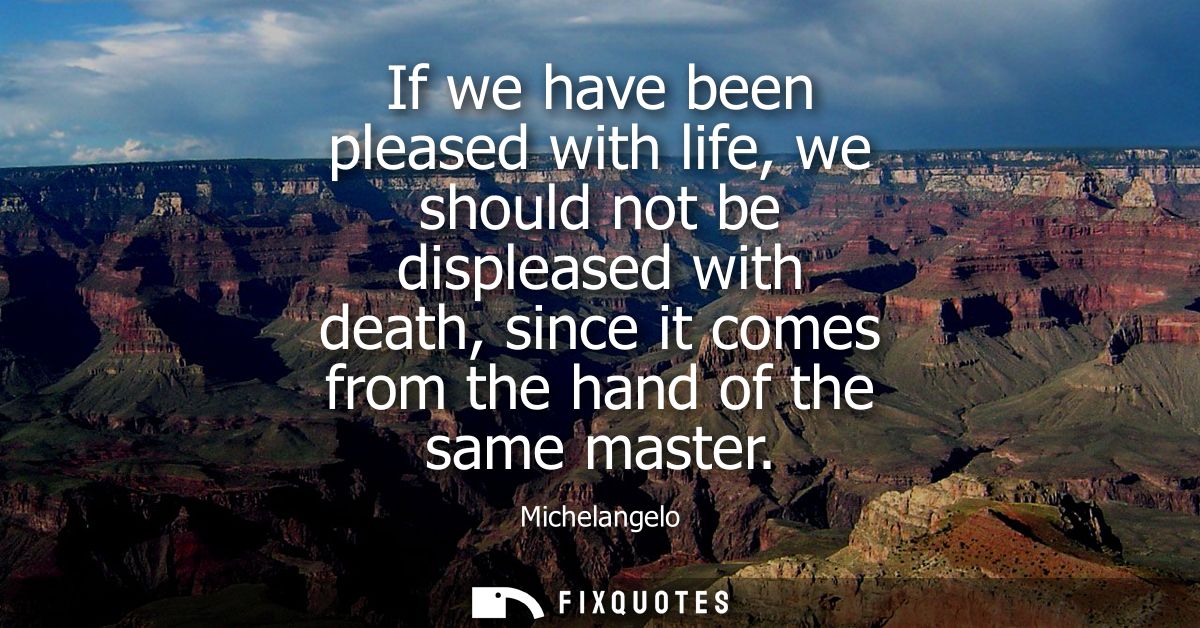
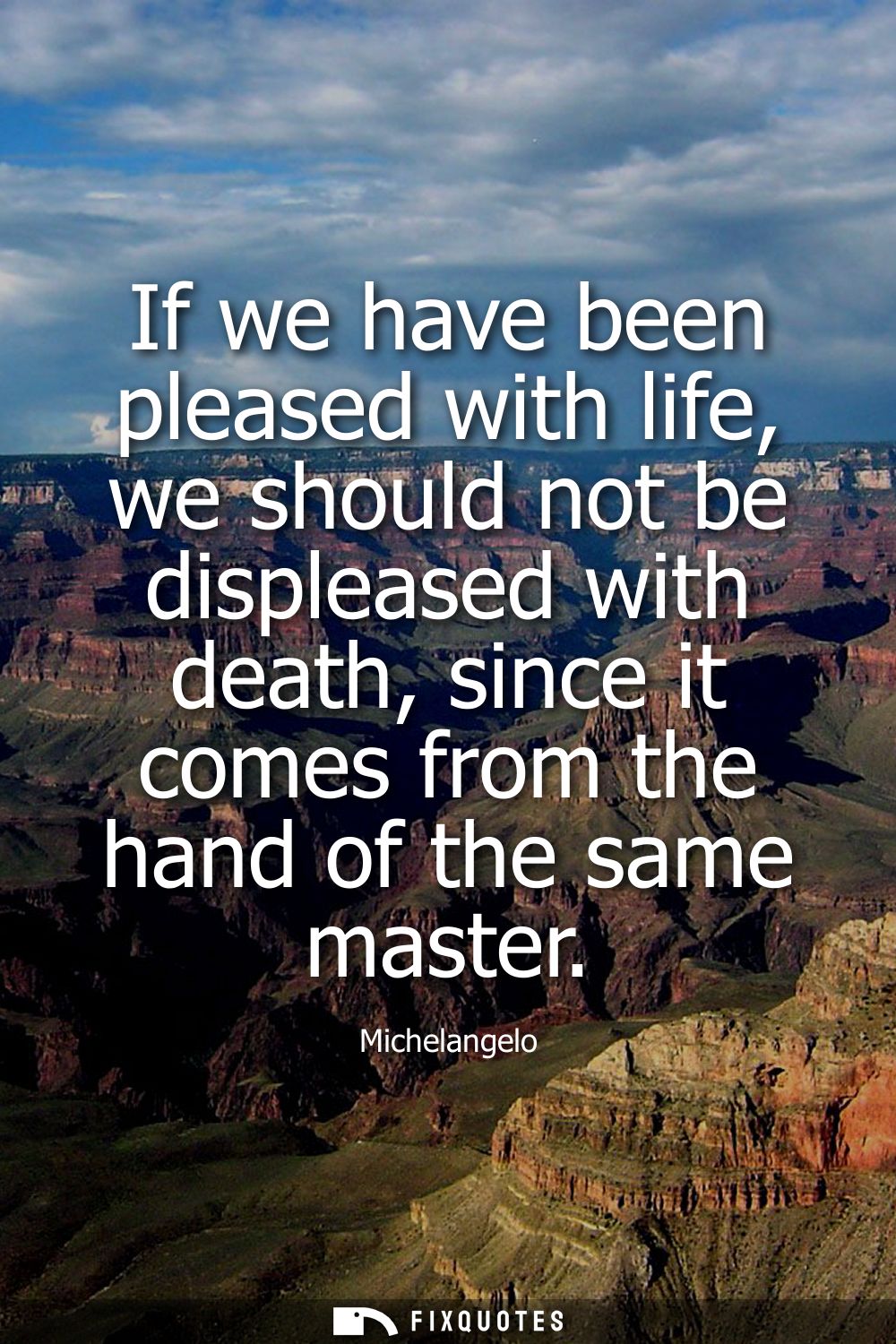
"If we have been pleased with life, we should not be displeased with death, since it comes from the hand of the same master"
About this Quote
The intent isn’t morbid comfort; it’s discipline. Michelangelo offers a credo for accepting limits, a way to sand down the ego’s demand for control. The subtext is a rebuke to selective faith: people praise the “master” when the composition flatters them, then act betrayed when the same hand signs the work with an ending. By framing death as part of the same authorship, he collapses the modern fantasy that life is our personal property and death an external theft.
Context matters: Renaissance Christian Europe treated death as ever-present, not an abstract philosophical problem. Plague, war, and fragile medicine made endings routine; religion made them meaningful. Michelangelo’s genius is to translate that worldview into the language of making - a statement that feels less like sermon and more like a studio note: trust the artist, even when the piece is finished.
Quote Details
| Topic | Mortality |
|---|---|
| Source | Help us find the source |
| Cite |
Citation Formats
APA Style (7th ed.)
Michelangelo. (2026, January 15). If we have been pleased with life, we should not be displeased with death, since it comes from the hand of the same master. FixQuotes. https://fixquotes.com/quotes/if-we-have-been-pleased-with-life-we-should-not-17435/
Chicago Style
Michelangelo. "If we have been pleased with life, we should not be displeased with death, since it comes from the hand of the same master." FixQuotes. January 15, 2026. https://fixquotes.com/quotes/if-we-have-been-pleased-with-life-we-should-not-17435/.
MLA Style (9th ed.)
"If we have been pleased with life, we should not be displeased with death, since it comes from the hand of the same master." FixQuotes, 15 Jan. 2026, https://fixquotes.com/quotes/if-we-have-been-pleased-with-life-we-should-not-17435/. Accessed 30 Mar. 2026.