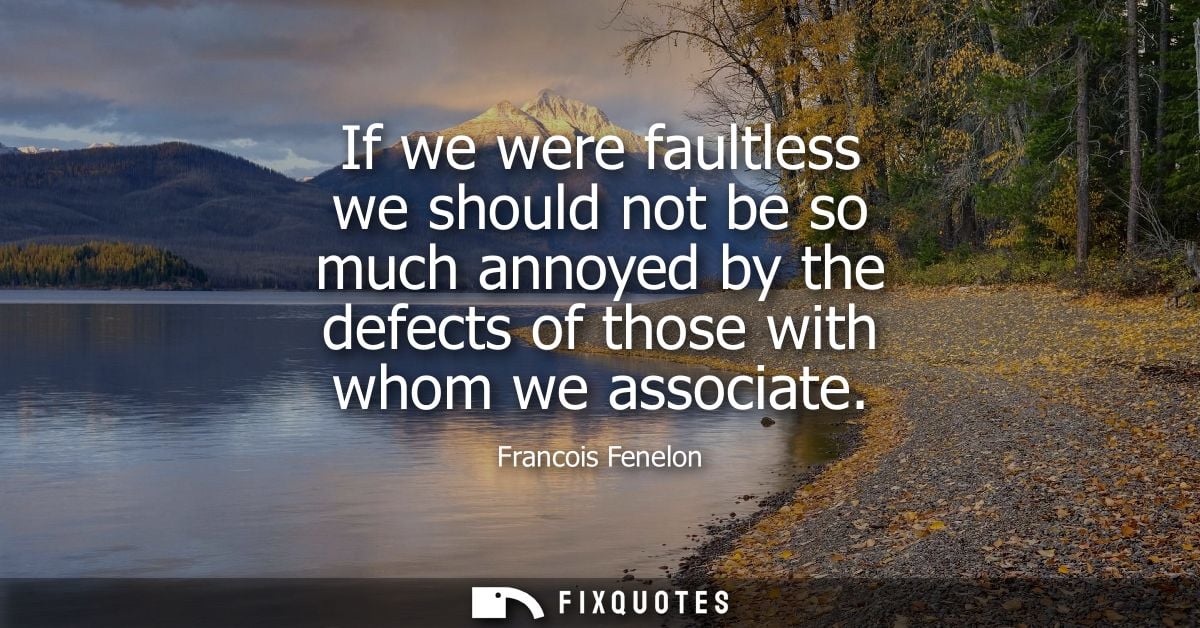
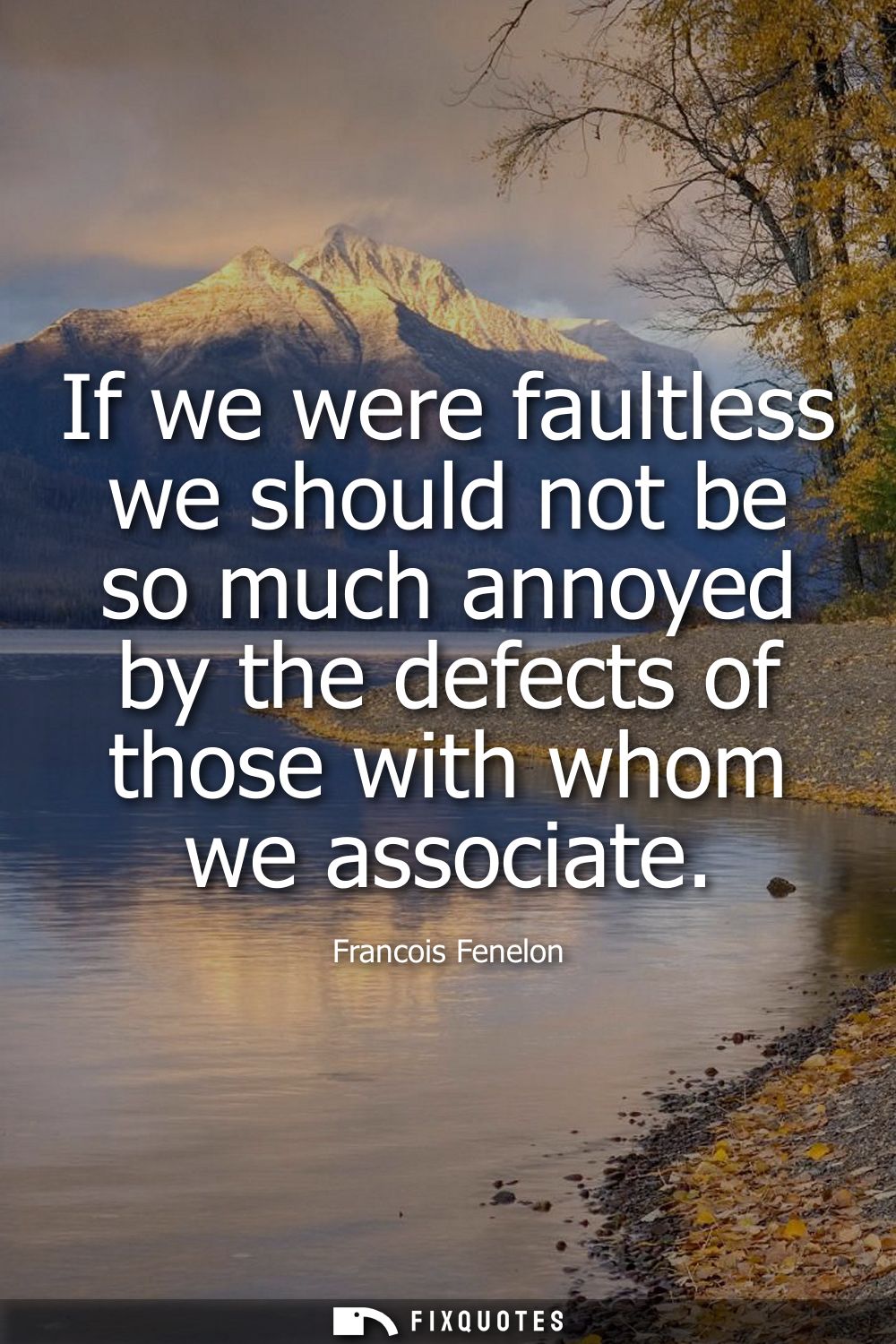
"If we were faultless we should not be so much annoyed by the defects of those with whom we associate"
About this Quote
As a clergyman and spiritual writer in Catholic France, Fenelon is speaking into a culture obsessed with manners, hierarchy, and the daily friction of court and community life. His audience would have known the performance of virtue: appearing patient while quietly compiling a ledger of others’ shortcomings. He punctures that hypocrisy without sounding like a scold. The conditional “If we were faultless” doesn’t accuse; it invites self-examination. It’s pastoral rhetoric with a razor hidden in the velvet.
The subtext is Augustinian: pride makes us allergic to weakness, especially weakness that resembles our own. The defects of “those with whom we associate” land hardest because they’re close enough to threaten our self-image, our comfort, our control. Fenelon’s intent isn’t to excuse bad behavior or demand passive tolerance; it’s to reassign the locus of moral drama. The real battle isn’t winning the argument at dinner. It’s noticing what your irritation reveals about the parts of you still negotiating with humility.
Quote Details
| Topic | Humility |
|---|---|
| Source | Help us find the source |
| Cite |
Citation Formats
APA Style (7th ed.)
Fenelon, Francois. (2026, January 16). If we were faultless we should not be so much annoyed by the defects of those with whom we associate. FixQuotes. https://fixquotes.com/quotes/if-we-were-faultless-we-should-not-be-so-much-84080/
Chicago Style
Fenelon, Francois. "If we were faultless we should not be so much annoyed by the defects of those with whom we associate." FixQuotes. January 16, 2026. https://fixquotes.com/quotes/if-we-were-faultless-we-should-not-be-so-much-84080/.
MLA Style (9th ed.)
"If we were faultless we should not be so much annoyed by the defects of those with whom we associate." FixQuotes, 16 Jan. 2026, https://fixquotes.com/quotes/if-we-were-faultless-we-should-not-be-so-much-84080/. Accessed 19 Feb. 2026.