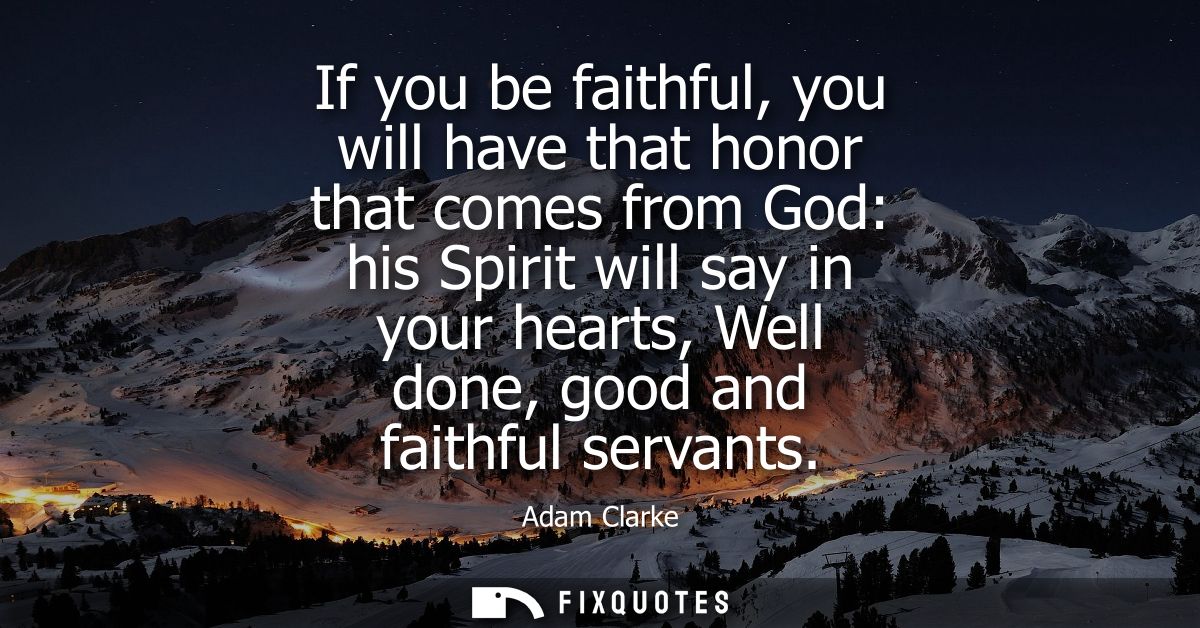
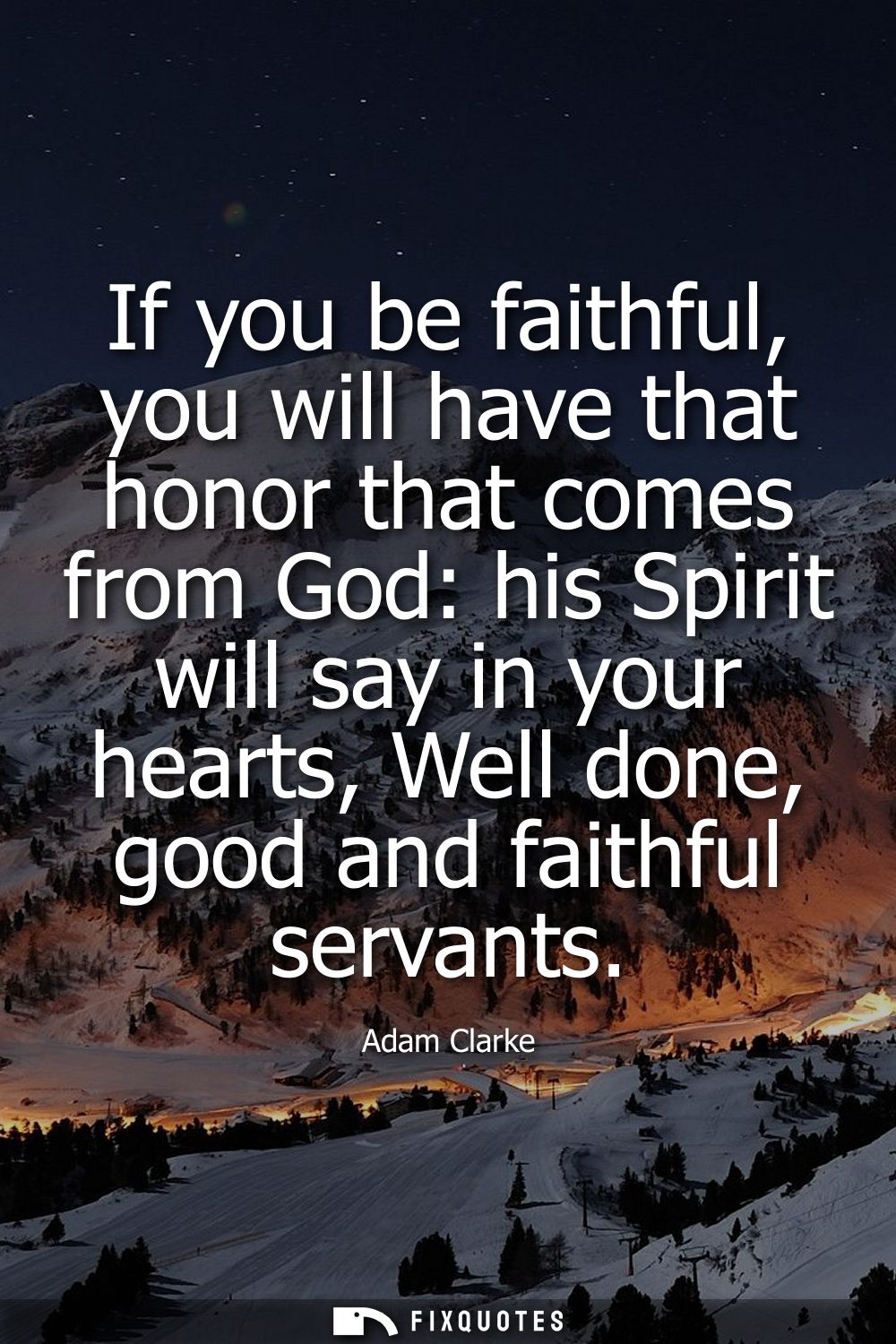
"If you be faithful, you will have that honor that comes from God: his Spirit will say in your hearts, Well done, good and faithful servants"
About this Quote
The intent is pastoral and disciplinary at once. “If you be faithful” sounds almost transactional, but the pay-off is deliberately non-market. The “honor that comes from God” refuses the economy of peer recognition; it is honor as divine assessment, not social brand. Clarke, writing in an era when evangelical Protestantism emphasized practical holiness and personal assurance, is speaking to believers anxious about signs of genuine faith. The promise is not that life will go smoothly, but that fidelity will be met with a stabilizing, internal witness.
Subtext: your community may not validate you. Your work may look small. You may even feel spiritually suspect. Clarke offers a kind of anti-vanity: keep going anyway, because the only applause worth trusting arrives as quiet conviction, not loud acclaim. The phrase “good and faithful servants” also lowers the stakes of heroism. Clarke’s ideal Christian isn’t a genius or a celebrity saint; it’s a reliable worker. In a culture where honor is often crowdsourced, he insists the most authoritative review comes unshareably, from within.
Quote Details
| Topic | Faith |
|---|---|
| Source | Help us find the source |
| Cite |
Citation Formats
APA Style (7th ed.)
Clarke, Adam. (2026, January 15). If you be faithful, you will have that honor that comes from God: his Spirit will say in your hearts, Well done, good and faithful servants. FixQuotes. https://fixquotes.com/quotes/if-you-be-faithful-you-will-have-that-honor-that-149708/
Chicago Style
Clarke, Adam. "If you be faithful, you will have that honor that comes from God: his Spirit will say in your hearts, Well done, good and faithful servants." FixQuotes. January 15, 2026. https://fixquotes.com/quotes/if-you-be-faithful-you-will-have-that-honor-that-149708/.
MLA Style (9th ed.)
"If you be faithful, you will have that honor that comes from God: his Spirit will say in your hearts, Well done, good and faithful servants." FixQuotes, 15 Jan. 2026, https://fixquotes.com/quotes/if-you-be-faithful-you-will-have-that-honor-that-149708/. Accessed 30 Mar. 2026.