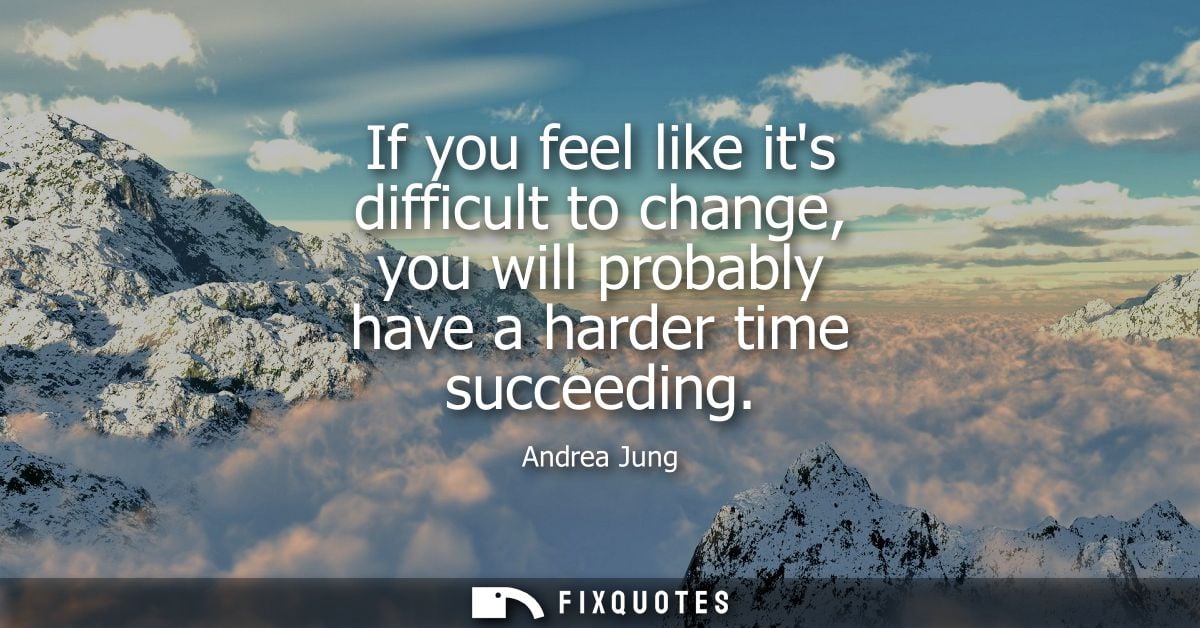
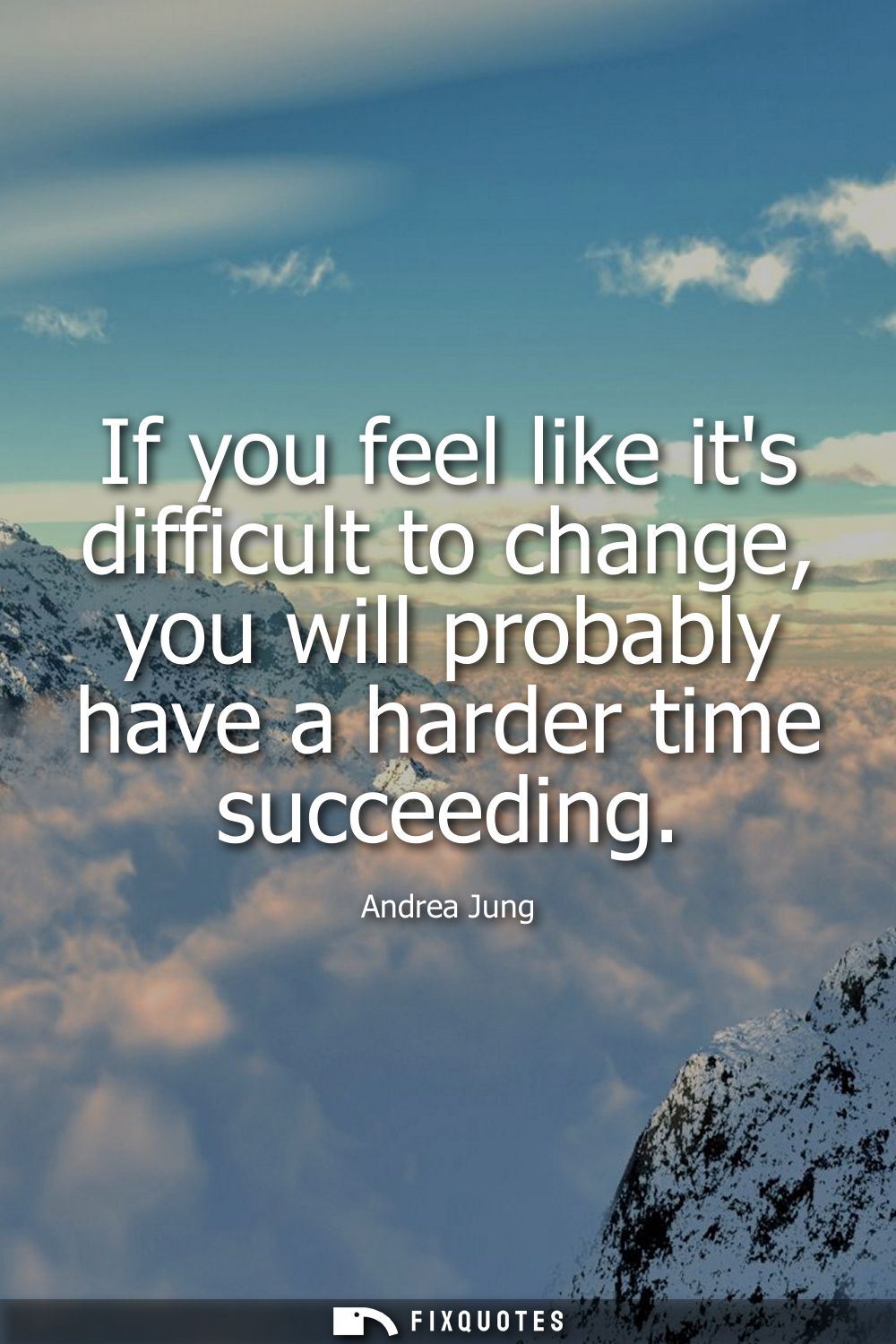
"If you feel like it's difficult to change, you will probably have a harder time succeeding"
About this Quote
Coming from a business leader, the intent reads like culture-setting. It’s advice aimed at organizations as much as individuals: companies that regard pivoting as trauma tend to move slower, spend more political capital, and tolerate less experimentation. “Succeeding” is left conspicuously vague, which is part of the quote’s utility. In corporate life, success can mean hitting numbers, surviving restructuring, or staying relevant when markets shift. The ambiguity lets it travel across contexts - a rebrand, a digital transformation, a personal career reinvention.
There’s also a subtle accountability move here. By locating the obstacle in “feelings,” the quote nudges listeners away from externalizing blame (the market, the boss, the timing) and toward examining mindset as a performance lever. It’s motivational, yes, but also a demand: adaptability isn’t a personality trait; it’s a professional requirement.
Quote Details
| Topic | Embrace Change |
|---|---|
| Source | Help us find the source |
| Cite |
Citation Formats
APA Style (7th ed.)
Jung, Andrea. (2026, January 17). If you feel like it's difficult to change, you will probably have a harder time succeeding. FixQuotes. https://fixquotes.com/quotes/if-you-feel-like-its-difficult-to-change-you-will-60971/
Chicago Style
Jung, Andrea. "If you feel like it's difficult to change, you will probably have a harder time succeeding." FixQuotes. January 17, 2026. https://fixquotes.com/quotes/if-you-feel-like-its-difficult-to-change-you-will-60971/.
MLA Style (9th ed.)
"If you feel like it's difficult to change, you will probably have a harder time succeeding." FixQuotes, 17 Jan. 2026, https://fixquotes.com/quotes/if-you-feel-like-its-difficult-to-change-you-will-60971/. Accessed 29 Mar. 2026.