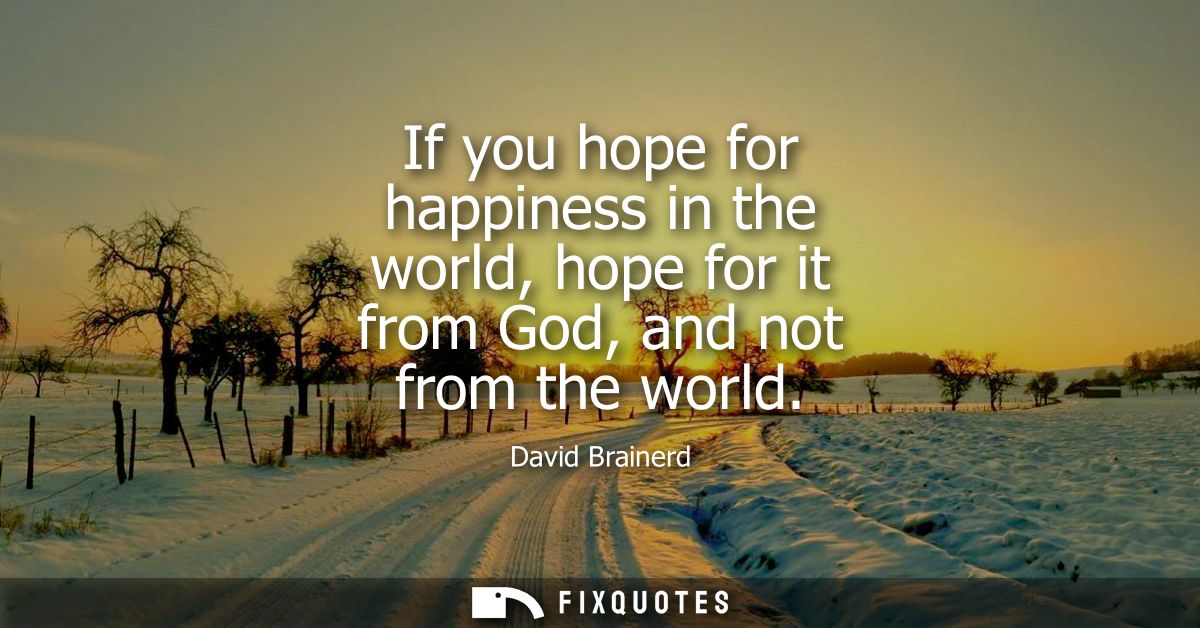
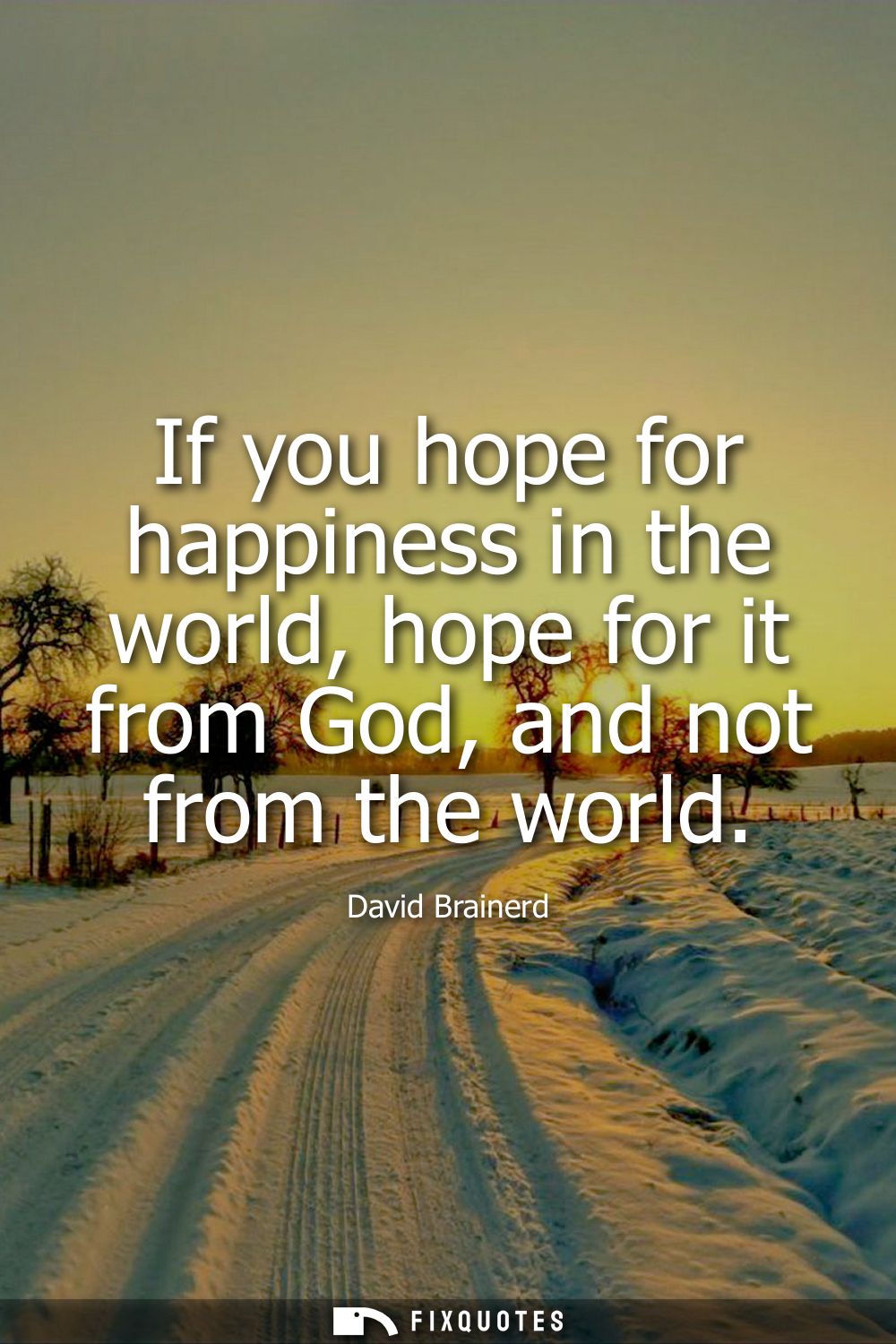
"If you hope for happiness in the world, hope for it from God, and not from the world"
About this Quote
The craft is in the clean transfer of desire. Brainerd doesn’t scold you for wanting happiness; he reroutes the supply line. “Hope for it” is key: he’s targeting the psychology of anticipation, the way we outsource emotional stability to outcomes we can’t command. By insisting happiness be hoped for “from God,” he offers a different economy of security, one where joy is not a wage paid by circumstances but a gift that can outlast them. That’s not merely piety; it’s a strategy for surviving a world that refuses to keep promises.
There’s also a quiet indictment embedded in the repetition: “from” the world, “from” God. Same grammar, opposite reliability. The subtext is sober, even bracingly modern: if your happiness is contingent on the world’s cooperation, you will be perpetually managed by forces that don’t know your name.
Quote Details
| Topic | God |
|---|---|
| Source | Help us find the source |
| Cite |
Citation Formats
APA Style (7th ed.)
Brainerd, David. (2026, January 15). If you hope for happiness in the world, hope for it from God, and not from the world. FixQuotes. https://fixquotes.com/quotes/if-you-hope-for-happiness-in-the-world-hope-for-66588/
Chicago Style
Brainerd, David. "If you hope for happiness in the world, hope for it from God, and not from the world." FixQuotes. January 15, 2026. https://fixquotes.com/quotes/if-you-hope-for-happiness-in-the-world-hope-for-66588/.
MLA Style (9th ed.)
"If you hope for happiness in the world, hope for it from God, and not from the world." FixQuotes, 15 Jan. 2026, https://fixquotes.com/quotes/if-you-hope-for-happiness-in-the-world-hope-for-66588/. Accessed 5 Mar. 2026.