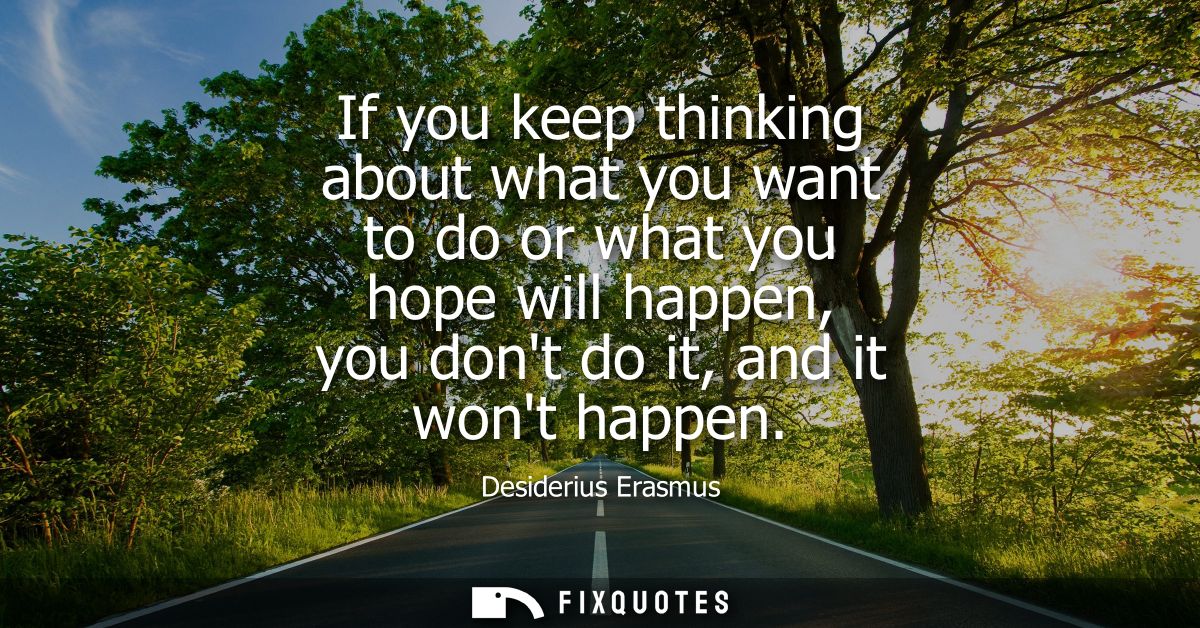
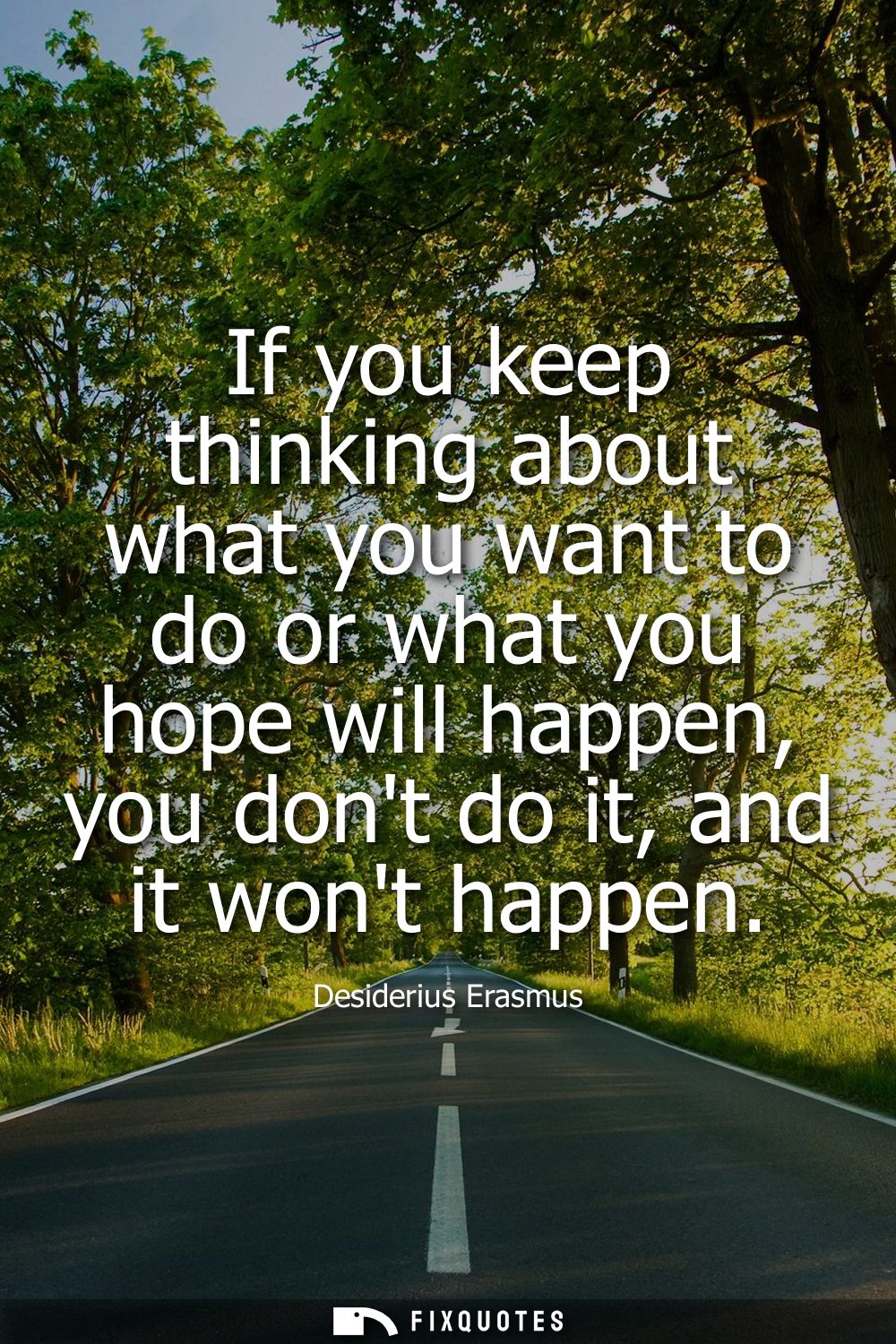
"If you keep thinking about what you want to do or what you hope will happen, you don't do it, and it won't happen"
About this Quote
The construction is almost mechanical: if A, then B. No drama, no moral fireworks, just cause and effect. That spareness is the rhetorical force. Erasmus is prying open the gap between intention and outcome, insisting that history doesn’t reward interiority. For a Christian humanist navigating the churn of the early Reformation era, this has bite: salvation, reform, learning, even peace are not accomplished by immaculate contemplation. They require choices that cost something and therefore invite resistance from the self.
Subtext: procrastination isn’t merely laziness; it’s self-protection. If you never act, you never risk failure, embarrassment, or responsibility for consequences. Erasmus, famously skeptical of fanaticism and piety-as-performance, aims at a quieter vice: the cultivated postponement that lets you feel serious without being changed. The quote works because it refuses to romanticize “someday.” It treats wishing as a method of ensuring nothing happens.
Quote Details
| Topic | Motivational |
|---|---|
| Source | Help us find the source |
| Cite |
Citation Formats
APA Style (7th ed.)
Erasmus, Desiderius. (2026, January 15). If you keep thinking about what you want to do or what you hope will happen, you don't do it, and it won't happen. FixQuotes. https://fixquotes.com/quotes/if-you-keep-thinking-about-what-you-want-to-do-or-47962/
Chicago Style
Erasmus, Desiderius. "If you keep thinking about what you want to do or what you hope will happen, you don't do it, and it won't happen." FixQuotes. January 15, 2026. https://fixquotes.com/quotes/if-you-keep-thinking-about-what-you-want-to-do-or-47962/.
MLA Style (9th ed.)
"If you keep thinking about what you want to do or what you hope will happen, you don't do it, and it won't happen." FixQuotes, 15 Jan. 2026, https://fixquotes.com/quotes/if-you-keep-thinking-about-what-you-want-to-do-or-47962/. Accessed 12 Feb. 2026.