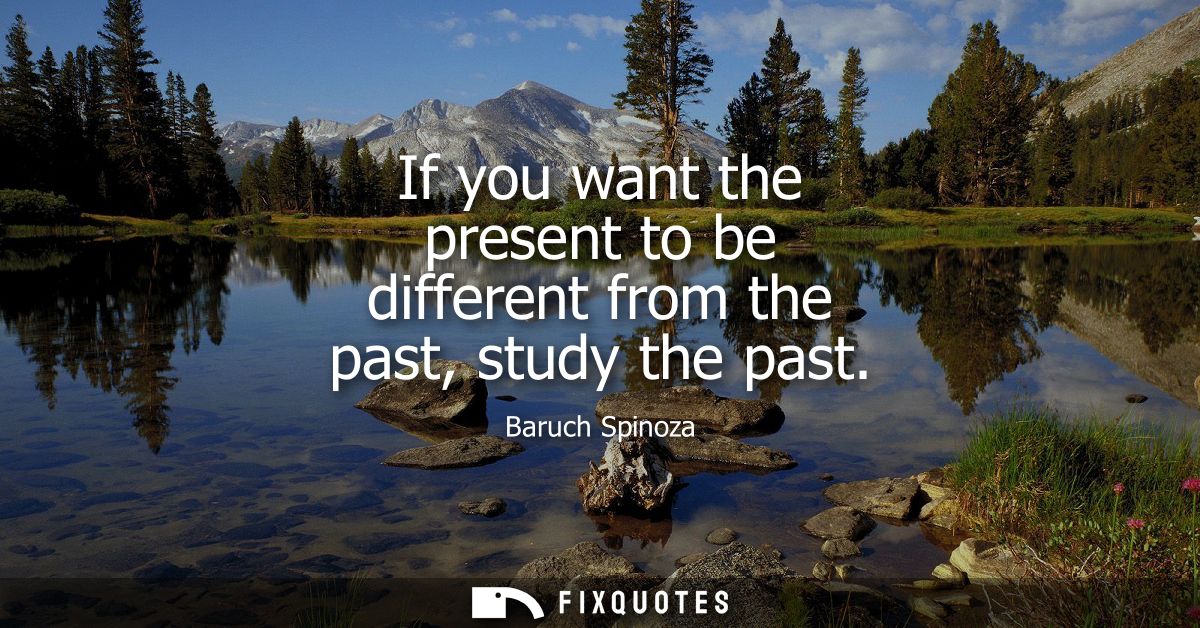
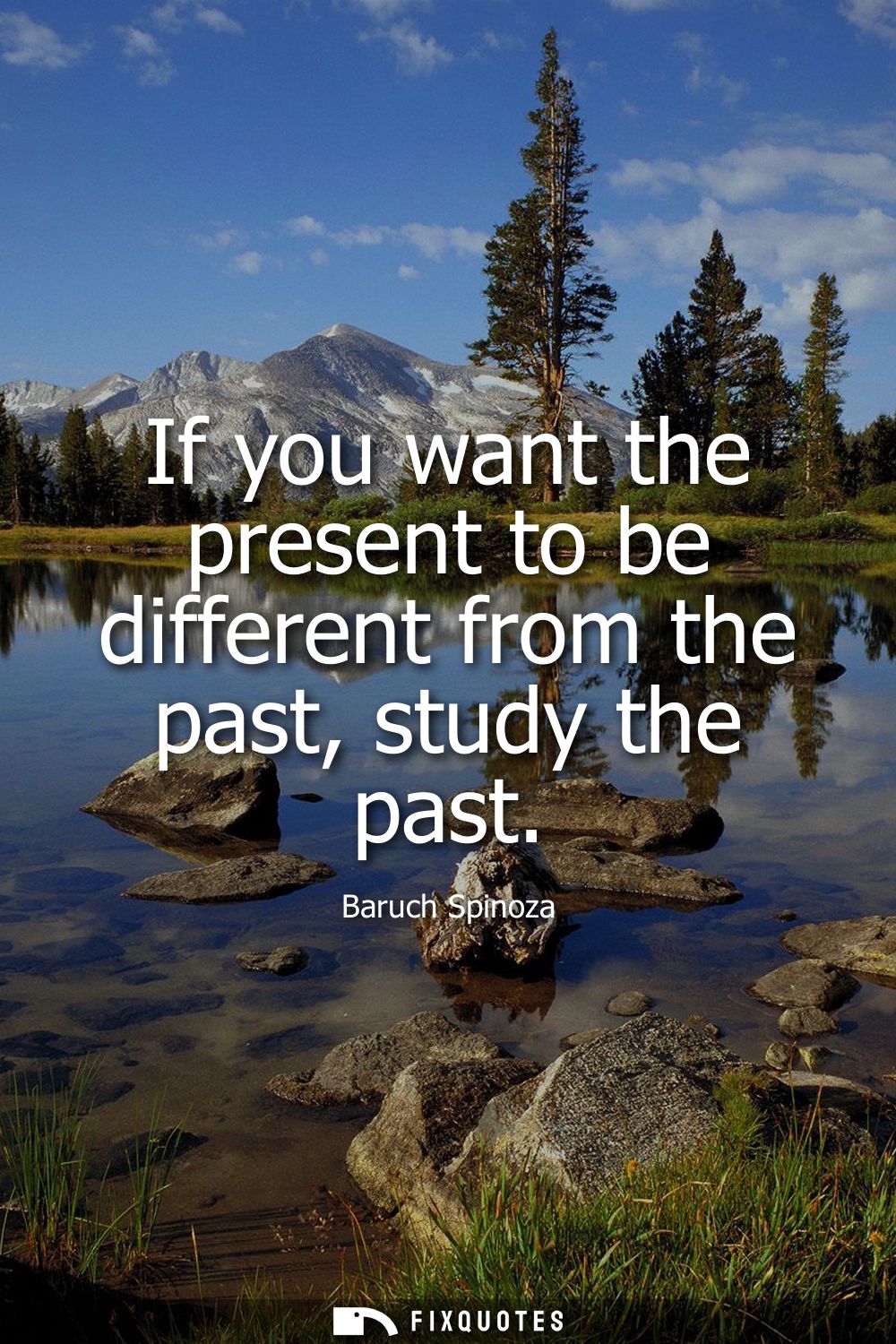
"If you want the present to be different from the past, study the past"
About this Quote
The intent tracks neatly with Spinoza’s wider project in the Ethics: replacing superstition and self-flattering stories with clear-eyed understanding of how things actually operate. His subtext is almost anti-heroic. The past isn’t a museum of villains and saints; it’s evidence of patterns - incentives, institutions, passions, material pressures - that keep reasserting themselves whenever people mistake feelings for freedom. “Different from the past” sounds like a revolution. “Study the past” drags you back to the unromantic truth that revolutions fail when they don’t understand what they’re made of.
Context matters: Spinoza lived through the Dutch Golden Age’s turbulence - religious conflict, political violence, the shock of assassinations and state power flexing in public. He also watched how communities weaponized selective memory to justify persecution. So the aphorism doubles as a warning: ignorance doesn’t produce innocence; it produces repetition.
What makes the sentence work is its quiet inversion of time. The present feels like the starting point, but Spinoza makes it the result. Change becomes less a mood than a method.
Quote Details
| Topic | Learning |
|---|---|
| Source | Help us find the source |
| Cite |
Citation Formats
APA Style (7th ed.)
Spinoza, Baruch. (2026, January 14). If you want the present to be different from the past, study the past. FixQuotes. https://fixquotes.com/quotes/if-you-want-the-present-to-be-different-from-the-69853/
Chicago Style
Spinoza, Baruch. "If you want the present to be different from the past, study the past." FixQuotes. January 14, 2026. https://fixquotes.com/quotes/if-you-want-the-present-to-be-different-from-the-69853/.
MLA Style (9th ed.)
"If you want the present to be different from the past, study the past." FixQuotes, 14 Jan. 2026, https://fixquotes.com/quotes/if-you-want-the-present-to-be-different-from-the-69853/. Accessed 13 Feb. 2026.