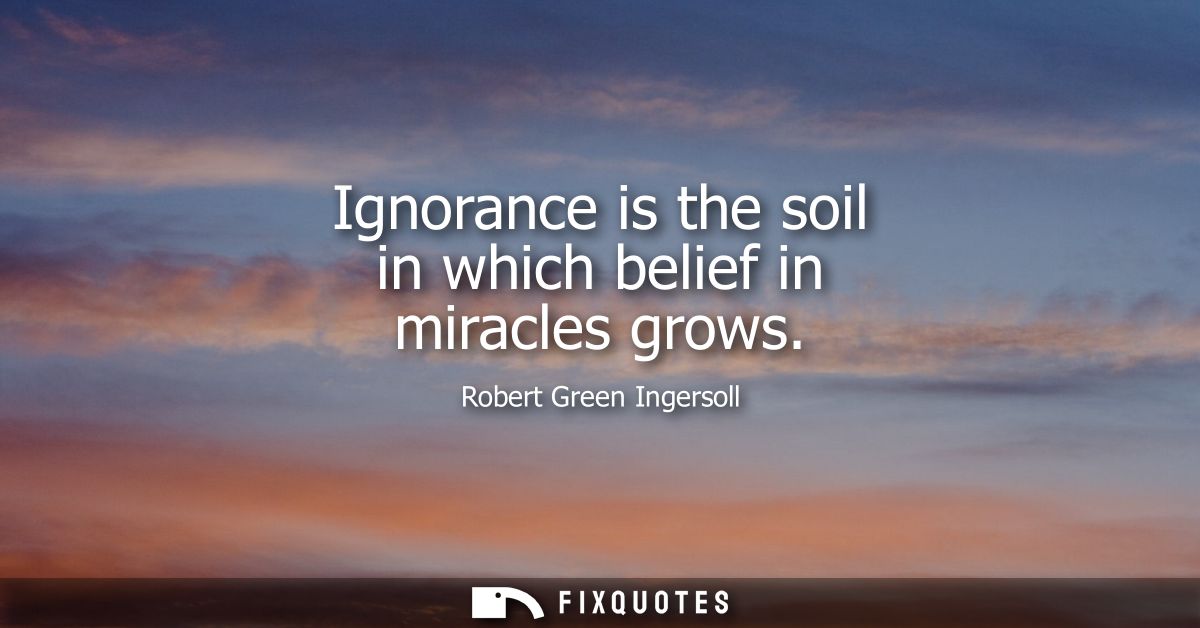
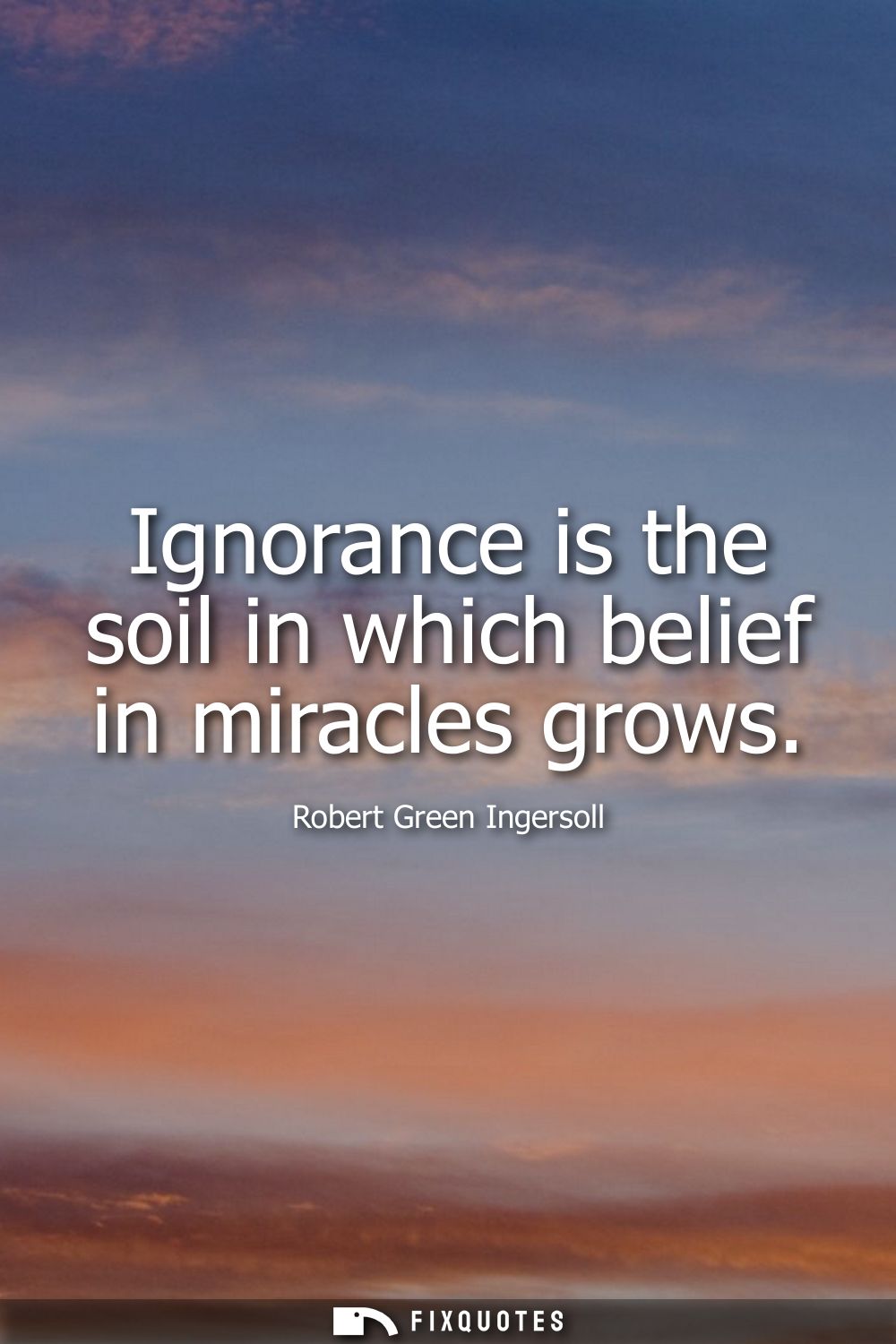
"Ignorance is the soil in which belief in miracles grows"
About this Quote
A miracle, in Ingersoll's hands, is less a rupture in nature than a symptom of a starving mind. Calling ignorance "the soil" is a deliberate act of demystification: miracles are not thunderbolts from the divine but crops cultivated under certain conditions. The metaphor does two jobs at once. It sounds almost gentle, agricultural, inevitable. Yet it carries a prosecutorial edge. Soil can be improved, tilled, educated out of. If miracles grow there, someone benefits from keeping the ground barren.
Ingersoll was a famed 19th-century orator and freethinker operating in an America intoxicated by revivalism, spiritualism, and the booming market for supernatural claims. As a lawyer, he builds the argument like a case: identify the environment (ignorance), identify the outcome (belief in miracles), imply causation without needing to litigate each miracle story on its merits. It's strategy over spectacle. He doesn't argue that every believer is stupid; he argues that ignorance is the enabling condition, the medium that lets extraordinary claims take root and spread.
The subtext is political. Miracles, for Ingersoll, aren’t just private consolations; they are tools of authority. If people can be persuaded that the rules of reality bend for the righteous, they're easier to recruit, easier to govern, easier to sell certainty to. The line lands because it reframes piety as a public-health problem for the intellect: improve education, expand literacy, teach skepticism, and the miracle supply chain weakens. It’s Enlightenment rhetoric with American bite, aimed not at wonder itself but at credulity and the institutions that monetize it.
Ingersoll was a famed 19th-century orator and freethinker operating in an America intoxicated by revivalism, spiritualism, and the booming market for supernatural claims. As a lawyer, he builds the argument like a case: identify the environment (ignorance), identify the outcome (belief in miracles), imply causation without needing to litigate each miracle story on its merits. It's strategy over spectacle. He doesn't argue that every believer is stupid; he argues that ignorance is the enabling condition, the medium that lets extraordinary claims take root and spread.
The subtext is political. Miracles, for Ingersoll, aren’t just private consolations; they are tools of authority. If people can be persuaded that the rules of reality bend for the righteous, they're easier to recruit, easier to govern, easier to sell certainty to. The line lands because it reframes piety as a public-health problem for the intellect: improve education, expand literacy, teach skepticism, and the miracle supply chain weakens. It’s Enlightenment rhetoric with American bite, aimed not at wonder itself but at credulity and the institutions that monetize it.
Quote Details
| Topic | Reason & Logic |
|---|---|
| Source | Later attribution: The Essential Works of Robert G. Ingersoll (Robert Green Ingersoll, 2023) modern compilationID: PSbmEAAAQBAJ
Evidence:
... Ignorance is the soil in which belief in miracles grows. Let us take another step: III. Table of Contents While our ancestors filled the darkness with evil spirits, enemies of mankind, they also believed in the existence of good spirits ... |
| Cite |
Citation Formats
APA Style (7th ed.)
Ingersoll, Robert G. (2026, February 23). Ignorance is the soil in which belief in miracles grows. FixQuotes. https://fixquotes.com/quotes/ignorance-is-the-soil-in-which-belief-in-miracles-91867/
Chicago Style
Ingersoll, Robert G. "Ignorance is the soil in which belief in miracles grows." FixQuotes. February 23, 2026. https://fixquotes.com/quotes/ignorance-is-the-soil-in-which-belief-in-miracles-91867/.
MLA Style (9th ed.)
"Ignorance is the soil in which belief in miracles grows." FixQuotes, 23 Feb. 2026, https://fixquotes.com/quotes/ignorance-is-the-soil-in-which-belief-in-miracles-91867/. Accessed 3 Apr. 2026.
More Quotes by Robert
Add to List