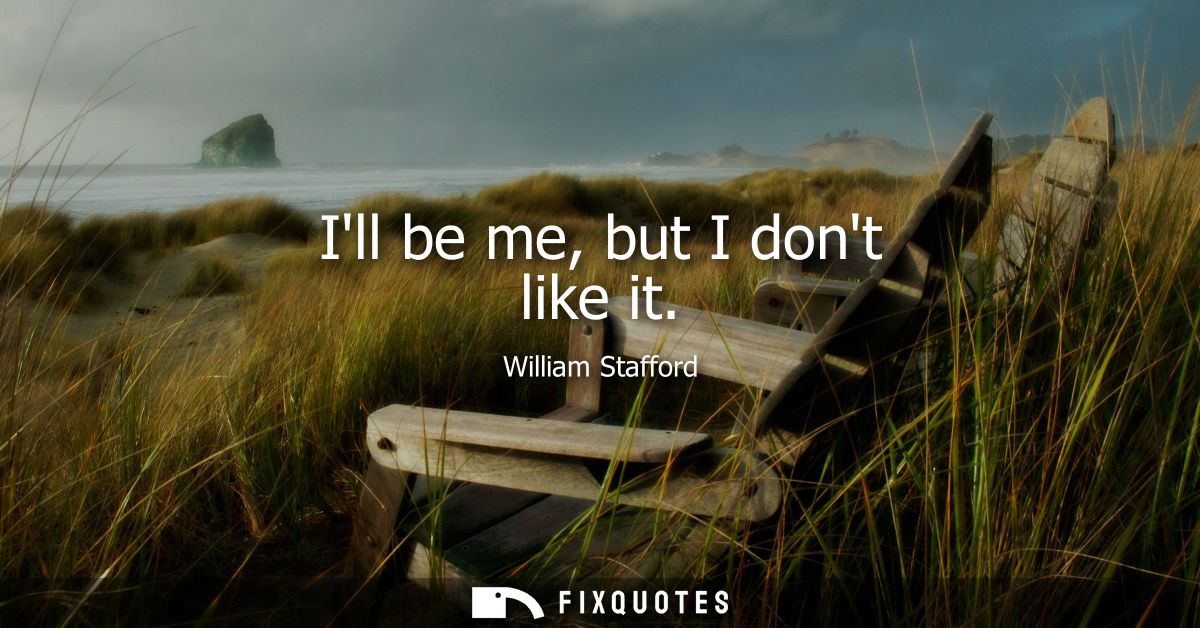
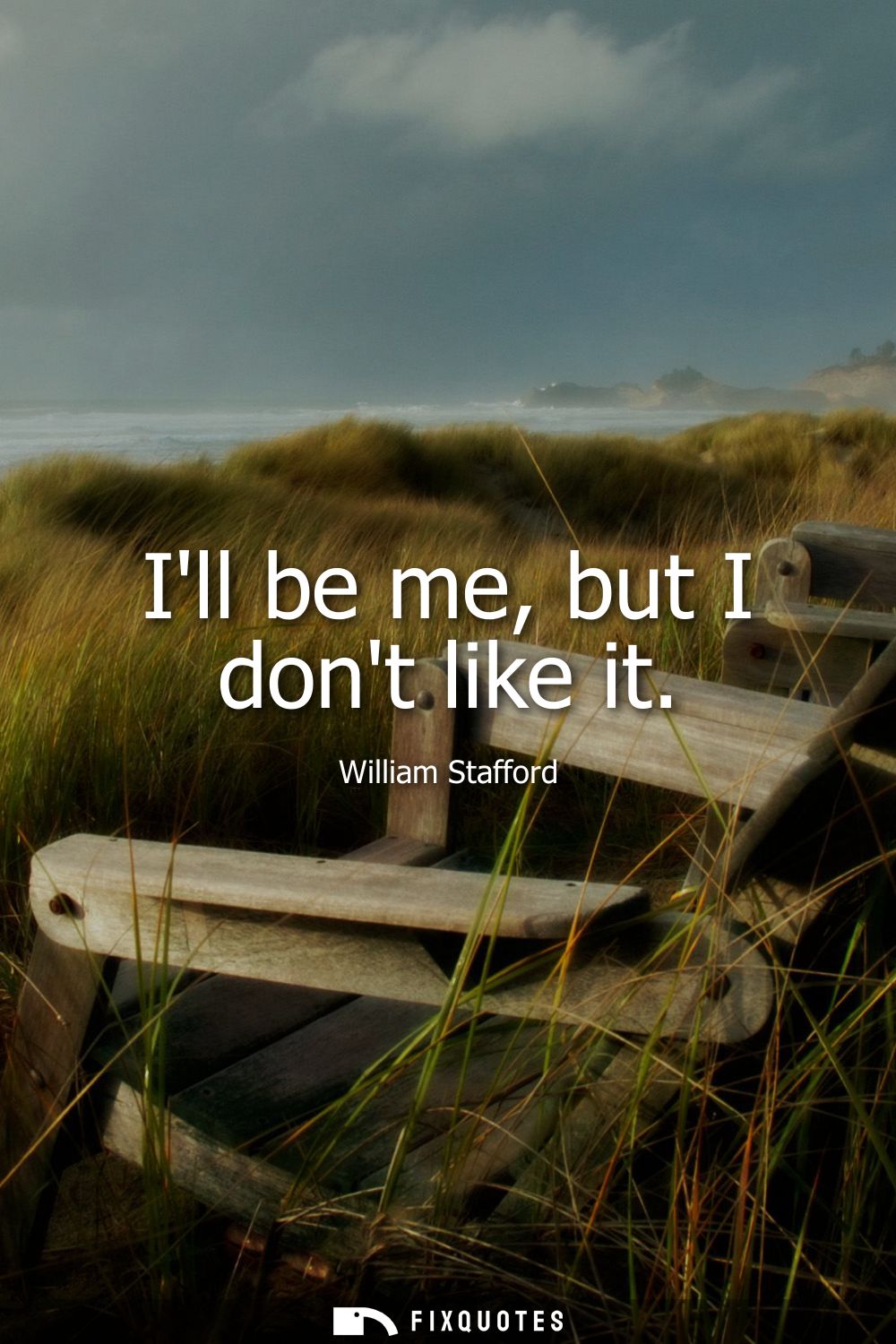
"I'll be me, but I don't like it"
About this Quote
A whole identity crisis packed into eight plain words, and the plainness is the trick. Stafford frames the self as both inescapable and unsatisfying: "I'll be me" lands like a shrug toward fate, a contract signed without negotiation. Then the pivot, "but I don't like it", refuses the neat, inspirational arc we’re trained to expect from selfhood. No triumph of authenticity, no glossy self-acceptance. Just the bracing admission that being yourself can feel like being stuck with yourself.
Stafford’s intent is less confessional melodrama than ethical clarity. His poems often prize humility, attention, and steady conscience over grand declarations. This line reads like a small, private vow made under pressure: I will inhabit my responsibilities, my limitations, my moral weather, even when I’m not pleased with who I am. The subtext is a critique of performance. It suggests that the self isn’t a brand you can optimize; it’s a daily condition, sometimes stubbornly mediocre, sometimes disappointing, always yours to answer for.
Context matters: Stafford lived through war, taught for decades, wrote in an accessible idiom that distrusted rhetorical flash. Postwar America sold confidence as a civic virtue; Stafford offers something rarer, almost radical now - the permission to be conflicted without turning it into spectacle. The line works because it’s unsentimental and human-scaled: a statement of continuity that doesn’t require self-love to keep going.
Stafford’s intent is less confessional melodrama than ethical clarity. His poems often prize humility, attention, and steady conscience over grand declarations. This line reads like a small, private vow made under pressure: I will inhabit my responsibilities, my limitations, my moral weather, even when I’m not pleased with who I am. The subtext is a critique of performance. It suggests that the self isn’t a brand you can optimize; it’s a daily condition, sometimes stubbornly mediocre, sometimes disappointing, always yours to answer for.
Context matters: Stafford lived through war, taught for decades, wrote in an accessible idiom that distrusted rhetorical flash. Postwar America sold confidence as a civic virtue; Stafford offers something rarer, almost radical now - the permission to be conflicted without turning it into spectacle. The line works because it’s unsentimental and human-scaled: a statement of continuity that doesn’t require self-love to keep going.
Quote Details
| Topic | Self-Love |
|---|---|
| Source | Help us find the source |
| Cite |
Citation Formats
APA Style (7th ed.)
Stafford, William. (2026, January 15). I'll be me, but I don't like it. FixQuotes. https://fixquotes.com/quotes/ill-be-me-but-i-dont-like-it-170521/
Chicago Style
Stafford, William. "I'll be me, but I don't like it." FixQuotes. January 15, 2026. https://fixquotes.com/quotes/ill-be-me-but-i-dont-like-it-170521/.
MLA Style (9th ed.)
"I'll be me, but I don't like it." FixQuotes, 15 Jan. 2026, https://fixquotes.com/quotes/ill-be-me-but-i-dont-like-it-170521/. Accessed 25 Mar. 2026.
More Quotes by William
Add to List