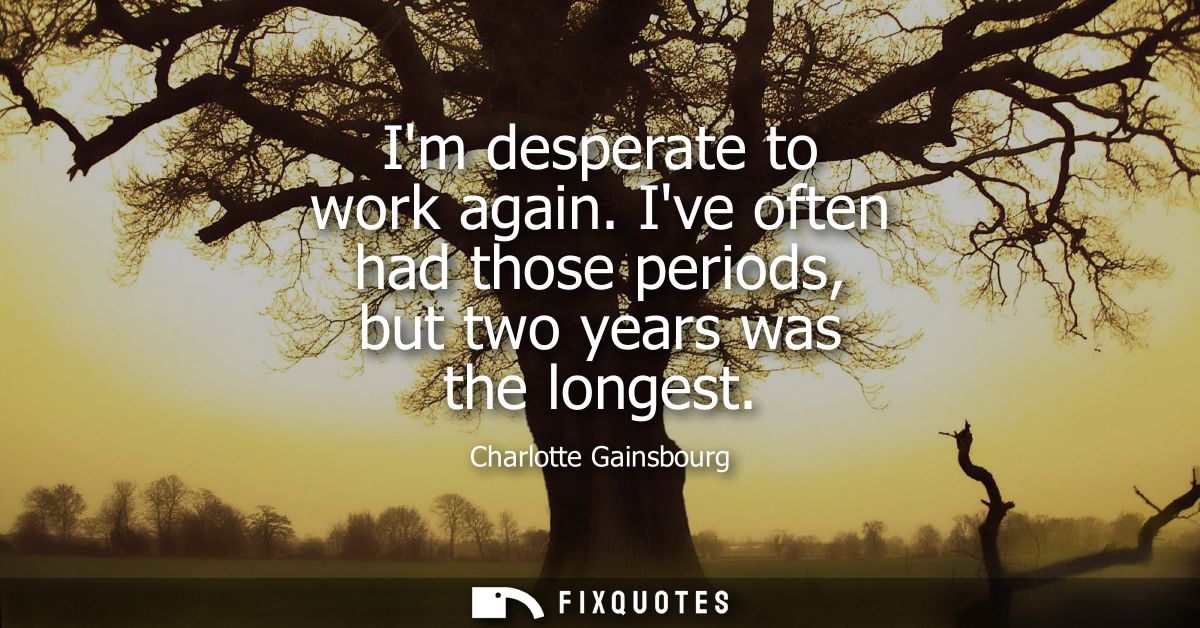
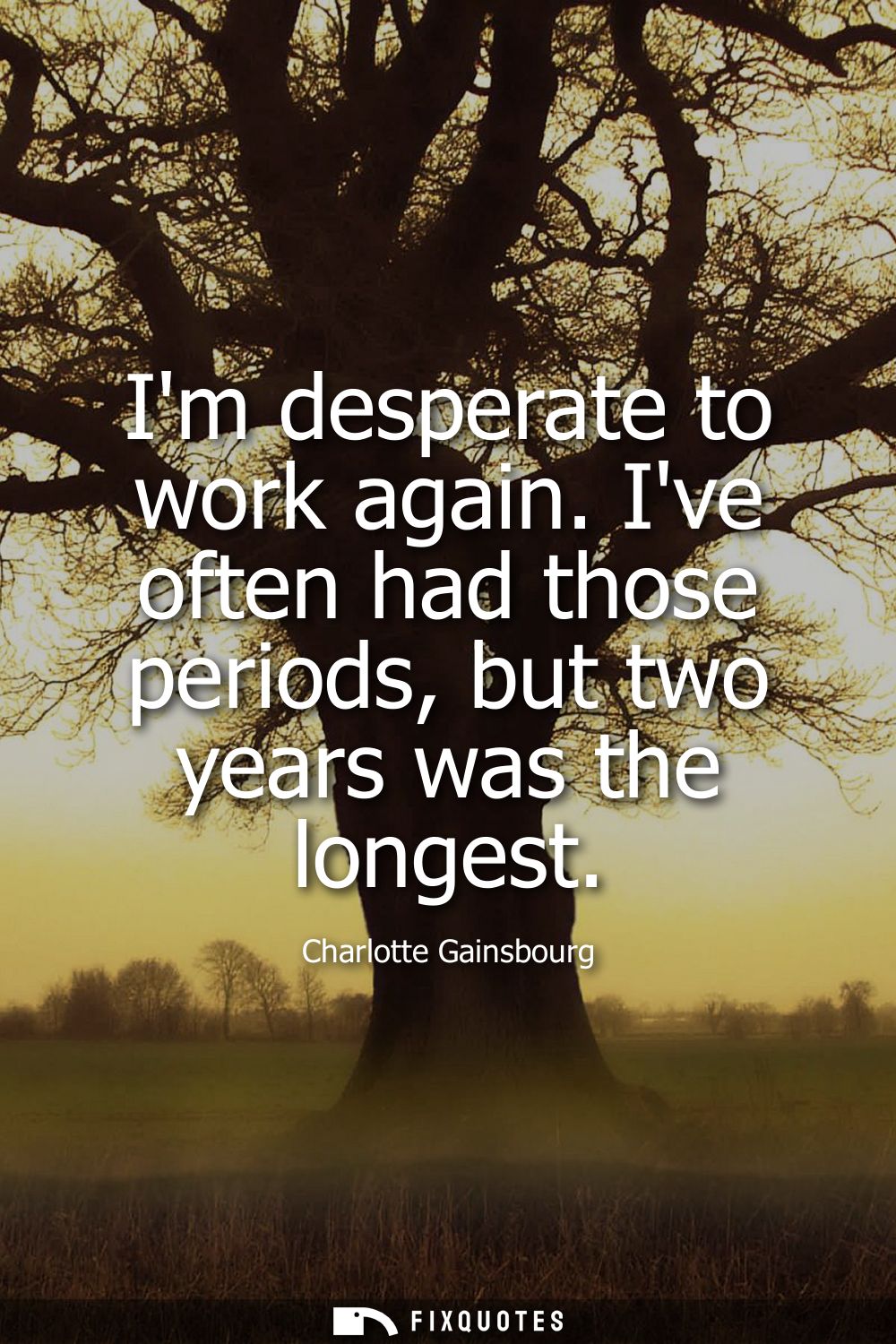
"I'm desperate to work again. I've often had those periods, but two years was the longest"
About this Quote
There is a particular kind of hunger in Charlotte Gainsbourg's line: not the manic grindset version, but the quiet panic of an artist whose identity is braided to the act of showing up on set. "Desperate" is doing heavy lifting here. It's not "eager" or "ready"; it's a word that admits dependence, even neediness, in a profession that trains people to appear unbothered. Coming from an actress long associated with restraint and emotional opacity, the confession lands harder: the controlled performer letting the mask slip.
The second sentence rewrites the first. "I've often had those periods" normalizes the drought, almost minimizing it, the way working actors learn to. Then she adds the twist: "but two years was the longest". That final clause is a small, blunt measurement of time that carries an industry-wide indictment. It nods to the fragility of creative labor, where momentum is currency and absence gets read as irrelevance. Two years isn't just lost income; it's lost narrative. In a culture that demands constant output, a gap becomes a rumor.
There's also a more intimate subtext: work as structure, work as rescue. Gainsbourg has built a career on inhabiting discomfort, often in films that flirt with transgression or emotional risk. Wanting to "work again" can mean craving that external frame - directors, scripts, crews - that gives personal feelings a safe container. The line captures the paradox of acting: your job is to pretend, but the absence of it can feel like disappearing for real.
The second sentence rewrites the first. "I've often had those periods" normalizes the drought, almost minimizing it, the way working actors learn to. Then she adds the twist: "but two years was the longest". That final clause is a small, blunt measurement of time that carries an industry-wide indictment. It nods to the fragility of creative labor, where momentum is currency and absence gets read as irrelevance. Two years isn't just lost income; it's lost narrative. In a culture that demands constant output, a gap becomes a rumor.
There's also a more intimate subtext: work as structure, work as rescue. Gainsbourg has built a career on inhabiting discomfort, often in films that flirt with transgression or emotional risk. Wanting to "work again" can mean craving that external frame - directors, scripts, crews - that gives personal feelings a safe container. The line captures the paradox of acting: your job is to pretend, but the absence of it can feel like disappearing for real.
Quote Details
| Topic | Work |
|---|
More Quotes by Charlotte
Add to List