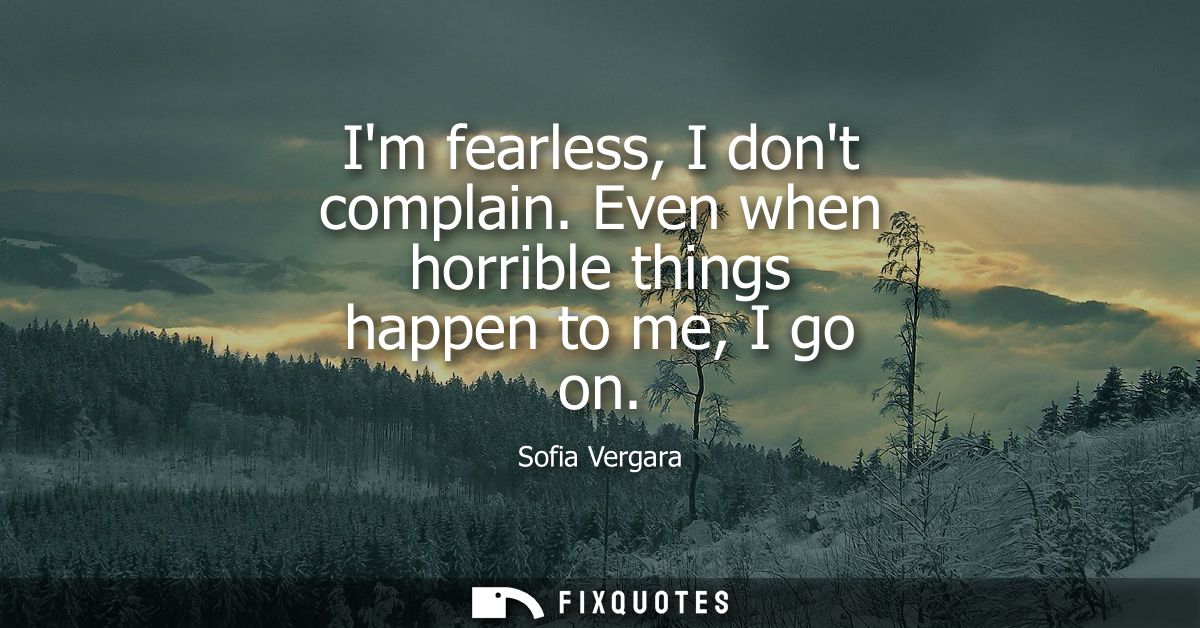
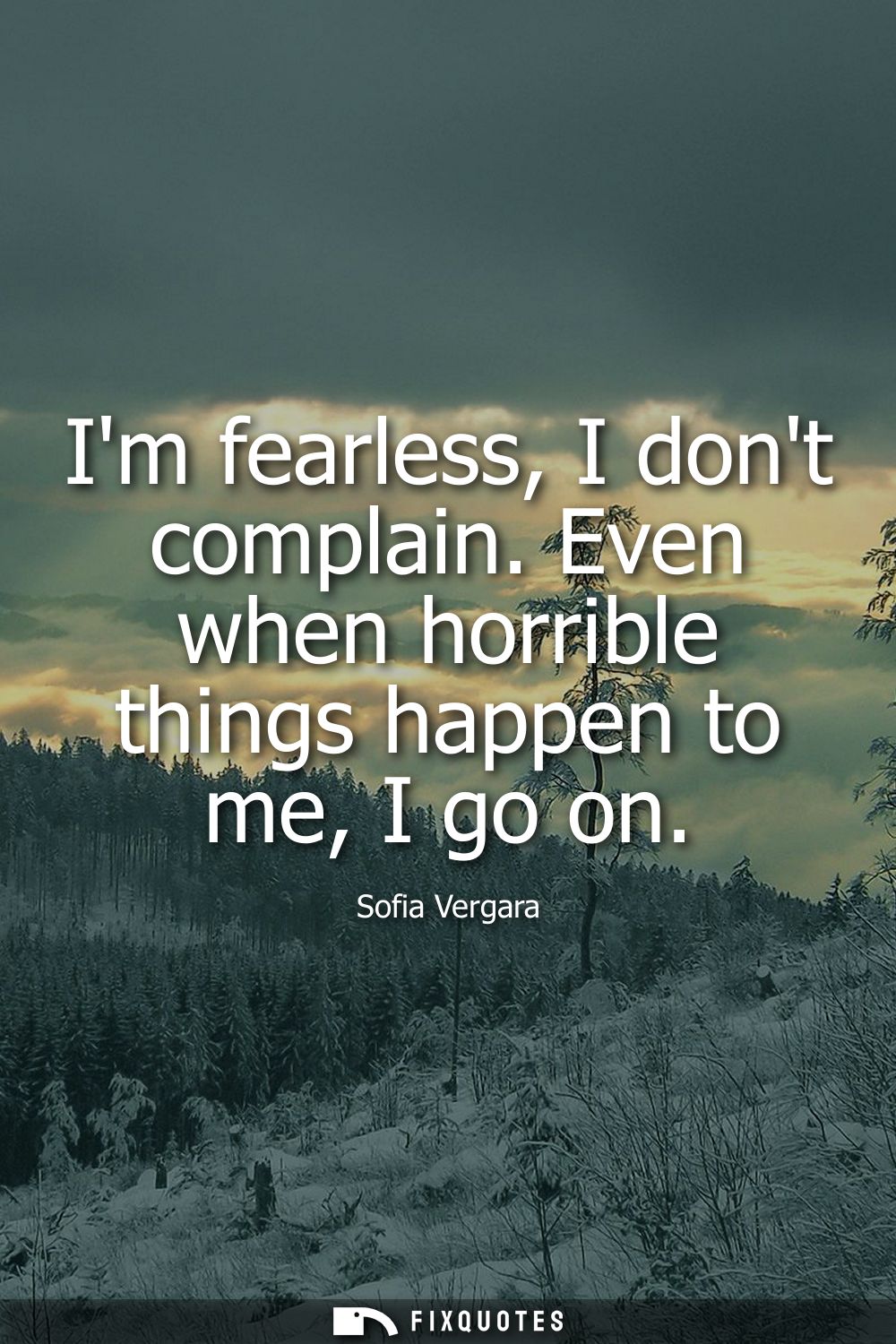
"I'm fearless, I don't complain. Even when horrible things happen to me, I go on"
About this Quote
The subtext is a negotiation with the stereotypes that cling to women who are loud, glamorous, foreign, or all three. Complaining gets coded as weakness or drama; "fearless" gets coded as admirable grit. Vergara's phrasing tries to control that framing: don't mistake my confidence for fragility, don't mistake my accent or sexuality for softness. It's also a quiet rebuttal to the industry's expectation that women earn sympathy to be taken seriously. She skips the sympathy bid entirely.
Context sharpens the edge. Vergara has spoken publicly about real hardship, including serious illness and the long grind of building a career across languages and cultures. In that light, "I go on" isn't inspirational wallpaper; it's a boundary. The line doesn’t ask to be rescued. It asks to be respected, and it dares the audience to keep up.
Quote Details
| Topic | Resilience |
|---|---|
| Source | Help us find the source |
| Cite |
Citation Formats
APA Style (7th ed.)
Vergara, Sofia. (2026, January 15). I'm fearless, I don't complain. Even when horrible things happen to me, I go on. FixQuotes. https://fixquotes.com/quotes/im-fearless-i-dont-complain-even-when-horrible-110404/
Chicago Style
Vergara, Sofia. "I'm fearless, I don't complain. Even when horrible things happen to me, I go on." FixQuotes. January 15, 2026. https://fixquotes.com/quotes/im-fearless-i-dont-complain-even-when-horrible-110404/.
MLA Style (9th ed.)
"I'm fearless, I don't complain. Even when horrible things happen to me, I go on." FixQuotes, 15 Jan. 2026, https://fixquotes.com/quotes/im-fearless-i-dont-complain-even-when-horrible-110404/. Accessed 11 Mar. 2026.