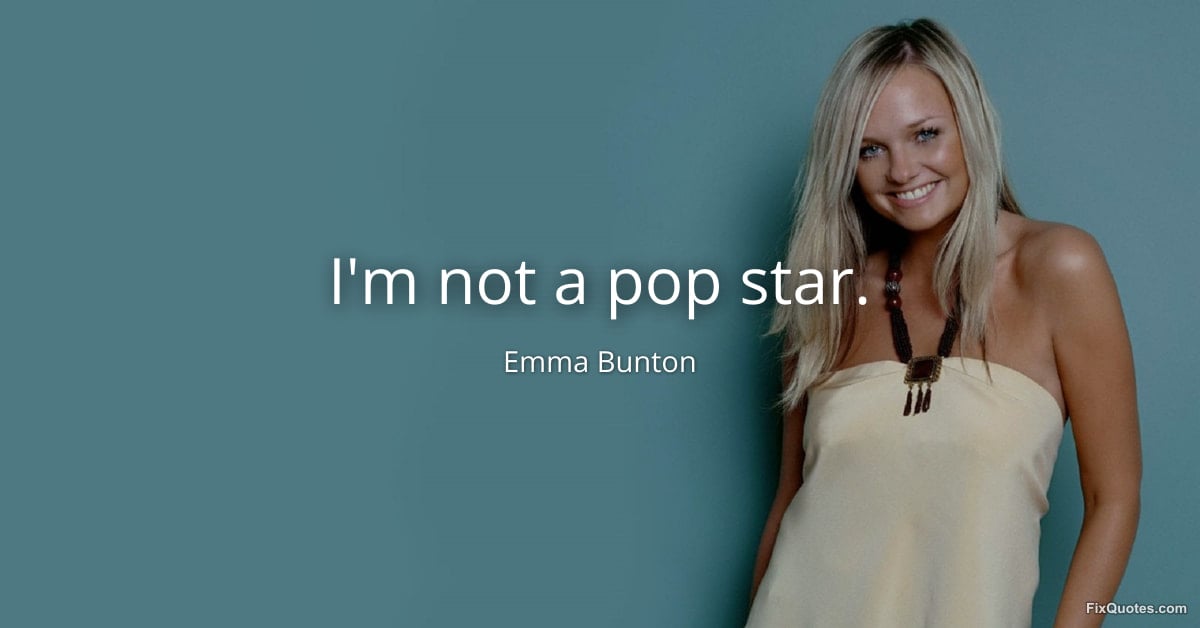
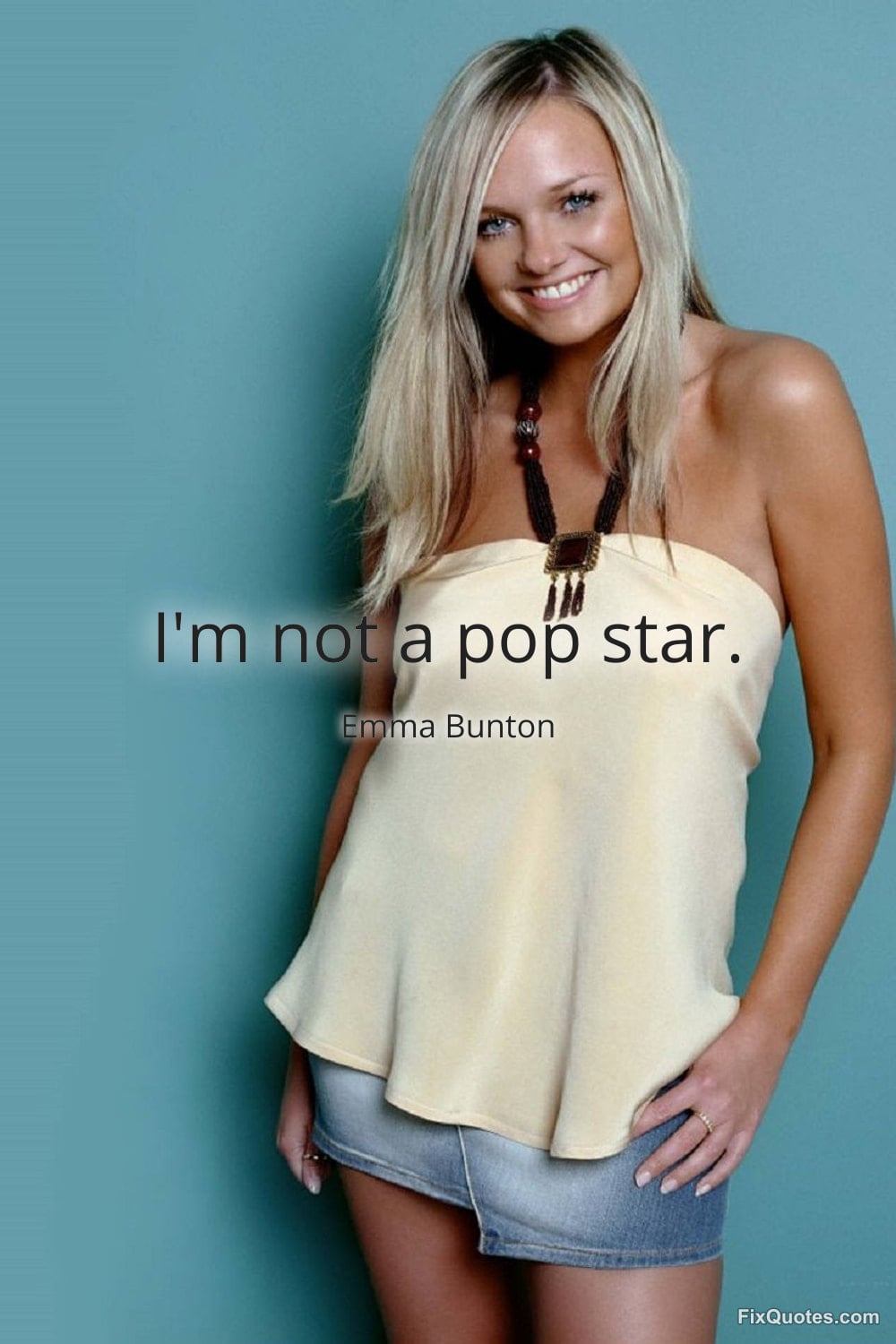
"I'm not a pop star"
About this Quote
"I'm not a pop star" lands less like denial and more like boundary-setting from someone who knows exactly how sticky that label is. Emma Bunton says it as a musician whose entire public identity was built inside pop’s most efficient machine: the Spice Girls, a project engineered to turn personality into product at stadium scale. When you’ve been marketed as a “Baby” archetype since your teens, insisting you’re not a pop star is a way of clawing back adult authorship. It’s also a subtle critique of how “pop star” can mean “manufactured,” “lightweight,” or “forever frozen in a single era,” regardless of craft.
The line works because it’s simultaneously modest and defiant. Modest, because it rejects celebrity hierarchy and the expectation that fame is a permanent job title. Defiant, because it refuses the bargain pop culture offers women in particular: be legible, be cute, be consistent, stay inside the box that made you profitable. Bunton’s career after the peak-Spice years has been deliberately unglamorous in the best way - radio hosting, occasional releases, a steadier kind of public life. “Pop star” implies a constant churn of reinvention and scrutiny; she’s signaling that she’s opted out of that treadmill.
There’s also a wink in the phrasing. Of course she is a pop star in the historical record. The point is that she’s not performing “pop star” as a persona anymore. It’s an attempt to be heard as a person who makes music, not as a brand whose identity is permanently owned by nostalgia.
The line works because it’s simultaneously modest and defiant. Modest, because it rejects celebrity hierarchy and the expectation that fame is a permanent job title. Defiant, because it refuses the bargain pop culture offers women in particular: be legible, be cute, be consistent, stay inside the box that made you profitable. Bunton’s career after the peak-Spice years has been deliberately unglamorous in the best way - radio hosting, occasional releases, a steadier kind of public life. “Pop star” implies a constant churn of reinvention and scrutiny; she’s signaling that she’s opted out of that treadmill.
There’s also a wink in the phrasing. Of course she is a pop star in the historical record. The point is that she’s not performing “pop star” as a persona anymore. It’s an attempt to be heard as a person who makes music, not as a brand whose identity is permanently owned by nostalgia.
Quote Details
| Topic | Music |
|---|---|
| Source | Help us find the source |
| Cite |
Citation Formats
APA Style (7th ed.)
Bunton, Emma. (2026, February 8). I'm not a pop star. FixQuotes. https://fixquotes.com/quotes/im-not-a-pop-star-148903/
Chicago Style
Bunton, Emma. "I'm not a pop star." FixQuotes. February 8, 2026. https://fixquotes.com/quotes/im-not-a-pop-star-148903/.
MLA Style (9th ed.)
"I'm not a pop star." FixQuotes, 8 Feb. 2026, https://fixquotes.com/quotes/im-not-a-pop-star-148903/. Accessed 12 Feb. 2026.
More Quotes by Emma
Add to List