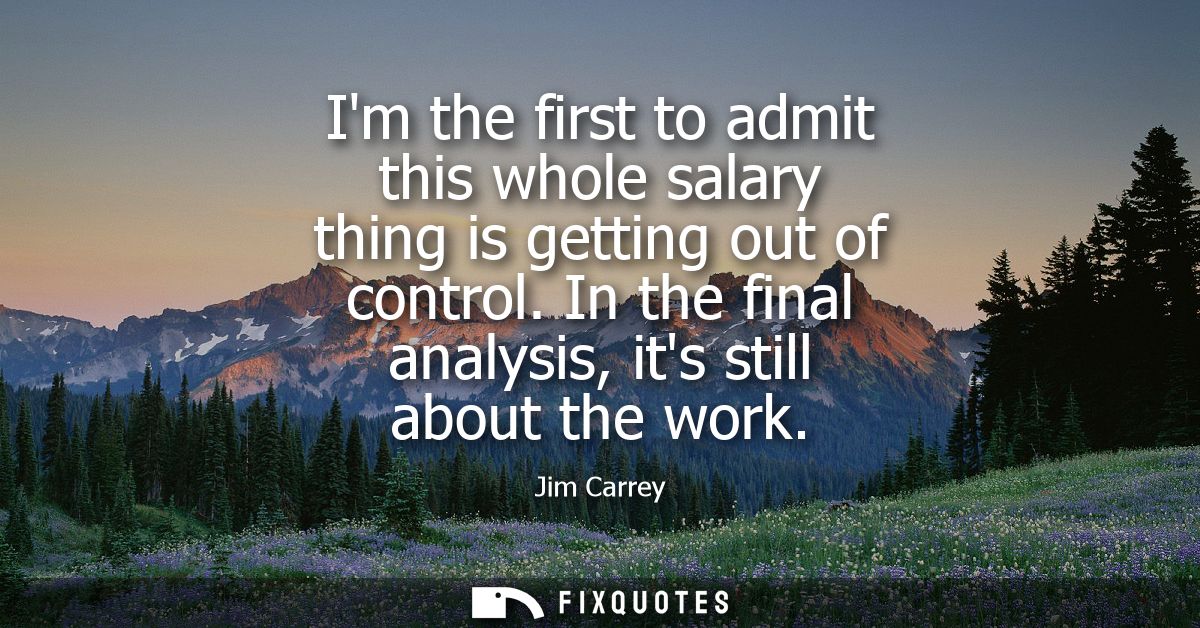
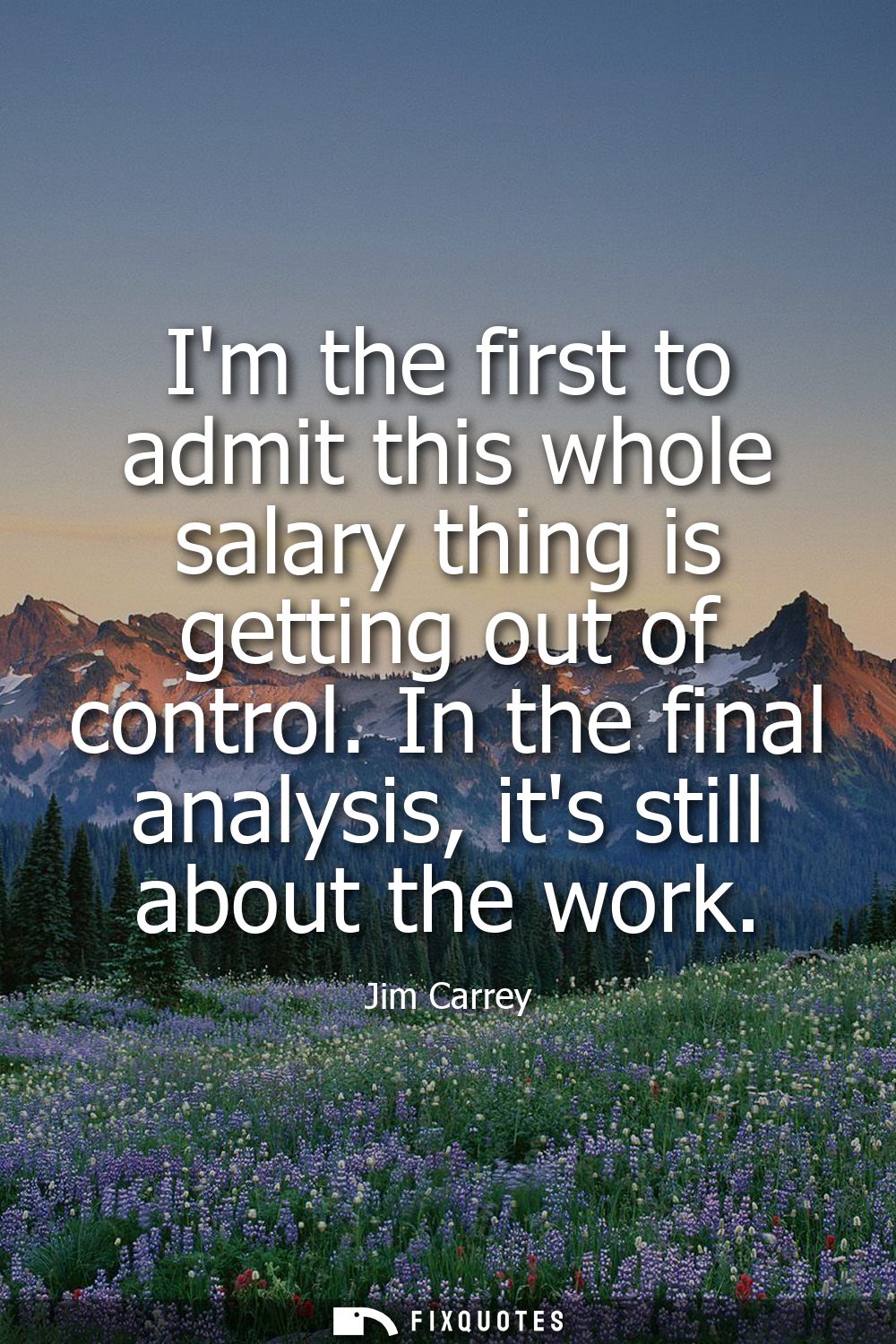
"I'm the first to admit this whole salary thing is getting out of control. In the final analysis, it's still about the work"
About this Quote
Carrey’s line is a confession with a wink: he’s “the first to admit” the pay frenzy is absurd, while also reminding you he’s inside the absurdity, benefiting from it, and still somehow trying to keep a straight face. The genius is the tension between candor and self-protection. He calls it “this whole salary thing,” a deliberately vague phrase that blurs responsibility. No names, no studios, no numbers. Just a cultural weather system that’s “getting out of control,” as if money were a runaway shopping cart no one pushed.
Then he pivots to the safety phrase actors reach for when their bank accounts become a public argument: “it’s still about the work.” The wording is telling. “In the final analysis” sounds clinical, almost corporate, as though he’s auditing his own conscience. It’s a comedian’s move: apply stiff, boardroom language to a deeply emotional question - how to be beloved when you’re paid like a CEO for pretending to be someone else.
The context is the late-90s/early-2000s escalation of blockbuster salaries, when stars became brands and tabloids treated paychecks like moral report cards. Carrey’s intent is damage control without sounding defensive: concede the excess, reaffirm the craft, keep the audience on his side. The subtext: I know you think this is ridiculous. I do too. Please don’t mistake my paycheck for my motivation - even if we both know the paycheck is part of the show.
Then he pivots to the safety phrase actors reach for when their bank accounts become a public argument: “it’s still about the work.” The wording is telling. “In the final analysis” sounds clinical, almost corporate, as though he’s auditing his own conscience. It’s a comedian’s move: apply stiff, boardroom language to a deeply emotional question - how to be beloved when you’re paid like a CEO for pretending to be someone else.
The context is the late-90s/early-2000s escalation of blockbuster salaries, when stars became brands and tabloids treated paychecks like moral report cards. Carrey’s intent is damage control without sounding defensive: concede the excess, reaffirm the craft, keep the audience on his side. The subtext: I know you think this is ridiculous. I do too. Please don’t mistake my paycheck for my motivation - even if we both know the paycheck is part of the show.
Quote Details
| Topic | Work |
|---|---|
| Source | Help us find the source |
More Quotes by Jim
Add to List