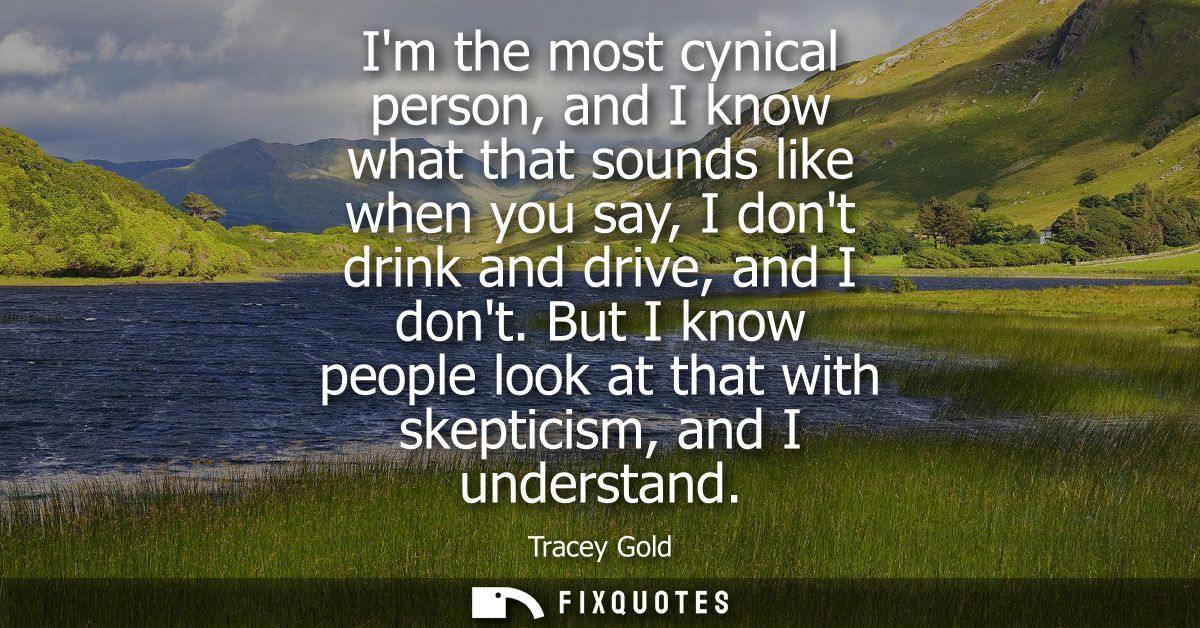
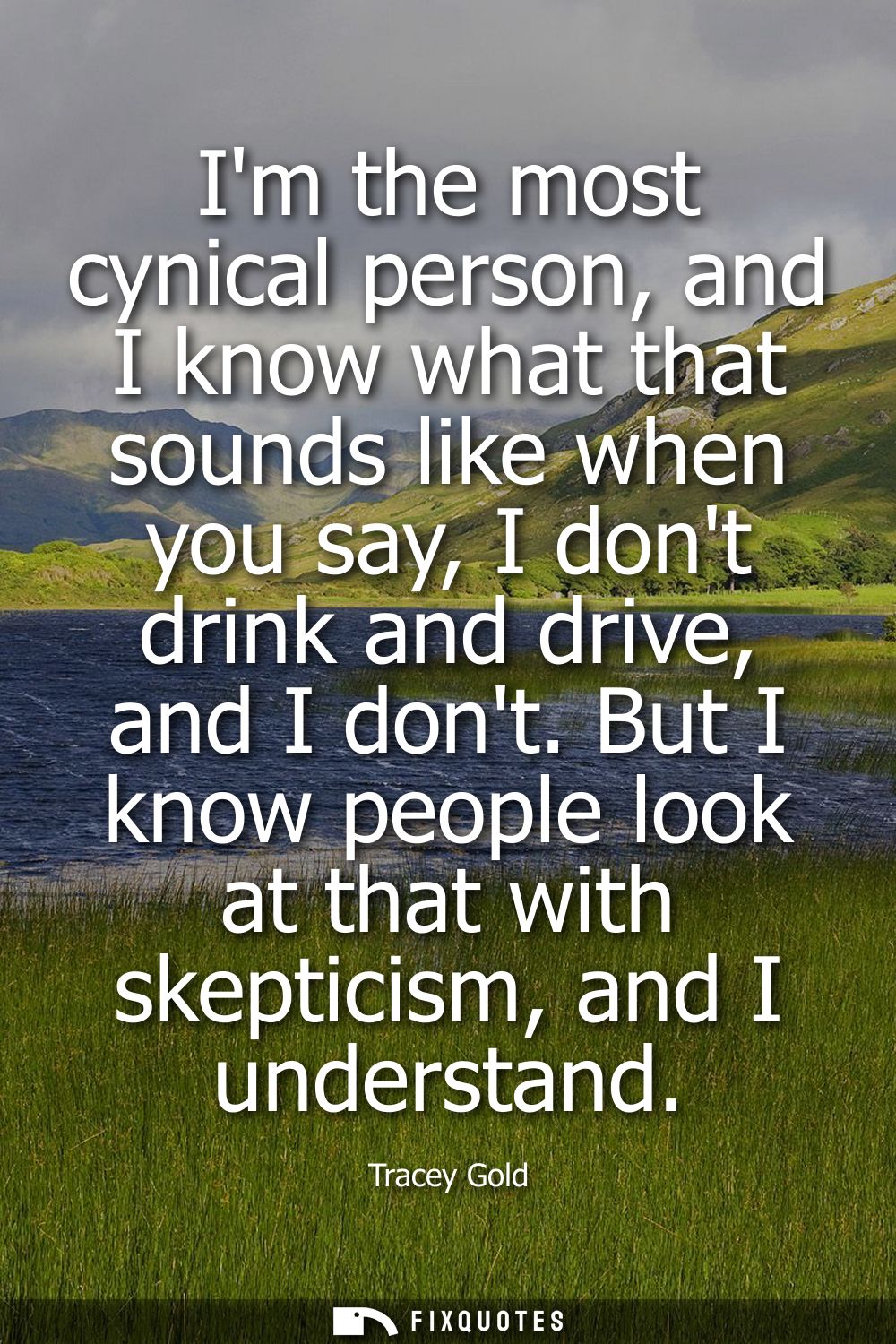
"I'm the most cynical person, and I know what that sounds like when you say, I don't drink and drive, and I don't. But I know people look at that with skepticism, and I understand"
About this Quote
What makes the quote work is how it stages two audiences at once: the public watching for hypocrisy and the speaker watching herself, aware of how easily good intentions get recast as PR. "I know what that sounds like" is a preemptive strike against the reflexive eye-roll. It acknowledges the script we all know: the famous person insists they’re responsible; the public assumes they’re spinning. Gold doesn’t fight that skepticism; she grants it legitimacy. That "and I understand" is quietly disarming - an admission that trust has become transactional, earned only through receipts.
The subtext feels shaped by the long shadow of tabloid-era suspicion, where actresses especially were treated as unreliable narrators of their own lives: too rehearsed when polished, too messy when candid. By calling herself cynical, Gold signals she’s not asking to be taken on faith. She’s describing a world where even doing the right thing comes with cross-examination. The intent isn’t confession or moralizing; it’s credibility management, spoken in plain language, with the weary awareness that credibility is the one thing fame reliably burns through.
Quote Details
| Topic | Honesty & Integrity |
|---|---|
| Source | Help us find the source |
| Cite |
Citation Formats
APA Style (7th ed.)
Gold, Tracey. (2026, January 17). I'm the most cynical person, and I know what that sounds like when you say, I don't drink and drive, and I don't. But I know people look at that with skepticism, and I understand. FixQuotes. https://fixquotes.com/quotes/im-the-most-cynical-person-and-i-know-what-that-63865/
Chicago Style
Gold, Tracey. "I'm the most cynical person, and I know what that sounds like when you say, I don't drink and drive, and I don't. But I know people look at that with skepticism, and I understand." FixQuotes. January 17, 2026. https://fixquotes.com/quotes/im-the-most-cynical-person-and-i-know-what-that-63865/.
MLA Style (9th ed.)
"I'm the most cynical person, and I know what that sounds like when you say, I don't drink and drive, and I don't. But I know people look at that with skepticism, and I understand." FixQuotes, 17 Jan. 2026, https://fixquotes.com/quotes/im-the-most-cynical-person-and-i-know-what-that-63865/. Accessed 31 Mar. 2026.