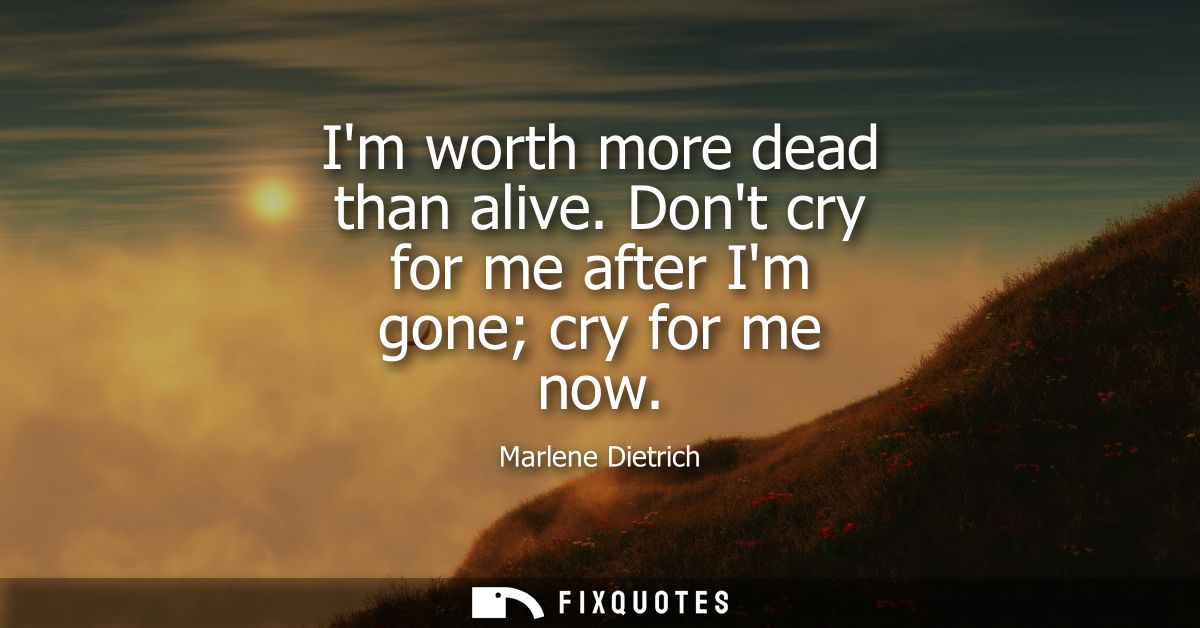
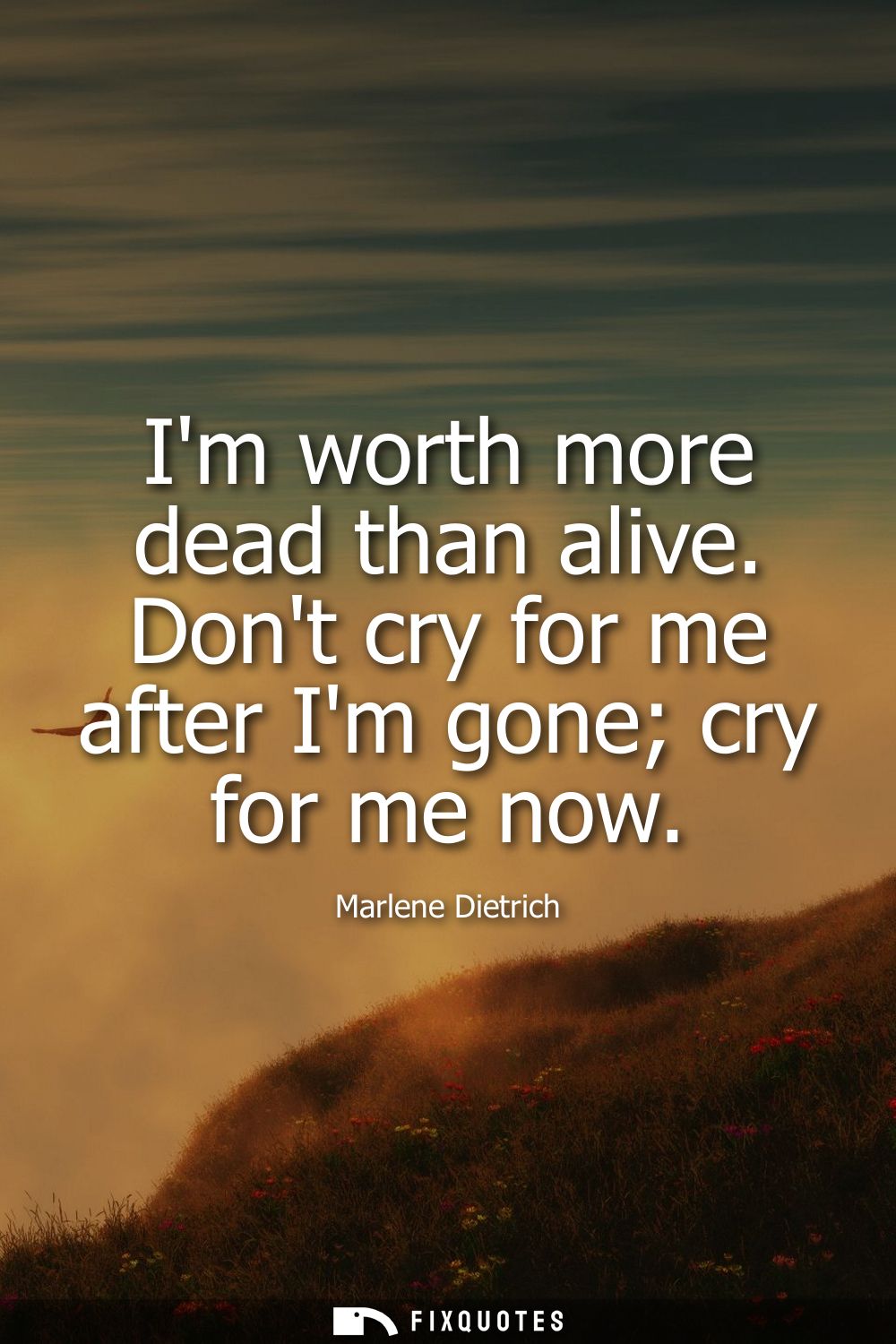
"I'm worth more dead than alive. Don't cry for me after I'm gone; cry for me now"
About this Quote
The second sentence tightens the knife. “Don’t cry for me after I’m gone; cry for me now” flips the ritual of mourning into a moral test. Posthumous grief is easy because it’s consequence-free; it asks nothing except sentiment. Crying “now” implies discomfort, responsibility, maybe even action: notice the person behind the persona while she’s still here, still complicated, still capable of disappointing you. Dietrich is calling out the audience’s habit of granting tenderness only once it can’t change anything.
There’s also a performer’s savvy in the phrasing: short, declarative, built for repetition. It sounds like a line that could be delivered onstage, but it refuses the stage’s bargain. Coming from an actress who carefully controlled her image and lived through the churn of celebrity, exile, and reinvention, it reads as both confession and warning: the world loves icons, not people. If you’re going to be moved, be moved in time to matter.
Quote Details
| Topic | Dark Humor |
|---|---|
| Source | Help us find the source |
| Cite |
Citation Formats
APA Style (7th ed.)
Dietrich, Marlene. (2026, January 16). I'm worth more dead than alive. Don't cry for me after I'm gone; cry for me now. FixQuotes. https://fixquotes.com/quotes/im-worth-more-dead-than-alive-dont-cry-for-me-93300/
Chicago Style
Dietrich, Marlene. "I'm worth more dead than alive. Don't cry for me after I'm gone; cry for me now." FixQuotes. January 16, 2026. https://fixquotes.com/quotes/im-worth-more-dead-than-alive-dont-cry-for-me-93300/.
MLA Style (9th ed.)
"I'm worth more dead than alive. Don't cry for me after I'm gone; cry for me now." FixQuotes, 16 Jan. 2026, https://fixquotes.com/quotes/im-worth-more-dead-than-alive-dont-cry-for-me-93300/. Accessed 12 Feb. 2026.