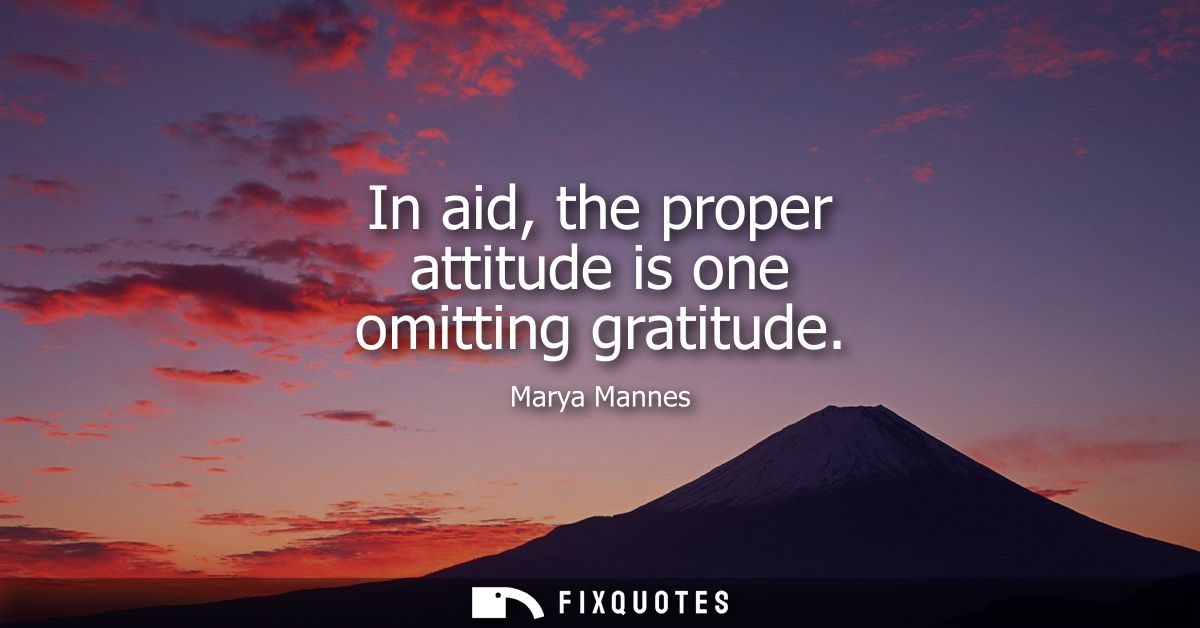
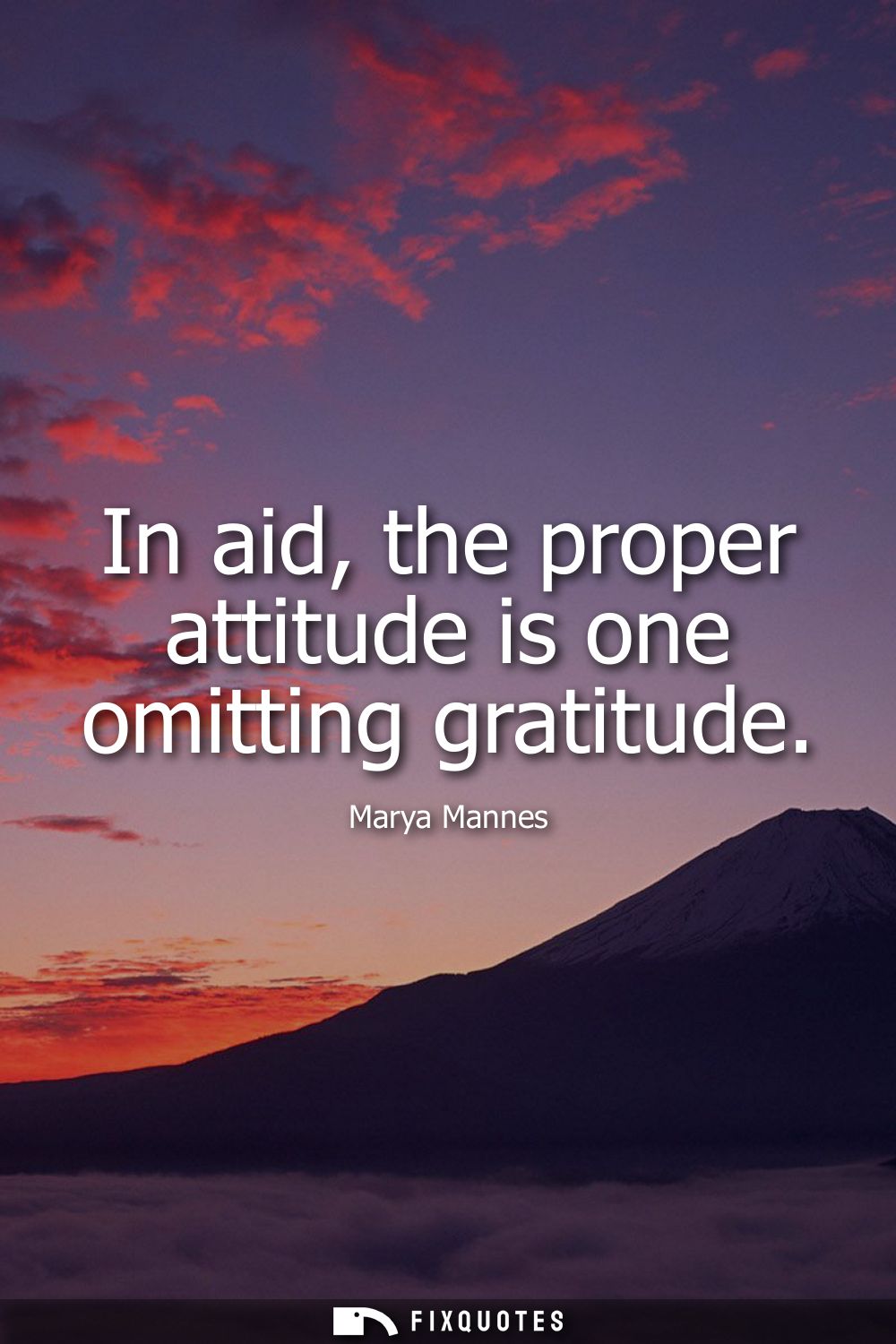
"In aid, the proper attitude is one omitting gratitude"
About this Quote
A good deed that demands applause is just a transaction in nicer clothing. Marya Mannes, a journalist with a knack for puncturing polite hypocrisy, compresses an entire ethics of giving into one tart sentence: if you are offering aid, your “proper attitude” is to leave gratitude out of the room.
The intent is corrective. Mannes isn’t scolding recipients for being ungrateful; she’s disciplining the giver. “In aid” frames charity as a social relationship where power is uneven from the start. The donor already has leverage (money, safety, access, status). Requiring gratitude adds a second tax: emotional performance. It turns relief into a stage on which the vulnerable must reassure the comfortable that they are, indeed, generous, decent people.
The subtext lands hardest in the word “proper.” This is etiquette, but with moral teeth. It implies that demanding gratitude is not merely gauche; it’s a subtle form of control. Gratitude can become a leash: comply, praise, stay indebted, don’t criticize. Mannes is warning that the giver’s hunger for affirmation contaminates the act itself, making “aid” less about need and more about the benefactor’s self-image.
Context matters: Mannes wrote in a 20th-century landscape thick with philanthropy, public welfare debates, and American confidence about “helping” others at home and abroad. Her line reads like an early rebuke to virtue-as-branding. Real aid, she suggests, is anonymous in spirit even when it’s public in practice: it expects nothing back, especially not worship.
The intent is corrective. Mannes isn’t scolding recipients for being ungrateful; she’s disciplining the giver. “In aid” frames charity as a social relationship where power is uneven from the start. The donor already has leverage (money, safety, access, status). Requiring gratitude adds a second tax: emotional performance. It turns relief into a stage on which the vulnerable must reassure the comfortable that they are, indeed, generous, decent people.
The subtext lands hardest in the word “proper.” This is etiquette, but with moral teeth. It implies that demanding gratitude is not merely gauche; it’s a subtle form of control. Gratitude can become a leash: comply, praise, stay indebted, don’t criticize. Mannes is warning that the giver’s hunger for affirmation contaminates the act itself, making “aid” less about need and more about the benefactor’s self-image.
Context matters: Mannes wrote in a 20th-century landscape thick with philanthropy, public welfare debates, and American confidence about “helping” others at home and abroad. Her line reads like an early rebuke to virtue-as-branding. Real aid, she suggests, is anonymous in spirit even when it’s public in practice: it expects nothing back, especially not worship.
Quote Details
| Topic | Humility |
|---|---|
| Source | Help us find the source |
| Cite |
Citation Formats
APA Style (7th ed.)
Mannes, Marya. (2026, January 16). In aid, the proper attitude is one omitting gratitude. FixQuotes. https://fixquotes.com/quotes/in-aid-the-proper-attitude-is-one-omitting-93704/
Chicago Style
Mannes, Marya. "In aid, the proper attitude is one omitting gratitude." FixQuotes. January 16, 2026. https://fixquotes.com/quotes/in-aid-the-proper-attitude-is-one-omitting-93704/.
MLA Style (9th ed.)
"In aid, the proper attitude is one omitting gratitude." FixQuotes, 16 Jan. 2026, https://fixquotes.com/quotes/in-aid-the-proper-attitude-is-one-omitting-93704/. Accessed 7 Apr. 2026.
More Quotes by Marya
Add to List