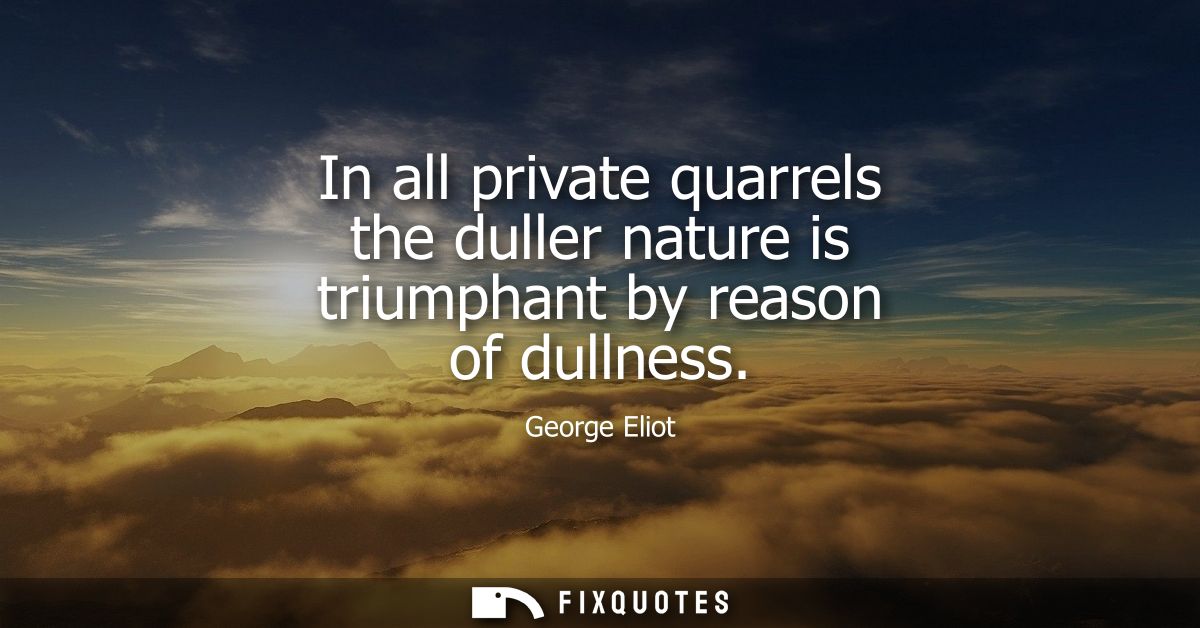
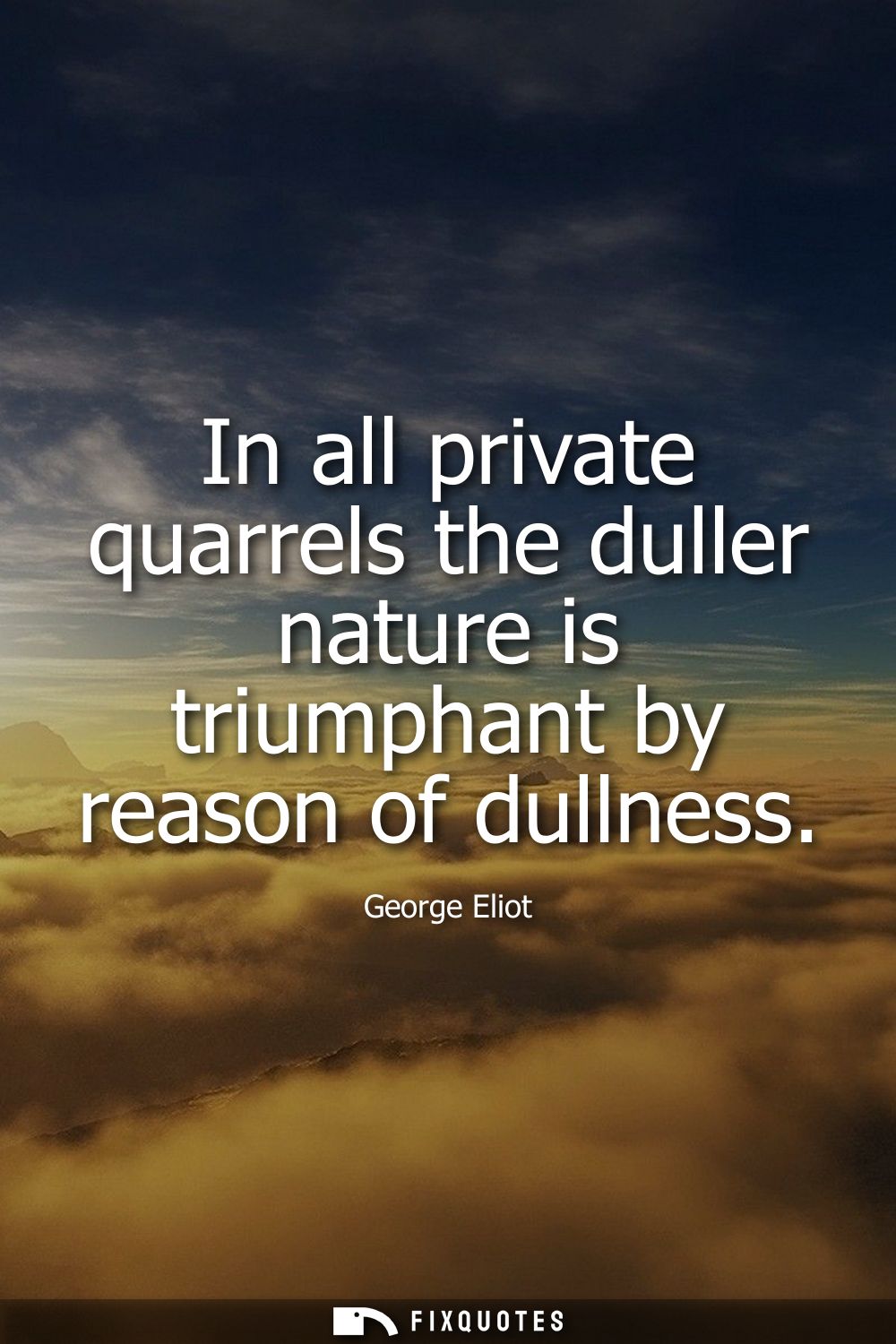
"In all private quarrels, the duller nature is triumphant by reason of dullness"
About this Quote
The subtext is darker than a simple jab at stupidity. Eliot is describing a power dynamic that shows up in homes and friendships: the person with less self-scrutiny can escalate without paying the psychic cost. The more perceptive partner wastes energy trying to make the conflict “make sense,” supplying context, distinctions, and good faith that the quarrel doesn’t reward. Dullness “triumphant by reason of dullness” is Eliot’s tight little paradox: the very limitation becomes the mechanism of victory, because it narrows the battlefield to brute persistence.
Context matters: Eliot wrote with an almost clinical interest in moral psychology and the daily negotiations of domestic life. This is Victorian realism at its sharpest, refusing the comforting idea that intelligence naturally confers social advantage. In private, she implies, the highest rhetorical skill is sometimes the ability not to hear.
Quote Details
| Topic | Wisdom |
|---|---|
| Source | Help us find the source |
| Cite |
Citation Formats
APA Style (7th ed.)
Eliot, George. (2026, February 19). In all private quarrels, the duller nature is triumphant by reason of dullness. FixQuotes. https://fixquotes.com/quotes/in-all-private-quarrels-the-duller-nature-is-28234/
Chicago Style
Eliot, George. "In all private quarrels, the duller nature is triumphant by reason of dullness." FixQuotes. February 19, 2026. https://fixquotes.com/quotes/in-all-private-quarrels-the-duller-nature-is-28234/.
MLA Style (9th ed.)
"In all private quarrels, the duller nature is triumphant by reason of dullness." FixQuotes, 19 Feb. 2026, https://fixquotes.com/quotes/in-all-private-quarrels-the-duller-nature-is-28234/. Accessed 29 Mar. 2026.