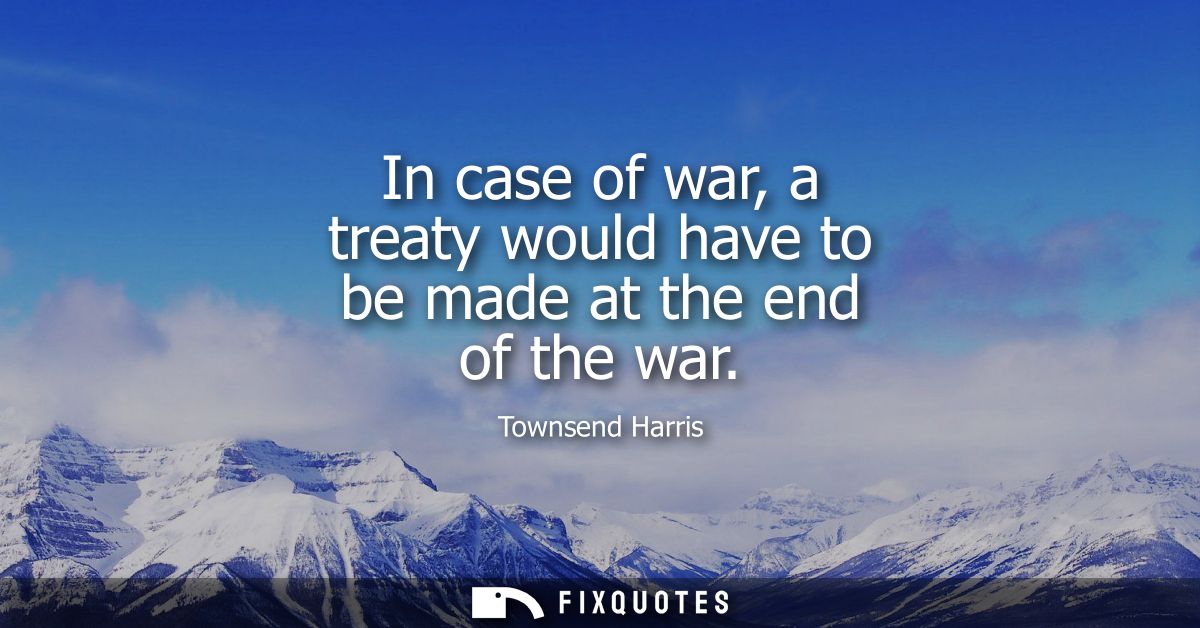
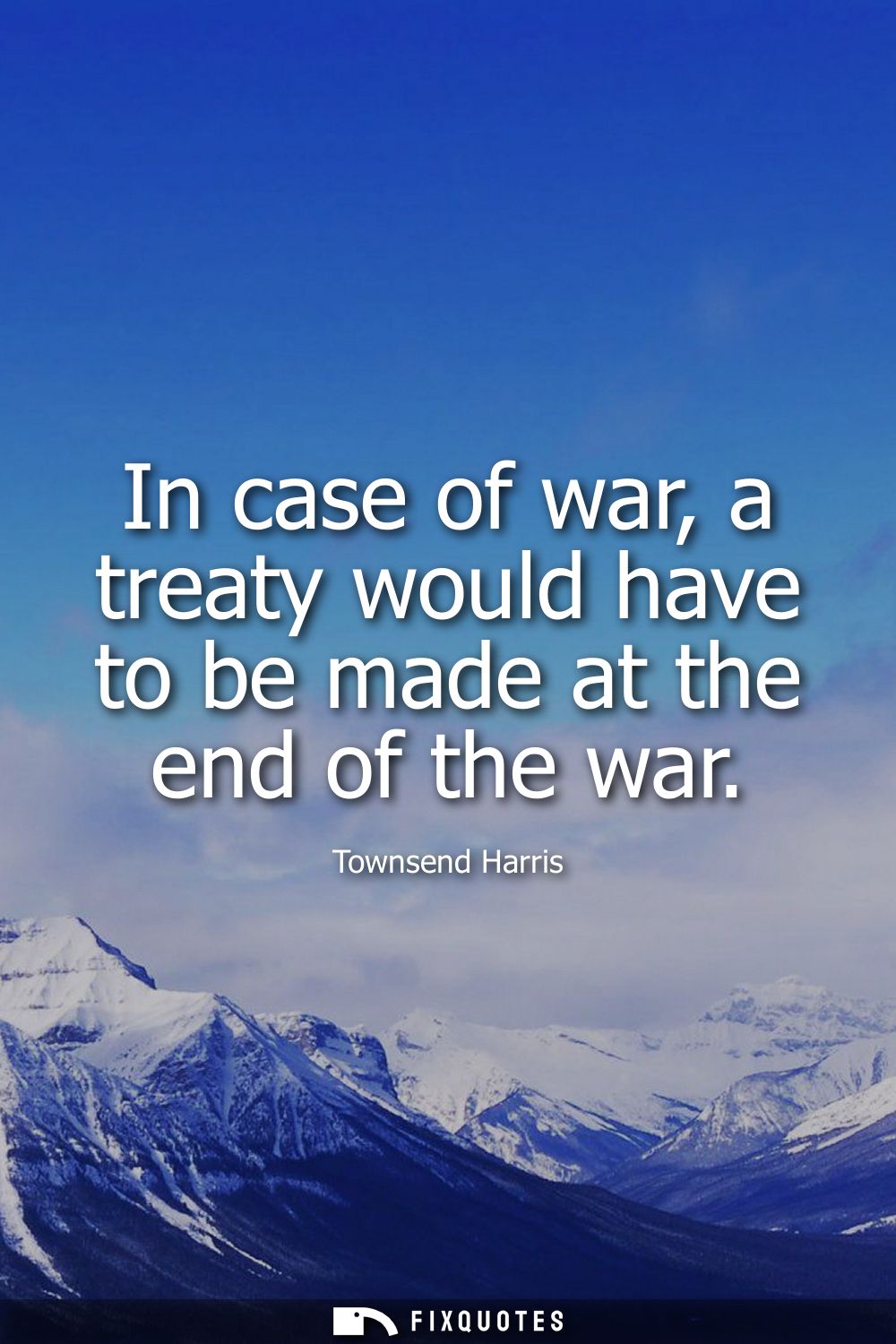
"In case of war, a treaty would have to be made at the end of the war"
About this Quote
The intent reads as both pragmatic and quietly coercive. Harris is arguing against romantic or absolutist postures by shrinking “war” down to a costly detour on the way back to negotiation. The subtext: if you think conflict will settle the issue permanently, you’re fooling yourself. You’ll still end up at a table, signing something that looks a lot like what you could have agreed to earlier, except with bodies, debt, and humiliation added to the ledger.
Context matters. Mid-19th-century “treaty” language wasn’t neutral; it often meant unequal arrangements imposed by naval power. Harris’s career sits inside that world of gunboat diplomacy, where commerce and coercion were adjacent tools. So the line can be read as a pressure tactic: accept the treaty now, because you will accept one later anyway, and later will be worse. Its rhetorical power comes from refusing moral theater. By framing peace as the inevitable administrative endpoint of war, Harris makes resistance seem not heroic but inefficient, and makes negotiation feel less like capitulation than like avoiding a predictable, expensive invoice.
Quote Details
| Topic | War |
|---|---|
| Source | Help us find the source |
| Cite |
Citation Formats
APA Style (7th ed.)
Harris, Townsend. (2026, January 17). In case of war, a treaty would have to be made at the end of the war. FixQuotes. https://fixquotes.com/quotes/in-case-of-war-a-treaty-would-have-to-be-made-at-71768/
Chicago Style
Harris, Townsend. "In case of war, a treaty would have to be made at the end of the war." FixQuotes. January 17, 2026. https://fixquotes.com/quotes/in-case-of-war-a-treaty-would-have-to-be-made-at-71768/.
MLA Style (9th ed.)
"In case of war, a treaty would have to be made at the end of the war." FixQuotes, 17 Jan. 2026, https://fixquotes.com/quotes/in-case-of-war-a-treaty-would-have-to-be-made-at-71768/. Accessed 19 Mar. 2026.