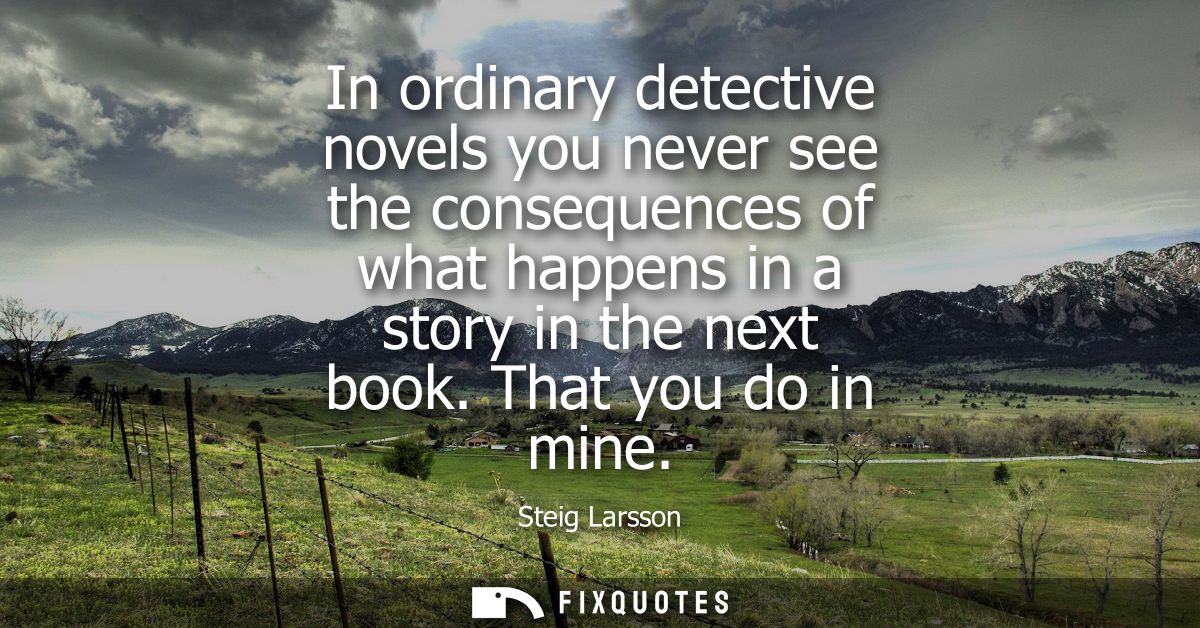
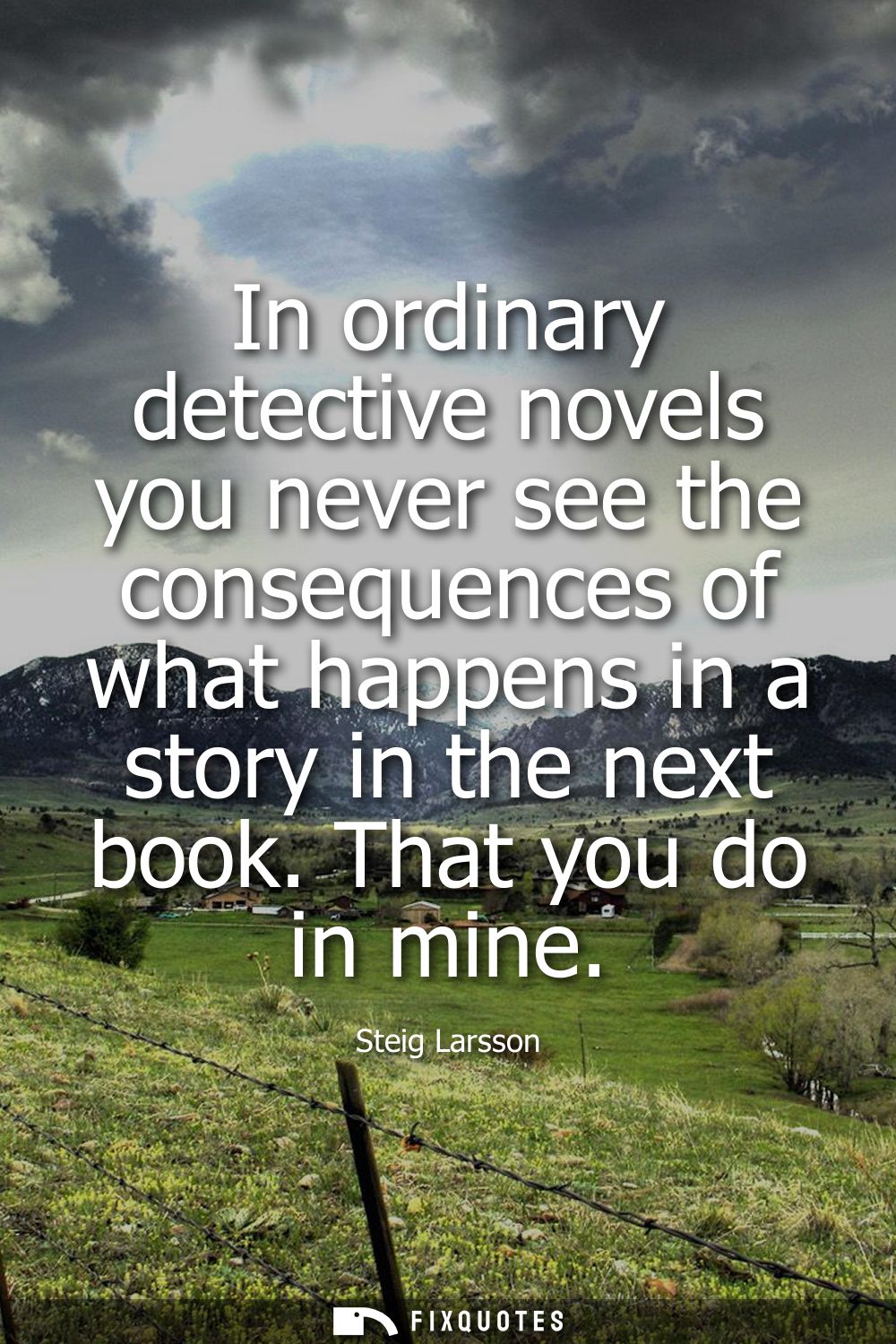
"In ordinary detective novels you never see the consequences of what happens in a story in the next book. That you do in mine"
About this Quote
The line also telegraphs Larsson’s larger project in the Millennium series: crime as a systemic condition, not a puzzlebox. Consequences don’t stop at the perpetrator’s arrest because power doesn’t stop working when the plot is over. Trauma lingers, institutions protect themselves, and the people who survive carry the story forward in altered bodies and altered choices. That’s why his books feel less like whodunits than like pressure systems: each volume changes the weather for the next.
There’s a sly accusation tucked inside “ordinary.” It’s a jab at a market that rewards closure as a product feature. Larsson frames his refusal of the reset button as a moral stance: if you’re going to write about brutality - especially sexual violence, corruption, and the quiet complicity of respectable Sweden - you owe the reader a world that remembers. Continuity becomes ethics. The narrative doesn’t just continue; it accounts.
Quote Details
| Topic | Writing |
|---|---|
| Source | Help us find the source |
| Cite |
Citation Formats
APA Style (7th ed.)
Larsson, Stieg. (2026, January 16). In ordinary detective novels you never see the consequences of what happens in a story in the next book. That you do in mine. FixQuotes. https://fixquotes.com/quotes/in-ordinary-detective-novels-you-never-see-the-122720/
Chicago Style
Larsson, Stieg. "In ordinary detective novels you never see the consequences of what happens in a story in the next book. That you do in mine." FixQuotes. January 16, 2026. https://fixquotes.com/quotes/in-ordinary-detective-novels-you-never-see-the-122720/.
MLA Style (9th ed.)
"In ordinary detective novels you never see the consequences of what happens in a story in the next book. That you do in mine." FixQuotes, 16 Jan. 2026, https://fixquotes.com/quotes/in-ordinary-detective-novels-you-never-see-the-122720/. Accessed 12 Feb. 2026.