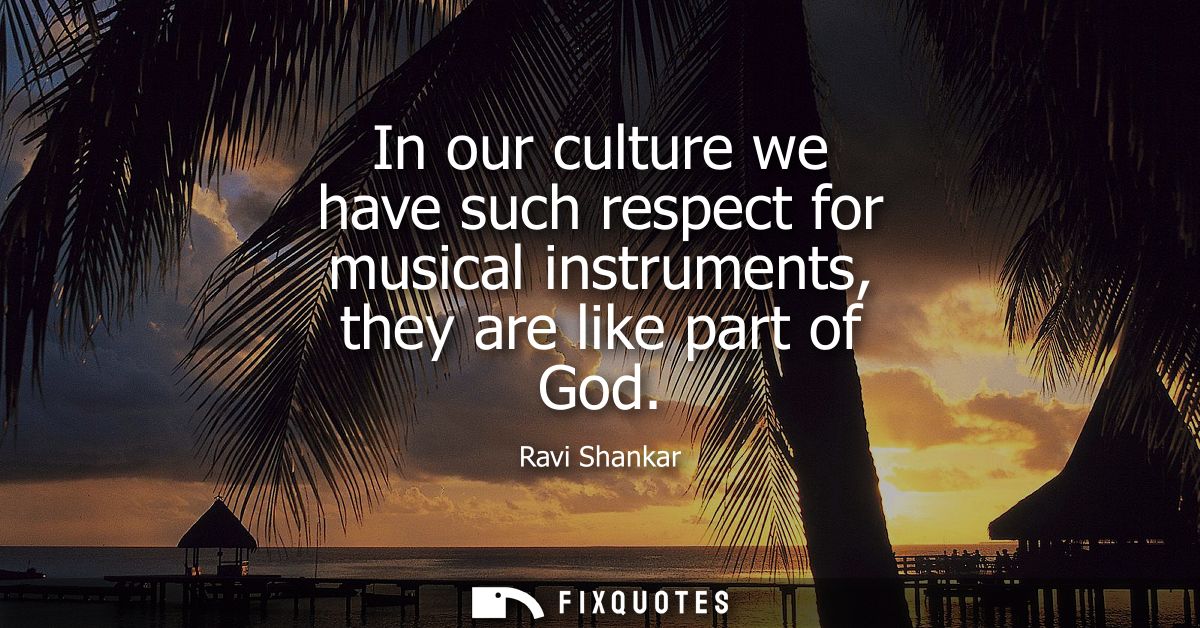
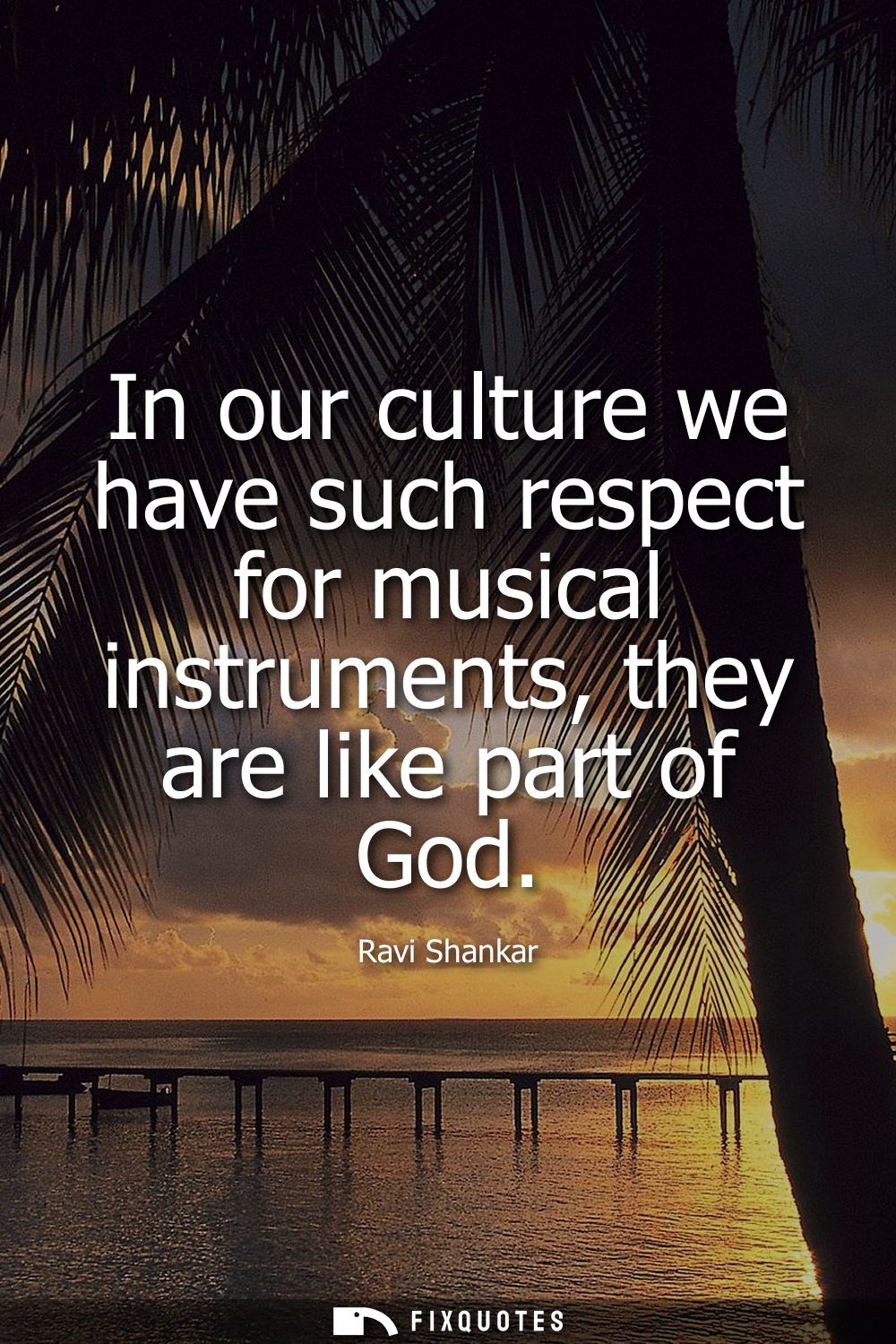
"In our culture we have such respect for musical instruments, they are like part of God"
About this Quote
The subtext lands as a quiet critique of disposable, gear-obsessed modernity. In many pop contexts an instrument is a brand, a prop, an extension of celebrity. Shankar’s phrasing turns that upside down: the musician is the temporary vessel, the instrument is enduring, worthy of ritual care. It’s an argument for humility disguised as reverence. Respect isn’t sentimental; it’s discipline, the willingness to submit to years of practice because the sound matters more than the performer.
Context sharpens the line. Shankar spent decades acting as a bridge figure, introducing Indian classical traditions to audiences primed by rock, jazz, and the 1960s counterculture. Spiritual language was often consumed in the West as vibe. He uses it strategically but not cynically, asserting that raga is tied to lineage, time, and intention, not just a “trippy” texture. By sanctifying the instrument, he sanctifies the entire relationship around it: teacher to student, musician to audience, sound to silence. That’s why it works: it upgrades listening from consumption to encounter.
Quote Details
| Topic | Music |
|---|---|
| Source | Help us find the source |
| Cite |
Citation Formats
APA Style (7th ed.)
Shankar, Ravi. (2026, January 16). In our culture we have such respect for musical instruments, they are like part of God. FixQuotes. https://fixquotes.com/quotes/in-our-culture-we-have-such-respect-for-musical-110300/
Chicago Style
Shankar, Ravi. "In our culture we have such respect for musical instruments, they are like part of God." FixQuotes. January 16, 2026. https://fixquotes.com/quotes/in-our-culture-we-have-such-respect-for-musical-110300/.
MLA Style (9th ed.)
"In our culture we have such respect for musical instruments, they are like part of God." FixQuotes, 16 Jan. 2026, https://fixquotes.com/quotes/in-our-culture-we-have-such-respect-for-musical-110300/. Accessed 10 Mar. 2026.