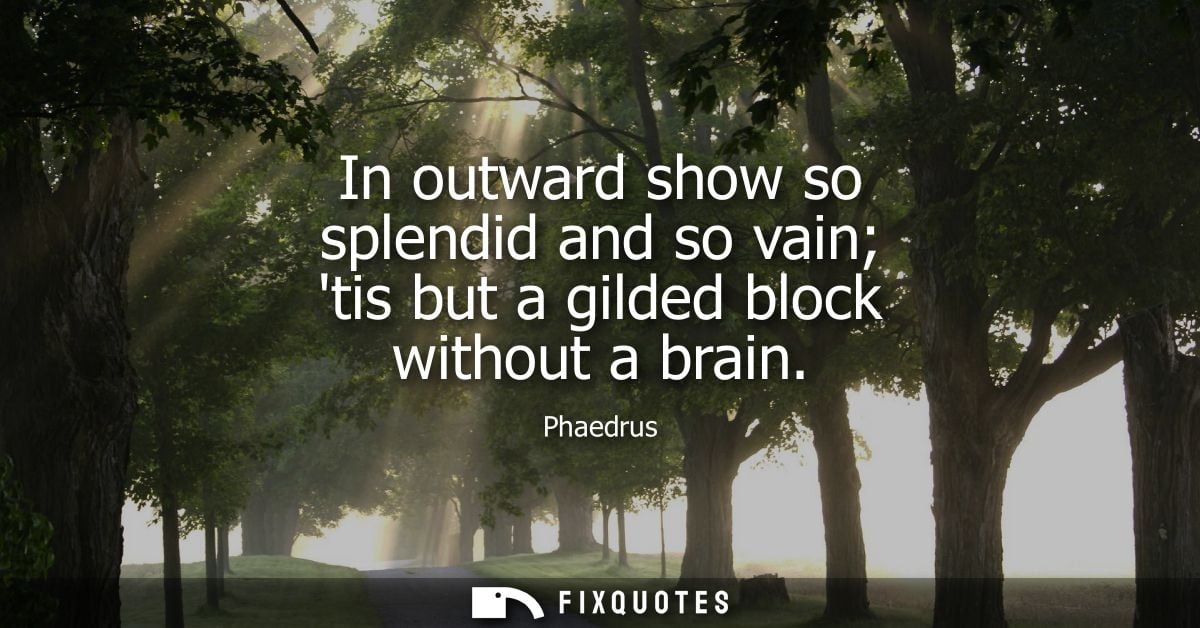
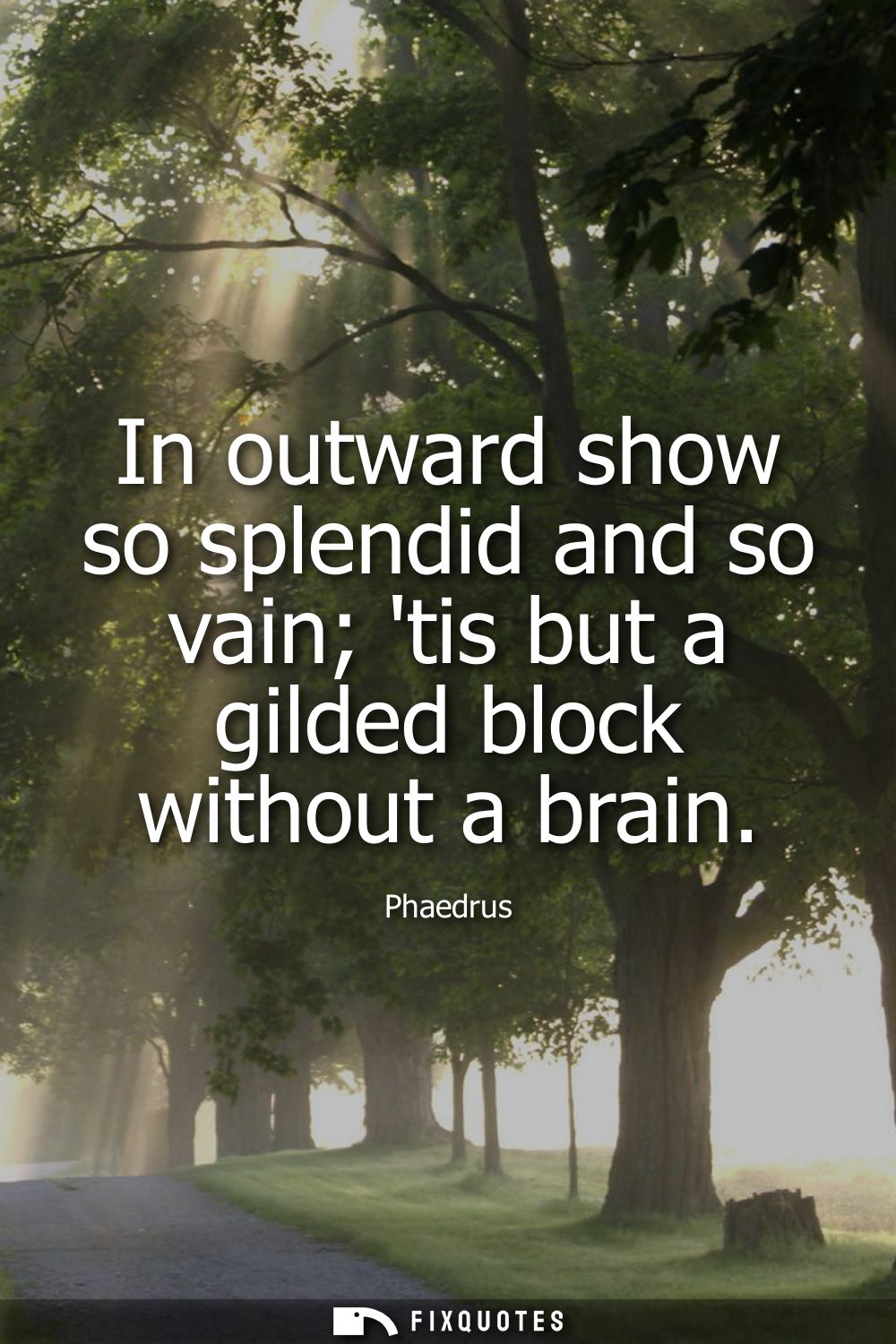
"In outward show so splendid and so vain; 'tis but a gilded block without a brain"
About this Quote
The intent is corrective, almost pedagogical. Phaedrus, a fabulist-poet in the Roman world, worked in a tradition where animals and objects expose human folly with quick, memorable turns. This couplet is a portable moral, designed to stick in the mind of a reader living amid imperial spectacle, patronage theatrics, and status signifiers that were literally worn and displayed. It’s not merely anti-wealth; it’s anti-credulity. The target is the audience as much as the peacock: anyone who confuses polish for intelligence, display for worth.
Subtextually, “vain” does double duty: vanity as self-regard, and vanity as emptiness. The line flatters the reader into feeling savvy (“you see through it”) while warning that seduction by shine is the default setting of public life. Swap Roman gilding for modern branding, influencer sheen, or corporate mission-speak, and the mechanism is identical: surface as a substitute for thought. The sting is timeless because the bait is.
Quote Details
| Topic | Wisdom |
|---|---|
| Source | Help us find the source |
| Cite |
Citation Formats
APA Style (7th ed.)
Phaedrus. (2026, January 18). In outward show so splendid and so vain; 'tis but a gilded block without a brain. FixQuotes. https://fixquotes.com/quotes/in-outward-show-so-splendid-and-so-vain-tis-but-a-8686/
Chicago Style
Phaedrus. "In outward show so splendid and so vain; 'tis but a gilded block without a brain." FixQuotes. January 18, 2026. https://fixquotes.com/quotes/in-outward-show-so-splendid-and-so-vain-tis-but-a-8686/.
MLA Style (9th ed.)
"In outward show so splendid and so vain; 'tis but a gilded block without a brain." FixQuotes, 18 Jan. 2026, https://fixquotes.com/quotes/in-outward-show-so-splendid-and-so-vain-tis-but-a-8686/. Accessed 31 Mar. 2026.