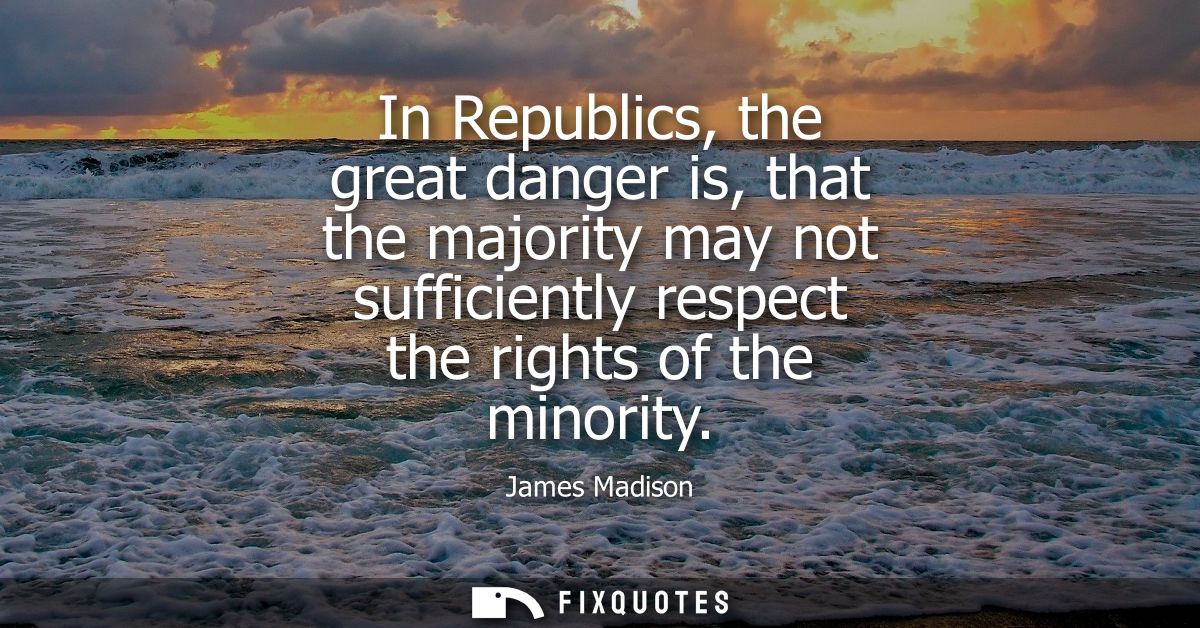
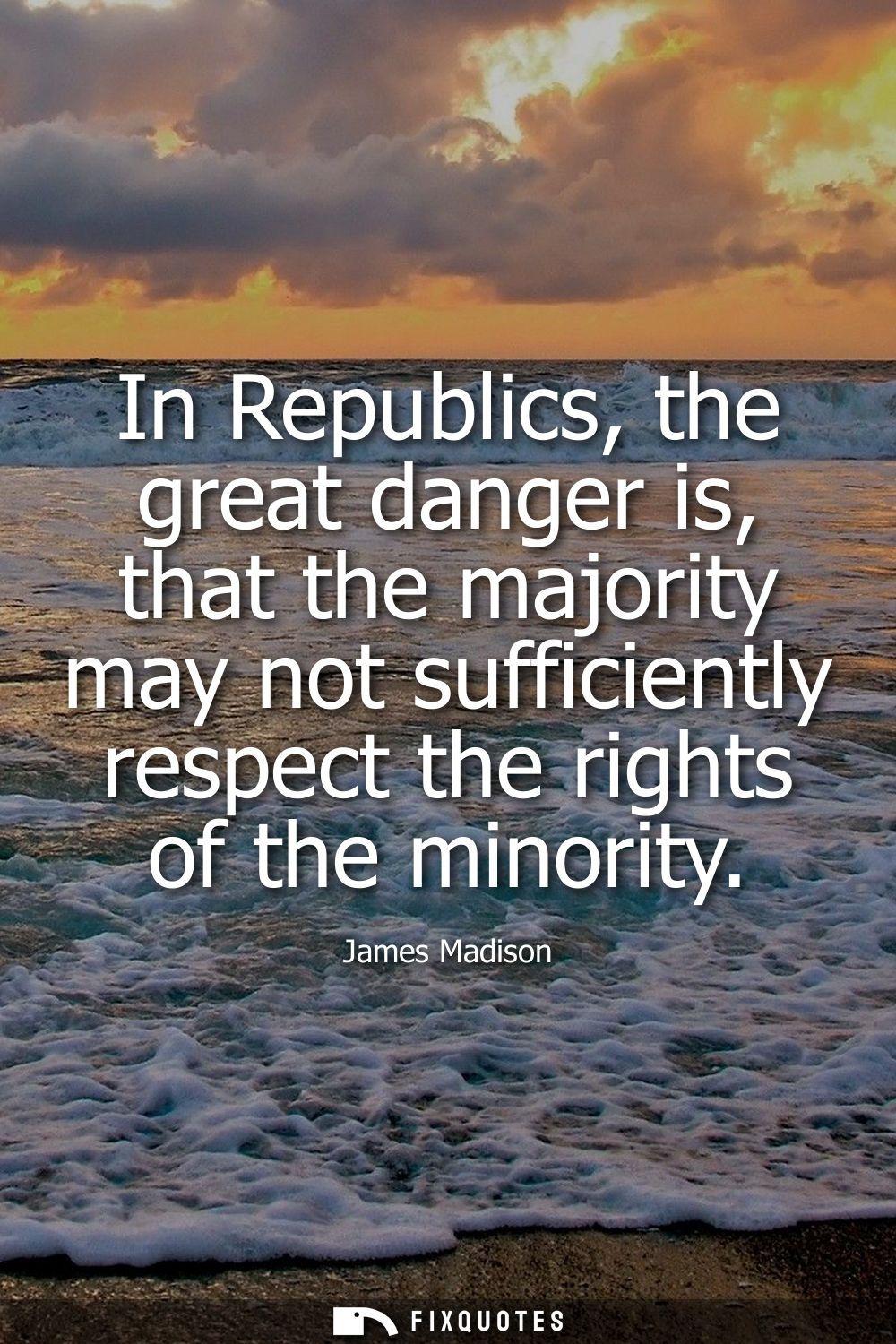
"In Republics, the great danger is, that the majority may not sufficiently respect the rights of the minority"
About this Quote
Madison’s warning lands with the cool menace of someone who has watched power justify itself in every costume. The line is often misread as genteel civics-class moderation; it’s closer to an alarm bell about democratic self-confidence curdling into democratic tyranny. He’s not distrusting “the people” in some abstract, aristocratic way. He’s diagnosing a particular failure mode of republics: when legitimacy is reduced to headcount, the winners start treating the losers’ rights as optional, even anti-democratic.
The intent is surgical. Madison is arguing for constitutional friction: checks and balances, separation of powers, and structural protections that keep a temporary majority from converting its appetite into law’s final word. The subtext is that majorities aren’t automatically wise or restrained; they’re organized interests with passions, incentives, and blind spots. “Not sufficiently respect” is doing heavy lifting: disrespect doesn’t have to be violent or explicit. It can be procedural, bureaucratic, clothed in popular slogans. Rights get eroded by “reasonable” exceptions, by security panics, by moral crusades, by the urge to punish dissenters who won’t get with the program.
Context matters. Madison is writing in the shadow of factionalism, debtor relief fights, and the post-Revolution stress test of governance, when state legislatures proved how quickly popular pressure can become policy roulette. This is Federalist logic distilled: democracy needs guardrails not because freedom is fragile, but because majorities are powerful enough to break it while believing they’re saving it. The line remains uncomfortably current: it challenges any movement that confuses electoral victory with moral permission.
The intent is surgical. Madison is arguing for constitutional friction: checks and balances, separation of powers, and structural protections that keep a temporary majority from converting its appetite into law’s final word. The subtext is that majorities aren’t automatically wise or restrained; they’re organized interests with passions, incentives, and blind spots. “Not sufficiently respect” is doing heavy lifting: disrespect doesn’t have to be violent or explicit. It can be procedural, bureaucratic, clothed in popular slogans. Rights get eroded by “reasonable” exceptions, by security panics, by moral crusades, by the urge to punish dissenters who won’t get with the program.
Context matters. Madison is writing in the shadow of factionalism, debtor relief fights, and the post-Revolution stress test of governance, when state legislatures proved how quickly popular pressure can become policy roulette. This is Federalist logic distilled: democracy needs guardrails not because freedom is fragile, but because majorities are powerful enough to break it while believing they’re saving it. The line remains uncomfortably current: it challenges any movement that confuses electoral victory with moral permission.
Quote Details
| Topic | Human Rights |
|---|---|
| Source | Federalist No. 51 (James Madison), 1788 — The Federalist Papers; contains line: 'In republican government, the great danger is, that the majority should not sufficiently respect the rights of the minority.' |
More Quotes by James
Add to List