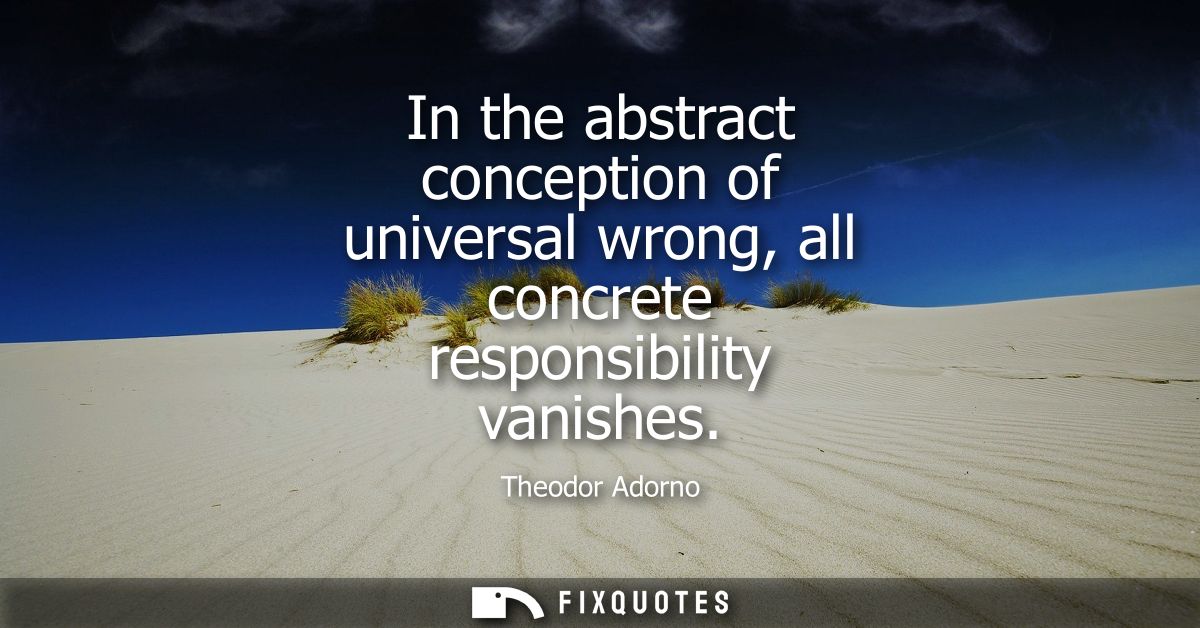
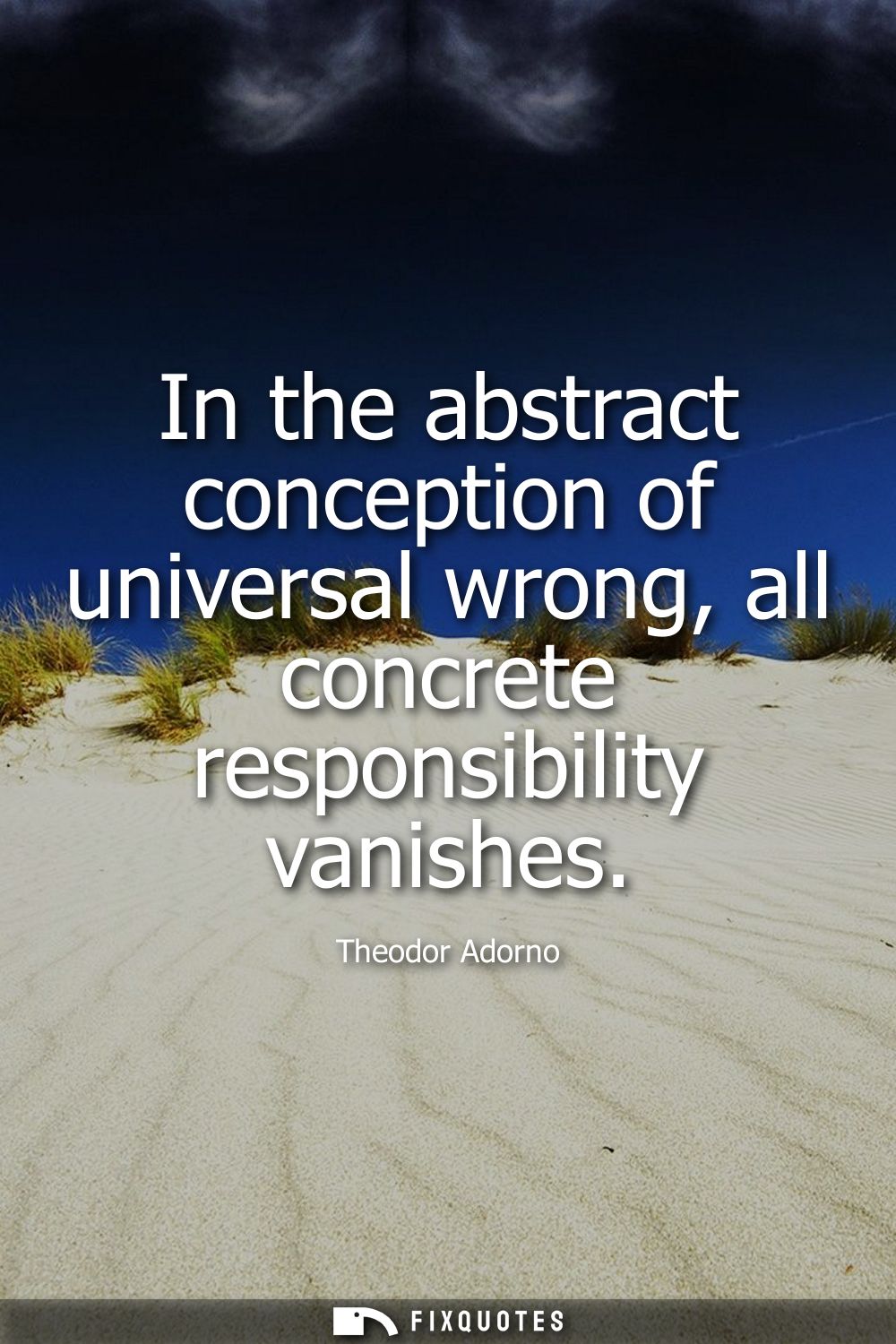
"In the abstract conception of universal wrong, all concrete responsibility vanishes"
About this Quote
The intent is not to deny structural critique but to discipline it. Adorno’s target is a style of thinking that converts historical violence into philosophical mood. That move flatters the speaker (look how deep, how total) while quietly evacuating the obligations that come with naming perpetrators, beneficiaries, institutions, and choices. It’s also a warning about the seductive comfort of pessimism: when the world is irredeemably corrupted, action can be dismissed as naive, compromised, or merely symbolic.
Context matters. Writing in the shadow of fascism, mass culture, and the Holocaust, Adorno distrusted the way big, totalizing narratives can anesthetize moral perception. Abstraction can become a defense mechanism, especially for intellectuals: you can indict “society” and still avoid asking what you did, what you financed, what you ignored, what you’re doing now. The line lands because it exposes an ethical loophole in high-minded critique: the more cosmic the condemnation, the easier it is to keep your hands clean.
Quote Details
| Topic | Ethics & Morality |
|---|---|
| Source | Help us find the source |
| Cite |
Citation Formats
APA Style (7th ed.)
Adorno, Theodor. (2026, January 17). In the abstract conception of universal wrong, all concrete responsibility vanishes. FixQuotes. https://fixquotes.com/quotes/in-the-abstract-conception-of-universal-wrong-all-33445/
Chicago Style
Adorno, Theodor. "In the abstract conception of universal wrong, all concrete responsibility vanishes." FixQuotes. January 17, 2026. https://fixquotes.com/quotes/in-the-abstract-conception-of-universal-wrong-all-33445/.
MLA Style (9th ed.)
"In the abstract conception of universal wrong, all concrete responsibility vanishes." FixQuotes, 17 Jan. 2026, https://fixquotes.com/quotes/in-the-abstract-conception-of-universal-wrong-all-33445/. Accessed 24 Mar. 2026.