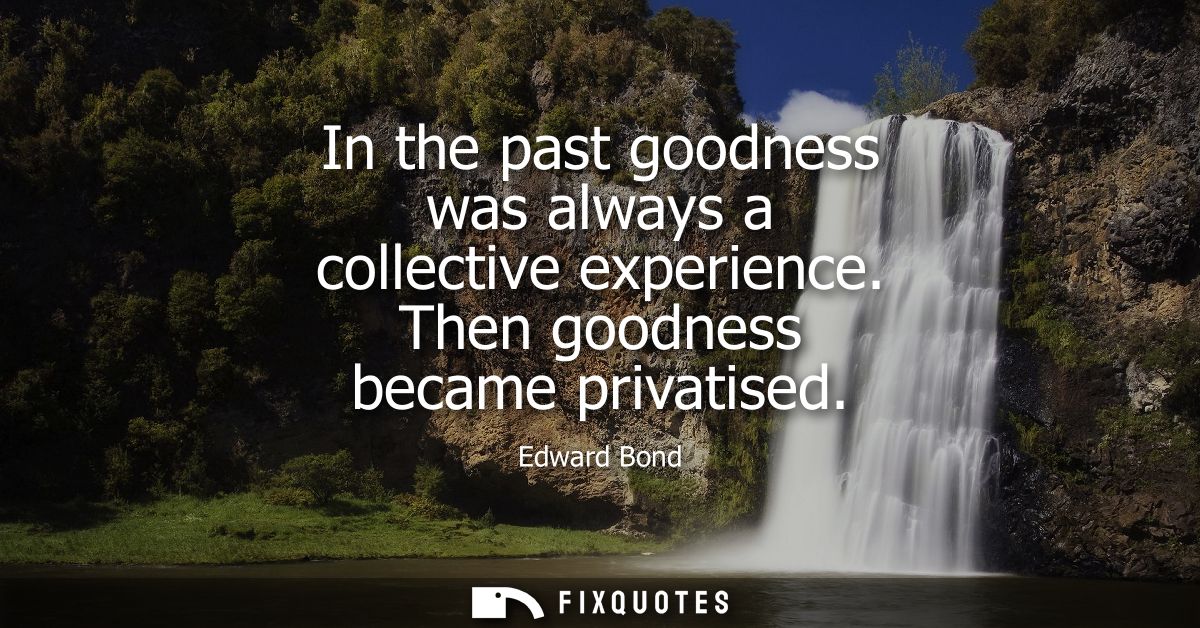
"In the past goodness was always a collective experience. Then goodness became privatised"
About this Quote
Then comes the pivot: “privatised.” Bond borrows the language of Thatcher-era economics and aims it at the soul. Privatisation suggests property, ownership, and enclosure: goodness converted into a private asset, curated like taste. Morality becomes something you feel about yourself, something you perform in controlled settings, something you purchase through ethical consumption or outsource to charities and institutions. The social safety net becomes a personal brand.
As a playwright shaped by postwar Britain and notorious for staging violence as the product of social arrangements, Bond isn’t mourning some village idyll. He’s indicting a system that makes cruelty easy by making responsibility optional. If goodness is collective, failure is everyone’s problem; if goodness is private, failure is a personal flaw, a secret shame, or someone else’s unlucky story.
The line works because it turns a comforting idea (“be a good person”) into a political question: who gets to define goodness, who gets access to it, and what happens when it stops being a shared public good.
Quote Details
| Topic | Ethics & Morality |
|---|---|
| Source | Help us find the source |
| Cite |
Citation Formats
APA Style (7th ed.)
Bond, Edward. (2026, January 17). In the past goodness was always a collective experience. Then goodness became privatised. FixQuotes. https://fixquotes.com/quotes/in-the-past-goodness-was-always-a-collective-47696/
Chicago Style
Bond, Edward. "In the past goodness was always a collective experience. Then goodness became privatised." FixQuotes. January 17, 2026. https://fixquotes.com/quotes/in-the-past-goodness-was-always-a-collective-47696/.
MLA Style (9th ed.)
"In the past goodness was always a collective experience. Then goodness became privatised." FixQuotes, 17 Jan. 2026, https://fixquotes.com/quotes/in-the-past-goodness-was-always-a-collective-47696/. Accessed 30 Mar. 2026.