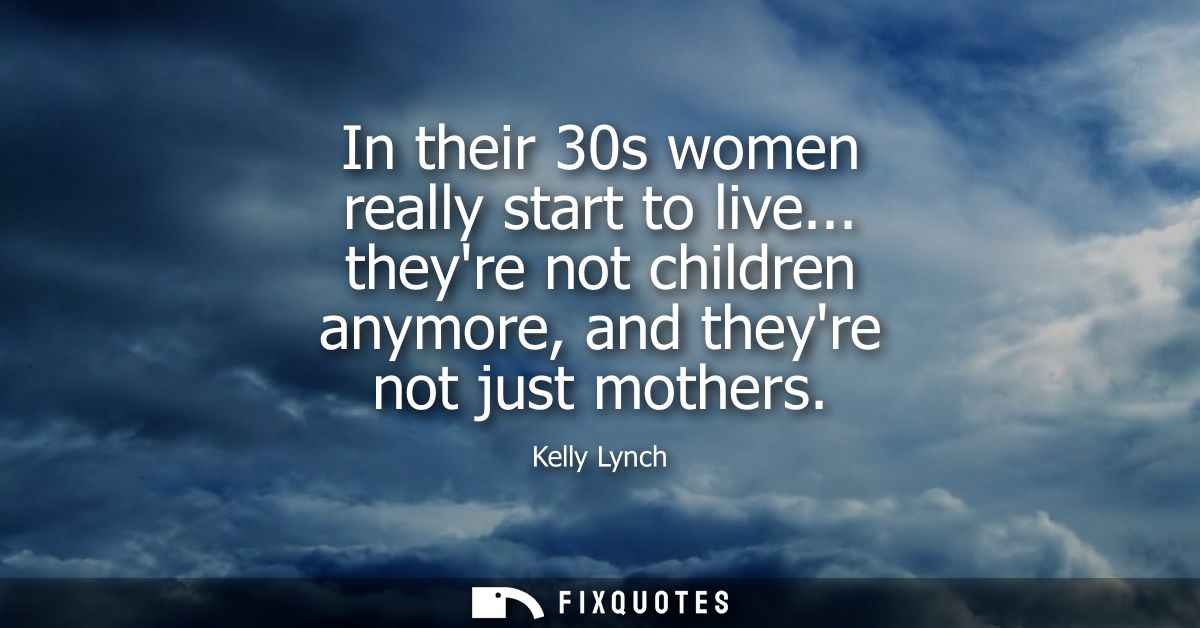
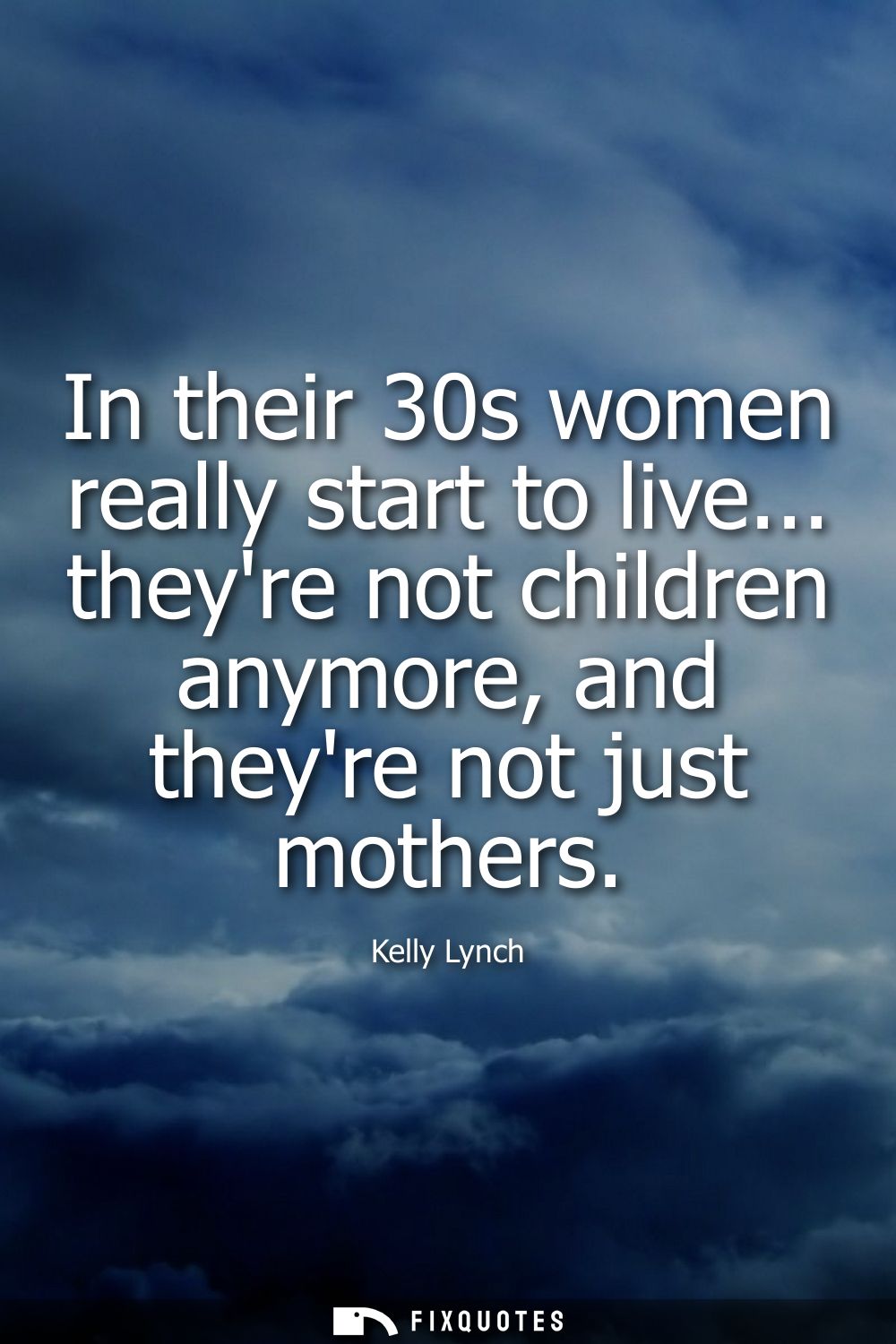
"In their 30s women really start to live... they're not children anymore, and they're not just mothers"
About this Quote
The bite is in her blunt demotion of "children" and "mothers" from identities to boxes. "Not children anymore" reads as a pushback against a culture that infantilizes adult women through aesthetics (youth obsession, "girl" branding) and behavior expectations (be agreeable, be cute, be easy). "Not just mothers" takes aim at the other trap: the idea that motherhood is the only socially legible adult narrative for women, the one that makes their ambition or erotic life feel like an add-on.
There’s also a quieter claim about power. Your 30s are often when you have more money, clearer boundaries, and less patience for being edited to fit someone else’s story. Coming from an actress, that subtext matters: she’s talking about an age when the industry can start withdrawing validation, yet life can finally start producing it internally. The line works because it’s aspirational without being sentimental: survival, then authorship.
Quote Details
| Topic | Aging |
|---|---|
| Source | Help us find the source |
| Cite |
Citation Formats
APA Style (7th ed.)
Lynch, Kelly. (2026, January 16). In their 30s women really start to live... they're not children anymore, and they're not just mothers. FixQuotes. https://fixquotes.com/quotes/in-their-30s-women-really-start-to-live-theyre-107452/
Chicago Style
Lynch, Kelly. "In their 30s women really start to live... they're not children anymore, and they're not just mothers." FixQuotes. January 16, 2026. https://fixquotes.com/quotes/in-their-30s-women-really-start-to-live-theyre-107452/.
MLA Style (9th ed.)
"In their 30s women really start to live... they're not children anymore, and they're not just mothers." FixQuotes, 16 Jan. 2026, https://fixquotes.com/quotes/in-their-30s-women-really-start-to-live-theyre-107452/. Accessed 6 Apr. 2026.