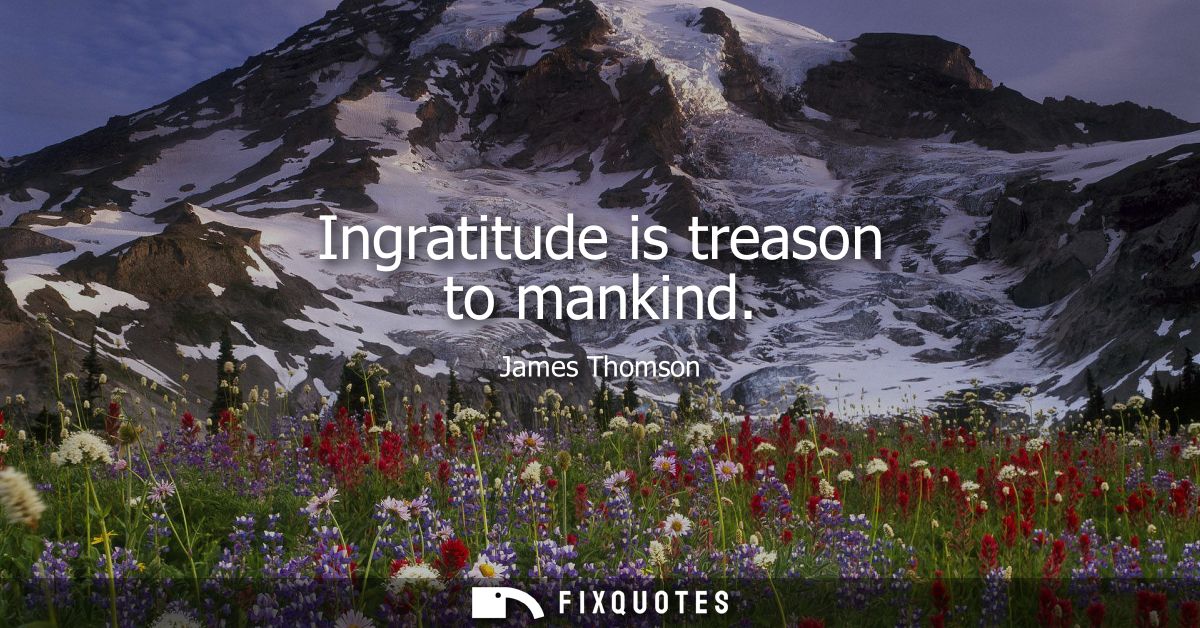
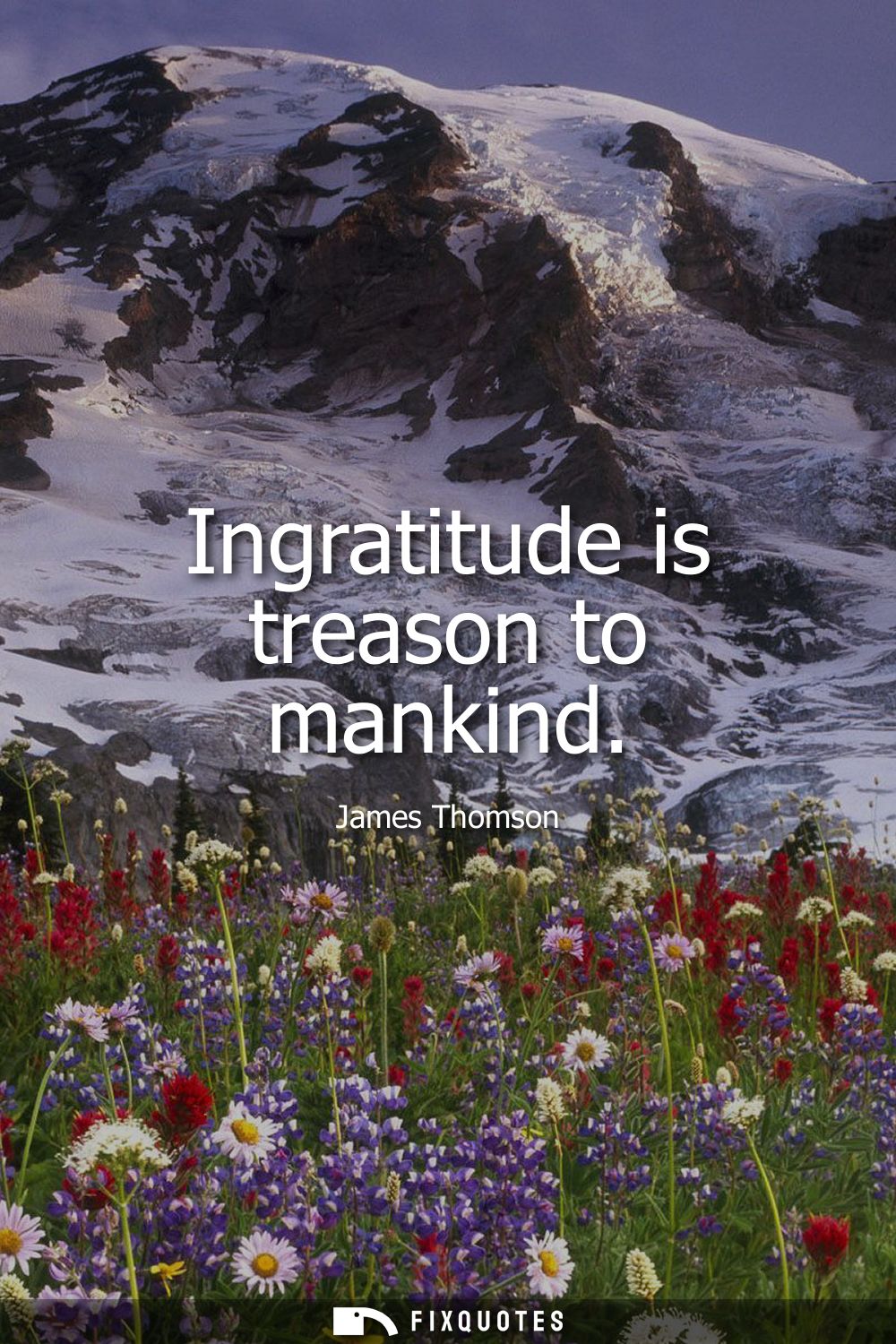
"Ingratitude is treason to mankind"
About this Quote
"Ingratitude is treason to mankind" lands like a moral drumbeat because it reframes a private flaw as a public crime. Thomson doesn’t call ingratitude rude or unbecoming; he calls it treason, a word tied to betrayal of the collective. The move is blunt, almost prosecutorial, and that’s the point: he’s trying to shame the listener out of treating thanks as optional etiquette. Gratitude, in this logic, is social infrastructure.
The intent is less about manners than about mutual obligation. In a world where patronage, favors, and fragile networks of support shaped survival and status, ingratitude wasn’t just hurt feelings; it was an attack on the trust that keeps a community functioning. By widening the injured party from an individual benefactor to "mankind", Thomson implies that every unacknowledged kindness teaches people to stop being kind. The subtext is pragmatic: gratitude isn’t sentimentality, it’s incentive.
Calling a lack of thanks "treason" also sneaks in a political theology of sorts. Treason violates a bond of loyalty; Thomson suggests humans owe loyalty to one another simply for participating in the shared human project. That’s a heavy claim, and it works rhetorically because it borrows the heat of state language to police everyday ethics.
As a musician, Thomson would have lived close to systems of credit and recognition: applause, patron support, reputational exchange. The line reads like someone who knows culture is made collaboratively, then too easily consumed as if it appeared from nowhere. Ingratitude, here, is not just personal failure; it’s cultural vandalism.
The intent is less about manners than about mutual obligation. In a world where patronage, favors, and fragile networks of support shaped survival and status, ingratitude wasn’t just hurt feelings; it was an attack on the trust that keeps a community functioning. By widening the injured party from an individual benefactor to "mankind", Thomson implies that every unacknowledged kindness teaches people to stop being kind. The subtext is pragmatic: gratitude isn’t sentimentality, it’s incentive.
Calling a lack of thanks "treason" also sneaks in a political theology of sorts. Treason violates a bond of loyalty; Thomson suggests humans owe loyalty to one another simply for participating in the shared human project. That’s a heavy claim, and it works rhetorically because it borrows the heat of state language to police everyday ethics.
As a musician, Thomson would have lived close to systems of credit and recognition: applause, patron support, reputational exchange. The line reads like someone who knows culture is made collaboratively, then too easily consumed as if it appeared from nowhere. Ingratitude, here, is not just personal failure; it’s cultural vandalism.
Quote Details
| Topic | Gratitude |
|---|---|
| Source | Help us find the source |
| Cite |
Citation Formats
APA Style (7th ed.)
Thomson, James. (2026, January 15). Ingratitude is treason to mankind. FixQuotes. https://fixquotes.com/quotes/ingratitude-is-treason-to-mankind-145770/
Chicago Style
Thomson, James. "Ingratitude is treason to mankind." FixQuotes. January 15, 2026. https://fixquotes.com/quotes/ingratitude-is-treason-to-mankind-145770/.
MLA Style (9th ed.)
"Ingratitude is treason to mankind." FixQuotes, 15 Jan. 2026, https://fixquotes.com/quotes/ingratitude-is-treason-to-mankind-145770/. Accessed 12 Mar. 2026.
More Quotes by James
Add to List