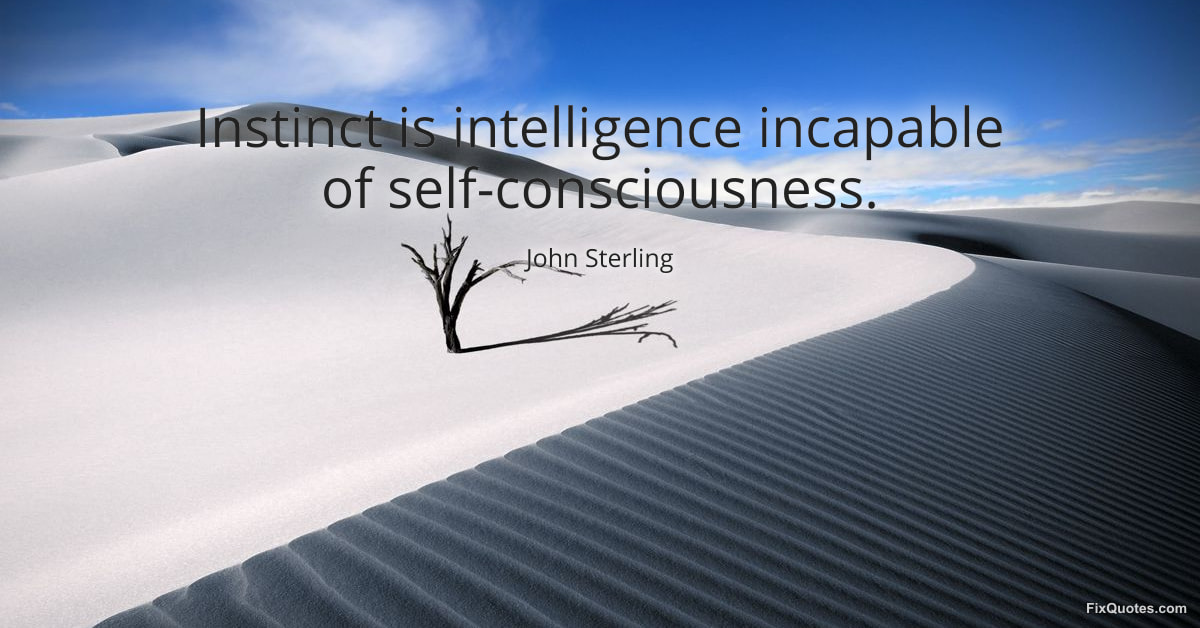
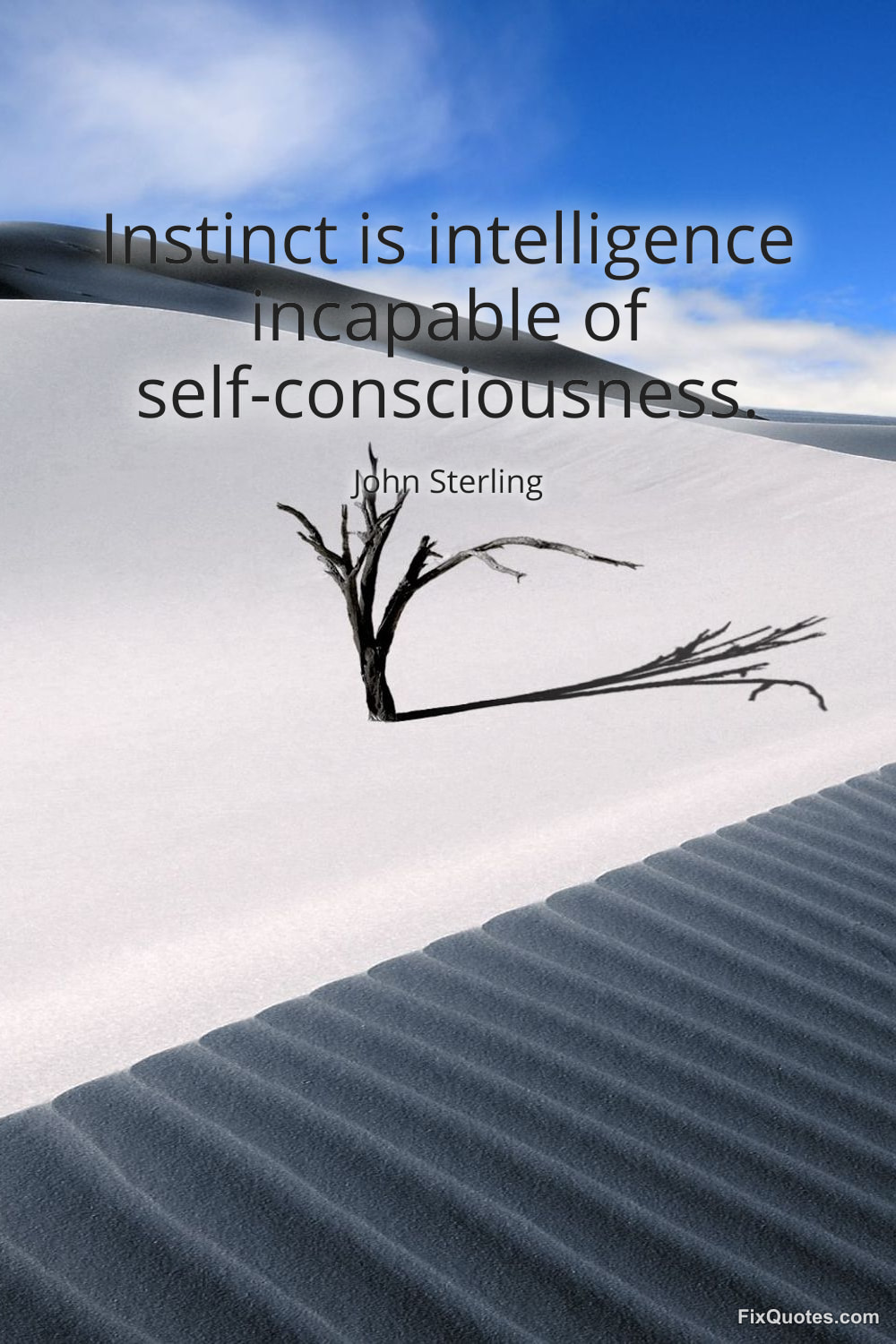
"Instinct is intelligence incapable of self-consciousness"
About this Quote
Sterling’s line flatters the gut while quietly demoting it. Calling instinct “intelligence” is a tactical upgrade: it treats the snap judgment, the flinch, the unreasoned certainty as something more than animal reflex. But the second half lands like a trapdoor. Instinct, in this framing, is smart precisely because it cannot watch itself being smart. The moment it turns inward, it stops being instinct and starts being something messier: deliberation, doubt, self-justification.
The intent is almost Victorian in its moral psychology: to map a hierarchy of mind without romanticizing either pole. Sterling wrote in a period obsessed with reason’s prestige and uneasy about its limits - an era of industrial discipline, evangelical introspection, and emerging scientific accounts of human behavior. The quote threads that needle by offering a bridge concept. Instinct is not the enemy of intellect; it’s intellect before the ego arrives to narrate, defend, and perform it.
The subtext is a warning about self-consciousness as both gift and corrosion. Reflection allows ethics, art, and accountability, but it also invites paralysis, vanity, and rationalization. Sterling implies that some of our best cognitive moves happen “under the hood,” unburdened by the internal press secretary that turns choices into stories.
It works because it reverses the usual insult. “Incapable of self-consciousness” sounds like a deficit, yet it’s also a kind of freedom: intelligence uninfected by the need to be seen - even by oneself.
The intent is almost Victorian in its moral psychology: to map a hierarchy of mind without romanticizing either pole. Sterling wrote in a period obsessed with reason’s prestige and uneasy about its limits - an era of industrial discipline, evangelical introspection, and emerging scientific accounts of human behavior. The quote threads that needle by offering a bridge concept. Instinct is not the enemy of intellect; it’s intellect before the ego arrives to narrate, defend, and perform it.
The subtext is a warning about self-consciousness as both gift and corrosion. Reflection allows ethics, art, and accountability, but it also invites paralysis, vanity, and rationalization. Sterling implies that some of our best cognitive moves happen “under the hood,” unburdened by the internal press secretary that turns choices into stories.
It works because it reverses the usual insult. “Incapable of self-consciousness” sounds like a deficit, yet it’s also a kind of freedom: intelligence uninfected by the need to be seen - even by oneself.
Quote Details
| Topic | Wisdom |
|---|
More Quotes by John
Add to List