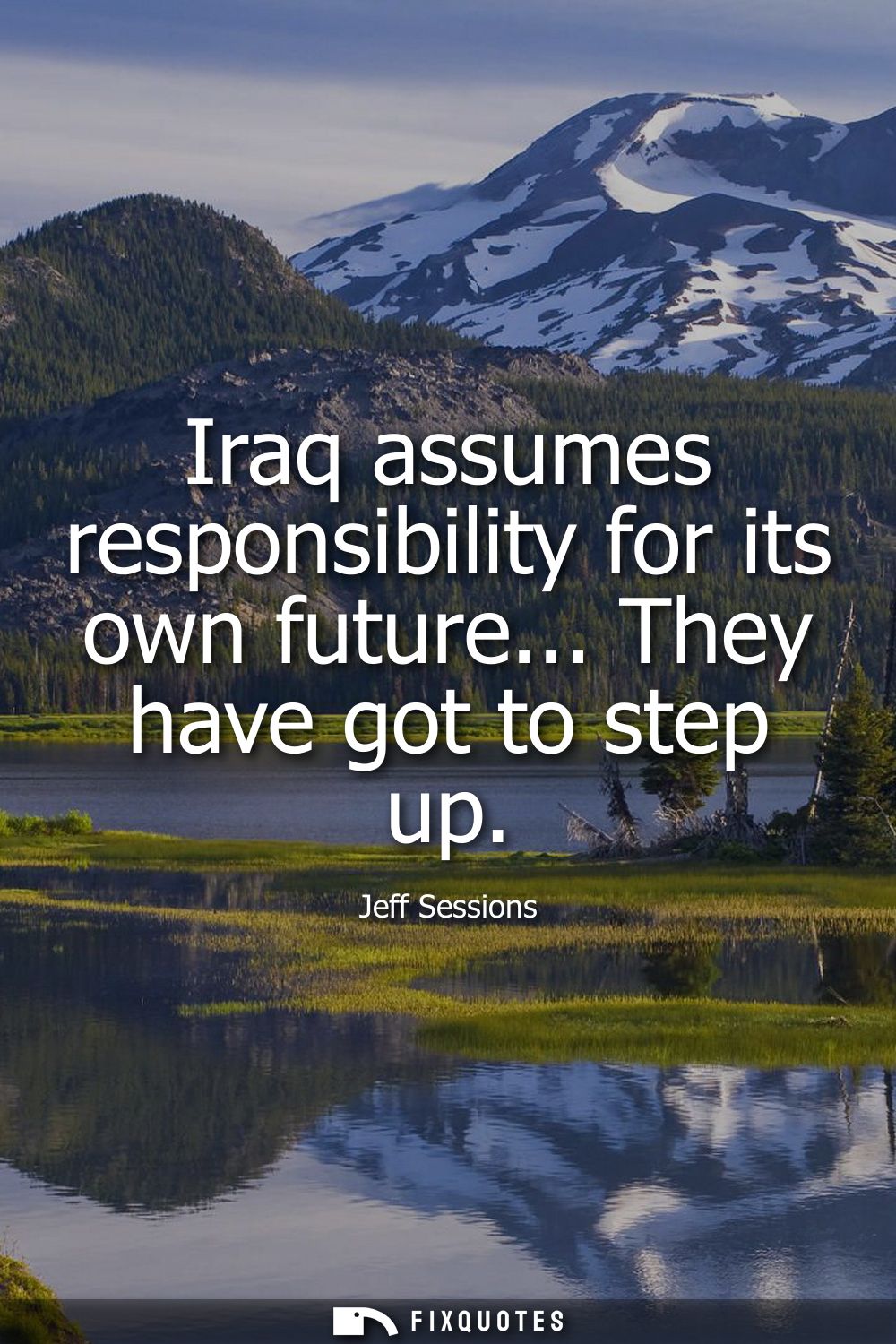
"Iraq assumes responsibility for its own future... They have got to step up"
About this Quote
A clean, blunt sentence like this is built to sound like adulthood: responsibility, future, step up. Sessions reaches for the language of self-reliance because it travels well in American politics, especially in the long shadow of the Iraq War, when patience at home curdled into fatigue and suspicion. The phrasing offers reassurance without promising anything measurable. It’s not policy; it’s posture.
The specific intent is twofold. First, it shifts the moral burden of success away from the United States and onto Iraq, framing the next phase not as an American choice but as an Iraqi obligation. Second, it signals to a domestic audience that Washington is tired of paying—financially, militarily, politically—for a project that has become synonymous with open-ended commitment.
The subtext sits in the paternal tone. “They have got to step up” is the language you use about dependents or underperforming partners, not sovereign equals. It quietly recasts the U.S. role from architect of the invasion and occupation to exasperated coach, implying that if outcomes disappoint, the failure is primarily theirs. That rhetorical move is convenient: it launders accountability while preserving a sense of toughness.
Context matters because “responsibility” was one of the war’s most elastic words. It could mean training local forces, building institutions, or simply creating an exit narrative. Sessions’ formulation leans toward the last. It’s less a diagnosis of Iraq than a message about America’s limits: we’re ready to stop owning this story, even if we still want to control how the ending is described.
The specific intent is twofold. First, it shifts the moral burden of success away from the United States and onto Iraq, framing the next phase not as an American choice but as an Iraqi obligation. Second, it signals to a domestic audience that Washington is tired of paying—financially, militarily, politically—for a project that has become synonymous with open-ended commitment.
The subtext sits in the paternal tone. “They have got to step up” is the language you use about dependents or underperforming partners, not sovereign equals. It quietly recasts the U.S. role from architect of the invasion and occupation to exasperated coach, implying that if outcomes disappoint, the failure is primarily theirs. That rhetorical move is convenient: it launders accountability while preserving a sense of toughness.
Context matters because “responsibility” was one of the war’s most elastic words. It could mean training local forces, building institutions, or simply creating an exit narrative. Sessions’ formulation leans toward the last. It’s less a diagnosis of Iraq than a message about America’s limits: we’re ready to stop owning this story, even if we still want to control how the ending is described.
Quote Details
| Topic | War |
|---|
More Quotes by Jeff
Add to List