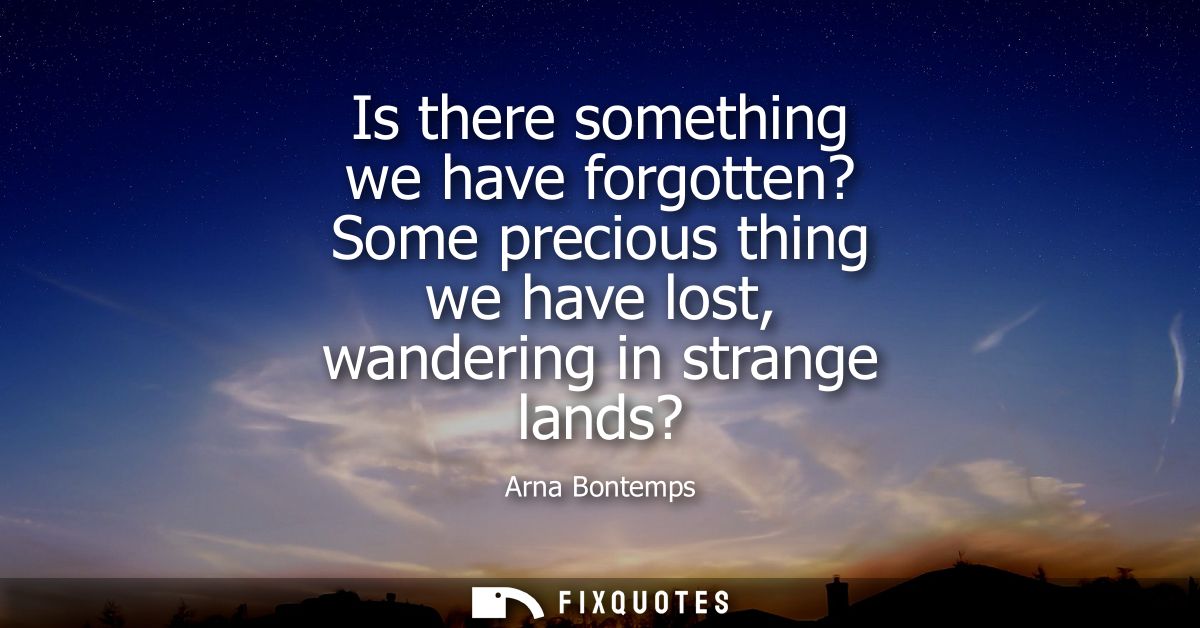
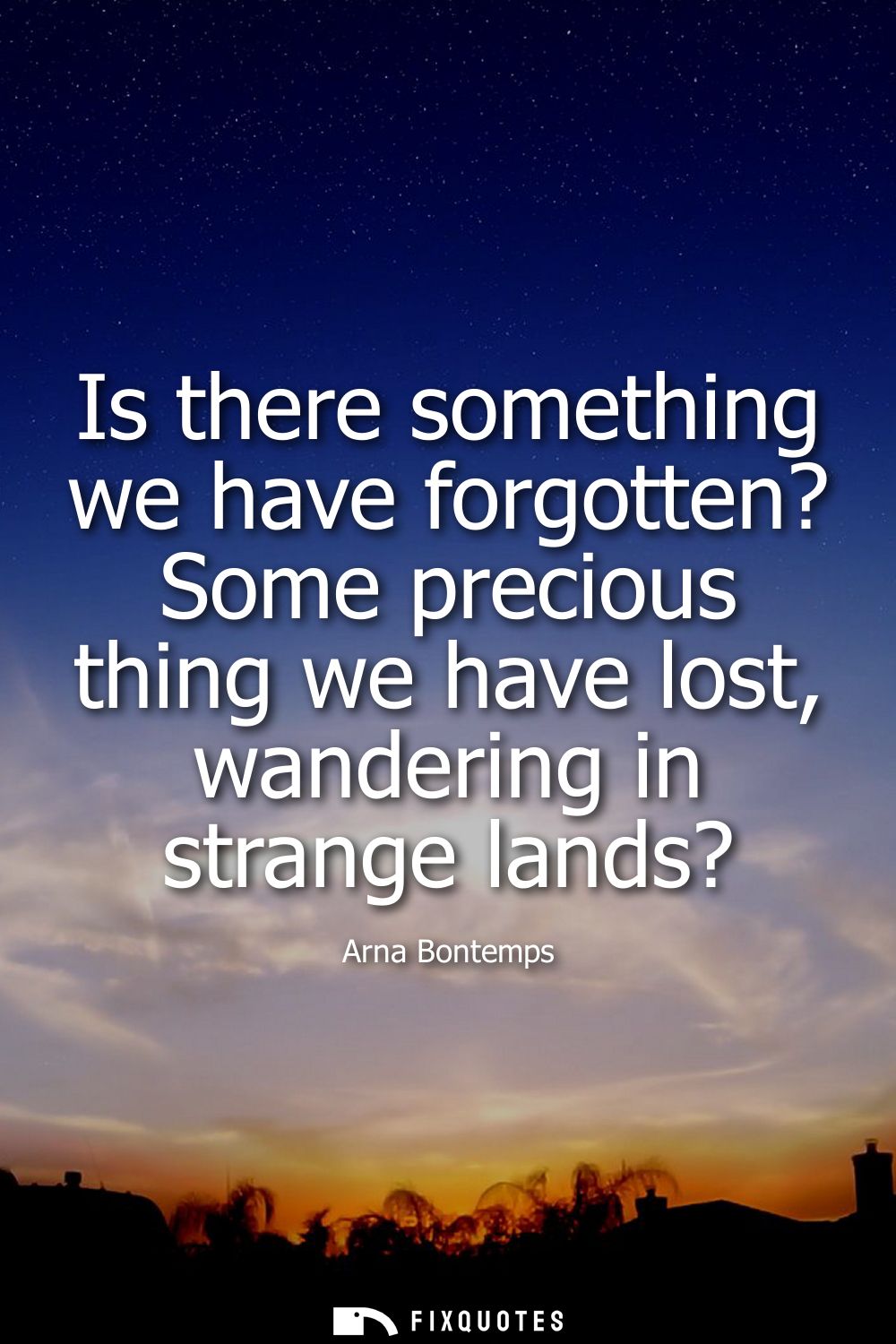
"Is there something we have forgotten? Some precious thing we have lost, wandering in strange lands?"
About this Quote
The line’s power comes from its collective “we,” a communal pronoun that refuses to let the reader stand safely outside the wound. This is a poet of the Harlem Renaissance and its aftermath, writing in the long shadow of the Great Migration, Jim Crow, and a nation that demanded Black people reinvent themselves while denying them full belonging. “Wandering in strange lands” evokes exile without needing a passport: the estrangement of moving north, of living in America, of being told your origins are either shameful or irrelevant. The “strange lands” are geographic, but also cultural and psychic.
Bontemps frames this as a question because certainty would be too easy. The question form performs the very searching it describes, turning the reader into a participant in the recovery effort. “Precious thing” stays deliberately unspecific, which is the trick: it can be ancestry, language, dignity, spiritual coherence, a sense of safety, an undistorted history. The line doesn’t romanticize the past; it makes forgetting look like a political event, not a private lapse.
Quote Details
| Topic | Nostalgia |
|---|---|
| Source | Help us find the source |
| Cite |
Citation Formats
APA Style (7th ed.)
Bontemps, Arna. (2026, January 15). Is there something we have forgotten? Some precious thing we have lost, wandering in strange lands? FixQuotes. https://fixquotes.com/quotes/is-there-something-we-have-forgotten-some-42665/
Chicago Style
Bontemps, Arna. "Is there something we have forgotten? Some precious thing we have lost, wandering in strange lands?" FixQuotes. January 15, 2026. https://fixquotes.com/quotes/is-there-something-we-have-forgotten-some-42665/.
MLA Style (9th ed.)
"Is there something we have forgotten? Some precious thing we have lost, wandering in strange lands?" FixQuotes, 15 Jan. 2026, https://fixquotes.com/quotes/is-there-something-we-have-forgotten-some-42665/. Accessed 26 Mar. 2026.