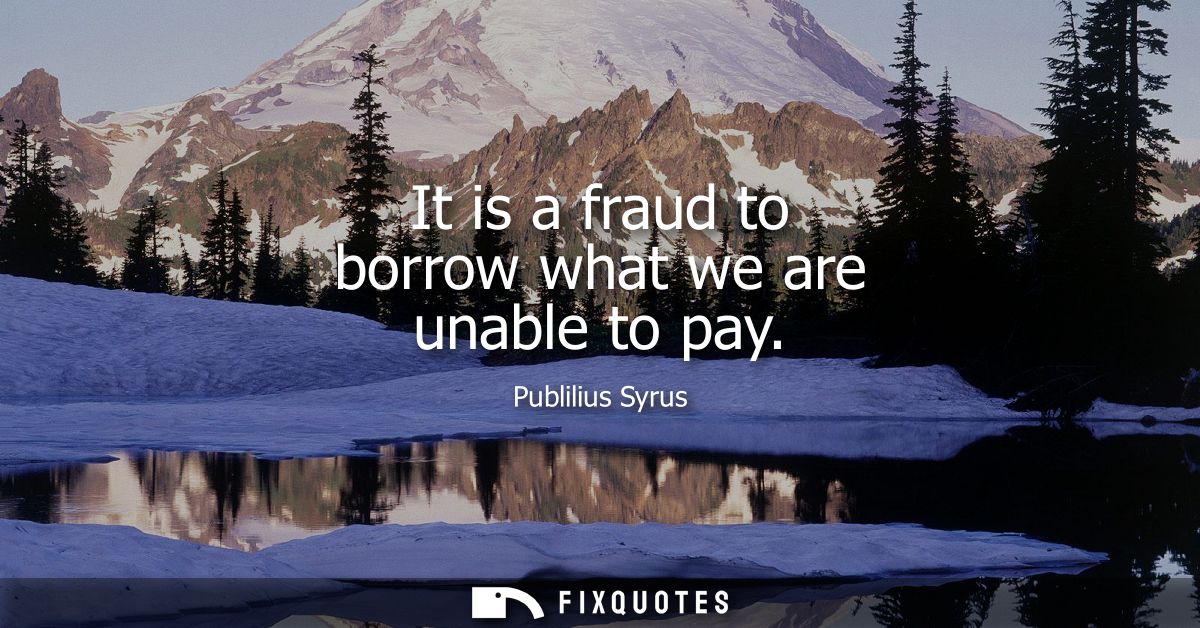
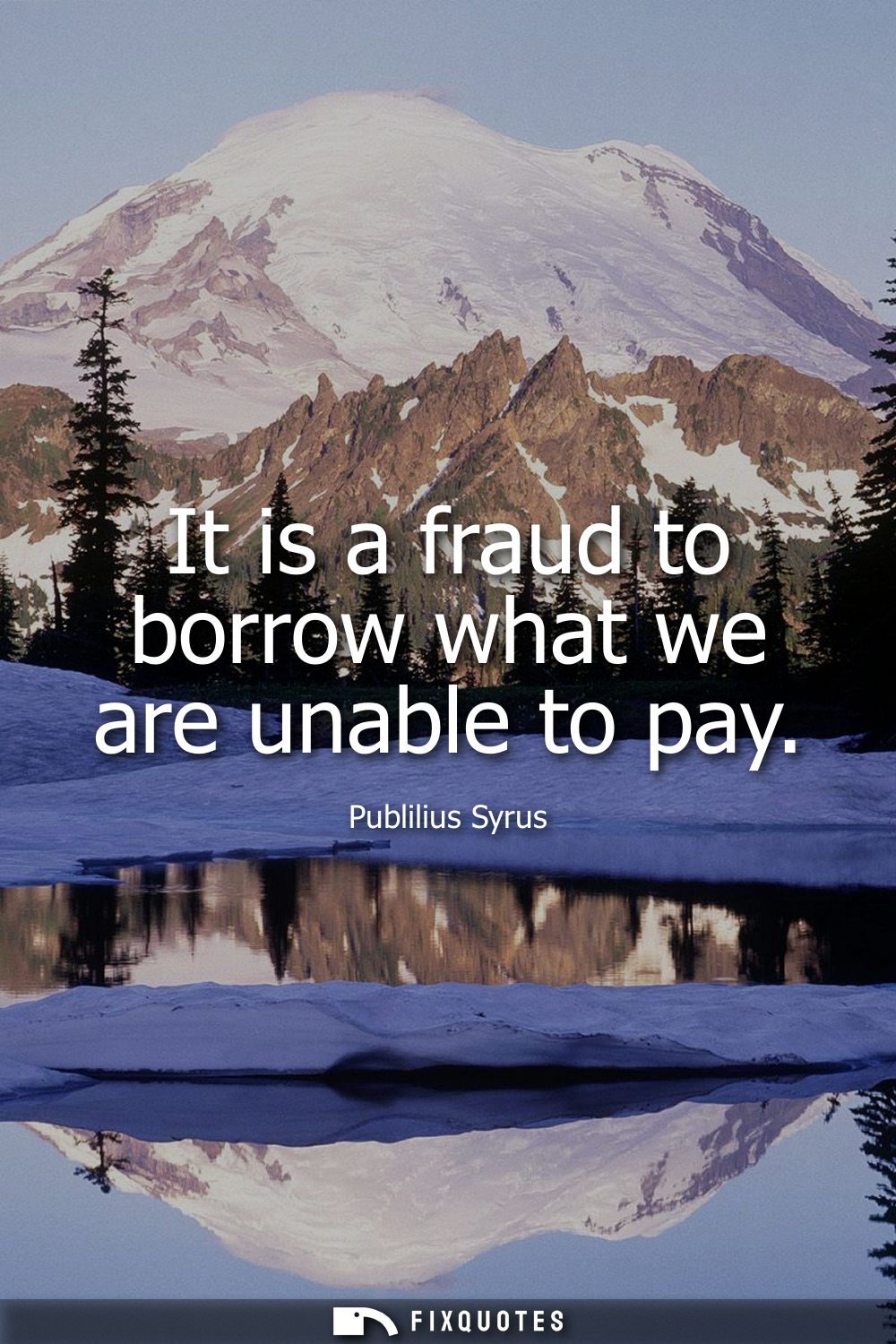
"It is a fraud to borrow what we are unable to pay"
About this Quote
A Roman poet calling borrowing “fraud” isn’t just scolding debt; he’s indicting the performance of respectability that credit makes possible. Publilius Syrus, a master of the epigram, compresses a whole social system into one moral pivot: if you take what you can’t repay, you’re not unlucky, you’re dishonest. The sentence works because it refuses the comforting story we tell ourselves about debt as neutral math. It drags the act back into the realm of character and public trust.
The subtext is about reputation in a status-obsessed culture where honor functioned like currency. In late Republican Rome, money flowed through patronage networks, political ambition, and conspicuous consumption; owing the wrong person could be a leash. Syrus’s line aims at the person who uses borrowing to cosplay stability, to keep up appearances, to buy time in hopes that fortune or favors will cover the bill. Calling that “fraud” punctures the self-excuse before it forms.
There’s also an implicit warning to lenders and bystanders: debt isn’t private. It corrodes the civic glue because it turns relationships into leverage and turns promises into instruments. The severity is the point. Syrus isn’t offering a budgeting tip; he’s defending a moral economy where obligation is sacred precisely because it’s social. The aphorism survives because modern credit culture still runs on the same fragile ingredient: belief that tomorrow will pay for today.
The subtext is about reputation in a status-obsessed culture where honor functioned like currency. In late Republican Rome, money flowed through patronage networks, political ambition, and conspicuous consumption; owing the wrong person could be a leash. Syrus’s line aims at the person who uses borrowing to cosplay stability, to keep up appearances, to buy time in hopes that fortune or favors will cover the bill. Calling that “fraud” punctures the self-excuse before it forms.
There’s also an implicit warning to lenders and bystanders: debt isn’t private. It corrodes the civic glue because it turns relationships into leverage and turns promises into instruments. The severity is the point. Syrus isn’t offering a budgeting tip; he’s defending a moral economy where obligation is sacred precisely because it’s social. The aphorism survives because modern credit culture still runs on the same fragile ingredient: belief that tomorrow will pay for today.
Quote Details
| Topic | Money |
|---|---|
| Source | Help us find the source |
| Cite |
Citation Formats
APA Style (7th ed.)
Syrus, Publilius. (2026, January 17). It is a fraud to borrow what we are unable to pay. FixQuotes. https://fixquotes.com/quotes/it-is-a-fraud-to-borrow-what-we-are-unable-to-pay-34356/
Chicago Style
Syrus, Publilius. "It is a fraud to borrow what we are unable to pay." FixQuotes. January 17, 2026. https://fixquotes.com/quotes/it-is-a-fraud-to-borrow-what-we-are-unable-to-pay-34356/.
MLA Style (9th ed.)
"It is a fraud to borrow what we are unable to pay." FixQuotes, 17 Jan. 2026, https://fixquotes.com/quotes/it-is-a-fraud-to-borrow-what-we-are-unable-to-pay-34356/. Accessed 8 Mar. 2026.
More Quotes by Publilius
Add to List