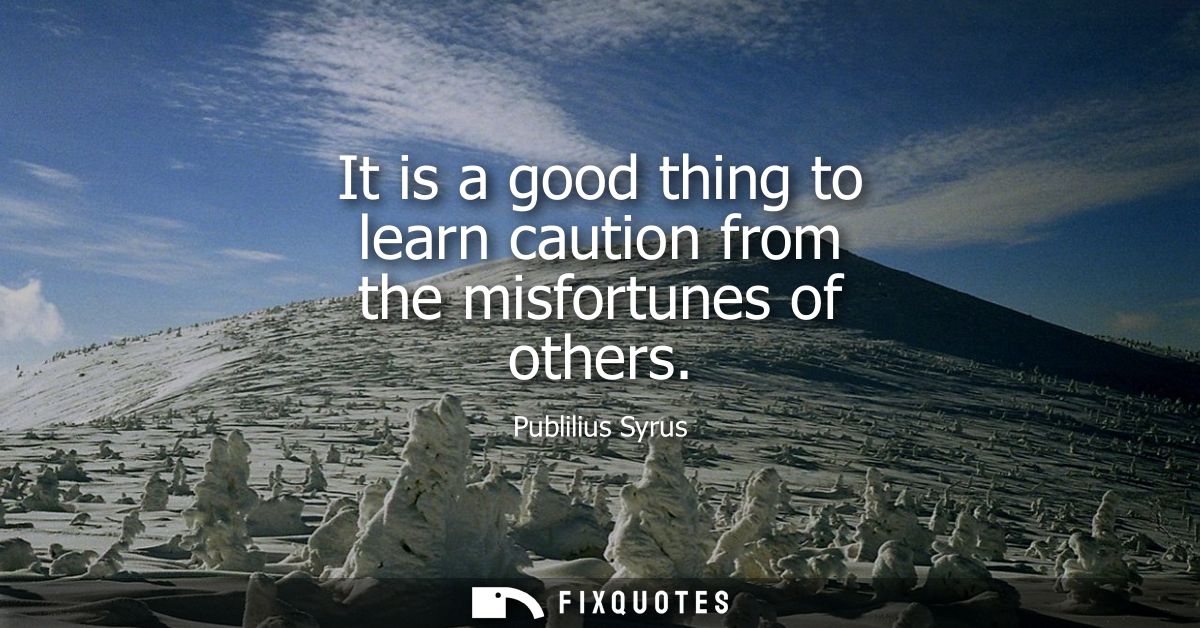
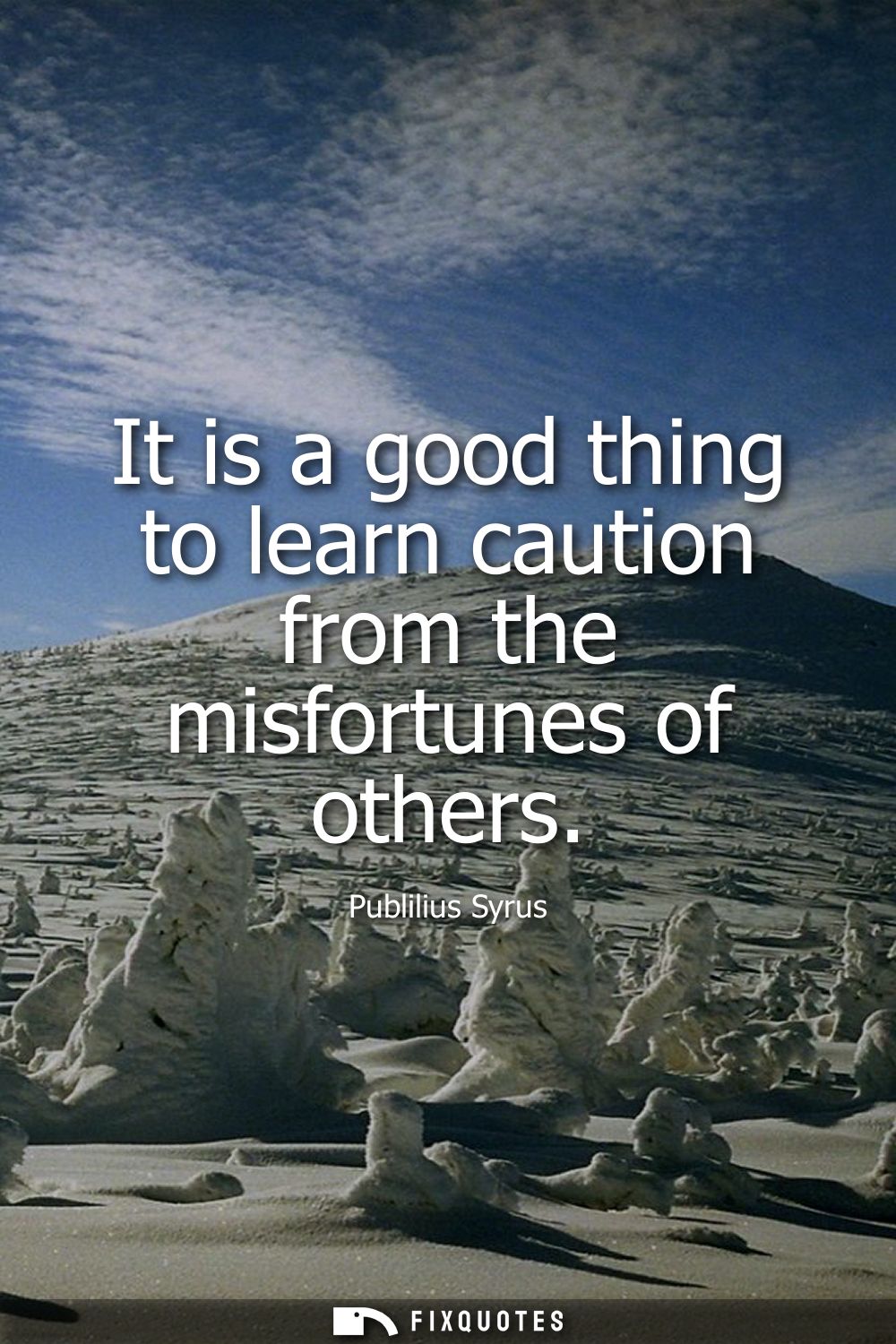
"It is a good thing to learn caution from the misfortunes of others"
About this Quote
A neat little knife of a line: it praises prudence while quietly admitting how hard humans are to teach. Publilius Syrus, a Roman writer of sententiae (those portable one-liners meant to stick), isn’t offering cozy moral advice so much as a survival algorithm for a culture that treated misfortune as public spectacle. In Rome, losses were visible: courtroom ruin, political exile, debt, disgrace. Other people’s bad endings weren’t private tragedies; they were civic information.
The intent is pragmatic, almost mercenary: don’t wait for pain to turn you wise when you can outsource the lesson. “Good thing” signals more than niceness; it’s a utilitarian endorsement. Caution is framed as a skill you can acquire cheaply, by observation, if you have the discipline to treat someone else’s downfall as data rather than entertainment.
The subtext is less flattering. It implies most of us are reactive, not reflective; we learn best when punished. Syrus flatters the reader as the rare person capable of secondhand wisdom, then nudges them toward a tougher ethic: pay attention. There’s also a faint rebuke of schadenfreude. If you’re going to watch misfortune, at least convert it into restraint instead of gossip.
Context matters because Syrus wrote in a world that prized aphorisms as social currency. The line works because it’s compact, quotable, and slightly cold-blooded: empathy isn’t the point; avoidance is. It’s Roman stoicism without the metaphysics, a reminder that history’s cruelties can be either theatre or training.
The intent is pragmatic, almost mercenary: don’t wait for pain to turn you wise when you can outsource the lesson. “Good thing” signals more than niceness; it’s a utilitarian endorsement. Caution is framed as a skill you can acquire cheaply, by observation, if you have the discipline to treat someone else’s downfall as data rather than entertainment.
The subtext is less flattering. It implies most of us are reactive, not reflective; we learn best when punished. Syrus flatters the reader as the rare person capable of secondhand wisdom, then nudges them toward a tougher ethic: pay attention. There’s also a faint rebuke of schadenfreude. If you’re going to watch misfortune, at least convert it into restraint instead of gossip.
Context matters because Syrus wrote in a world that prized aphorisms as social currency. The line works because it’s compact, quotable, and slightly cold-blooded: empathy isn’t the point; avoidance is. It’s Roman stoicism without the metaphysics, a reminder that history’s cruelties can be either theatre or training.
Quote Details
| Topic | Learning from Mistakes |
|---|---|
| Source | Help us find the source |
| Cite |
Citation Formats
APA Style (7th ed.)
Syrus, Publilius. (2026, January 17). It is a good thing to learn caution from the misfortunes of others. FixQuotes. https://fixquotes.com/quotes/it-is-a-good-thing-to-learn-caution-from-the-34357/
Chicago Style
Syrus, Publilius. "It is a good thing to learn caution from the misfortunes of others." FixQuotes. January 17, 2026. https://fixquotes.com/quotes/it-is-a-good-thing-to-learn-caution-from-the-34357/.
MLA Style (9th ed.)
"It is a good thing to learn caution from the misfortunes of others." FixQuotes, 17 Jan. 2026, https://fixquotes.com/quotes/it-is-a-good-thing-to-learn-caution-from-the-34357/. Accessed 12 Feb. 2026.
More Quotes by Publilius
Add to List