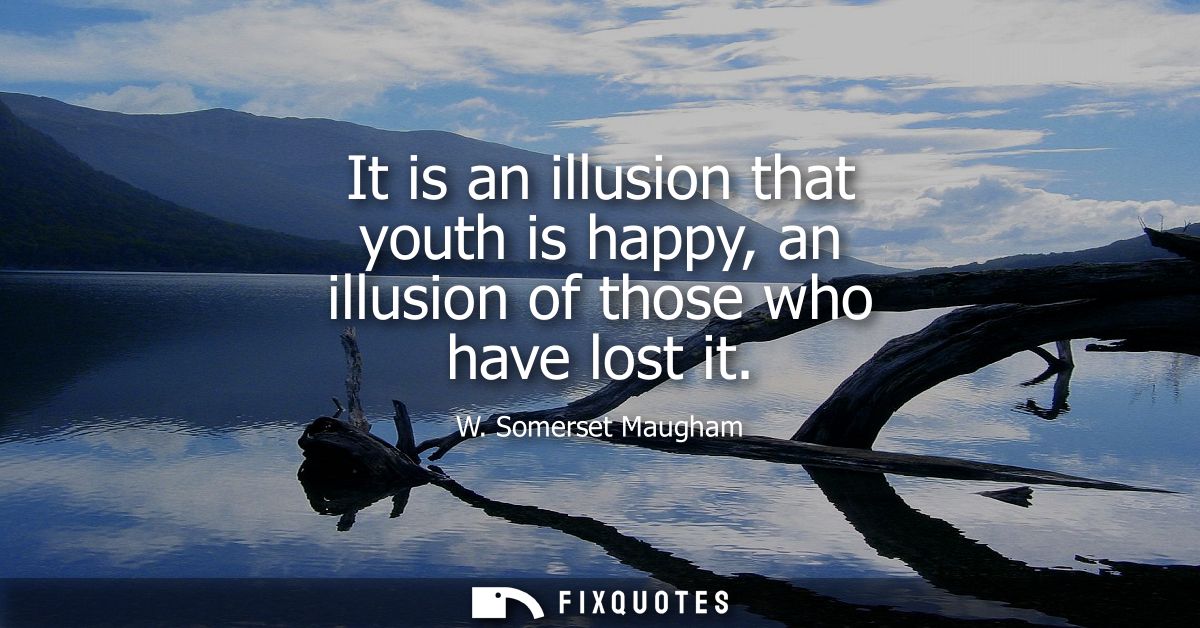
"It is an illusion that youth is happy, an illusion of those who have lost it"
About this Quote
Maugham, a playwright with a clinician’s eye for self-deception, is targeting a particular sentimental myth: that young people are naturally carefree. His subtext is sharper. Youth is often anxious, status-obsessed, hormonally chaotic, financially precarious, and trapped inside other people’s schedules. It can be vivid, yes, but vividness isn’t the same as happiness. The older observer projects peace onto youth because they’re remembering physical ease, not emotional ease; they’re remembering options, not the terror of choosing.
The line also performs a little moral reversal. It refuses to flatter either camp. It denies the old the comforting romance of what they’ve lost, and it denies the young the cultural permission to treat their turbulence as a betrayal of the "best years". In a society that markets youth as a product and nostalgia as a lifestyle, Maugham’s sentence is a small act of sabotage: your longing may be less truth than narrative.
Quote Details
| Topic | Nostalgia |
|---|---|
| Source | Help us find the source |
| Cite |
Citation Formats
APA Style (7th ed.)
Maugham, W. Somerset. (2026, January 15). It is an illusion that youth is happy, an illusion of those who have lost it. FixQuotes. https://fixquotes.com/quotes/it-is-an-illusion-that-youth-is-happy-an-illusion-17943/
Chicago Style
Maugham, W. Somerset. "It is an illusion that youth is happy, an illusion of those who have lost it." FixQuotes. January 15, 2026. https://fixquotes.com/quotes/it-is-an-illusion-that-youth-is-happy-an-illusion-17943/.
MLA Style (9th ed.)
"It is an illusion that youth is happy, an illusion of those who have lost it." FixQuotes, 15 Jan. 2026, https://fixquotes.com/quotes/it-is-an-illusion-that-youth-is-happy-an-illusion-17943/. Accessed 18 Feb. 2026.